

As Panama tightens visa rules, Cubans brace for tough journeys
By the time Natalia and her family were called to enter the Panamanian embassy in Havana, they had been sleeping on the grass outside for nearly a week.
Natalia, who spoke under a pseudonym for security reasons, had travelled to the Cuban capital in early March along with her mother, aunt and cousin – a long trip from their home in the country’s eastern Las Tunas province. Once inside, they would buy a transit visa to enter Panama.
“Of course, you have to be frustrated,” Natalia told Al Jazeera. “There are so many people here, and we’ve been planning this trip for over a month.”
The journey from Las Tunas took two days and cost the family about $200, she said – a significant sum in Cuba, where the average salary is less than $50 a month. Natalia and her mother were planning to fly in April to Panama, and then to Nicaragua, from where they would begin their trek to the United States border to apply for asylum on the grounds of political persecution.
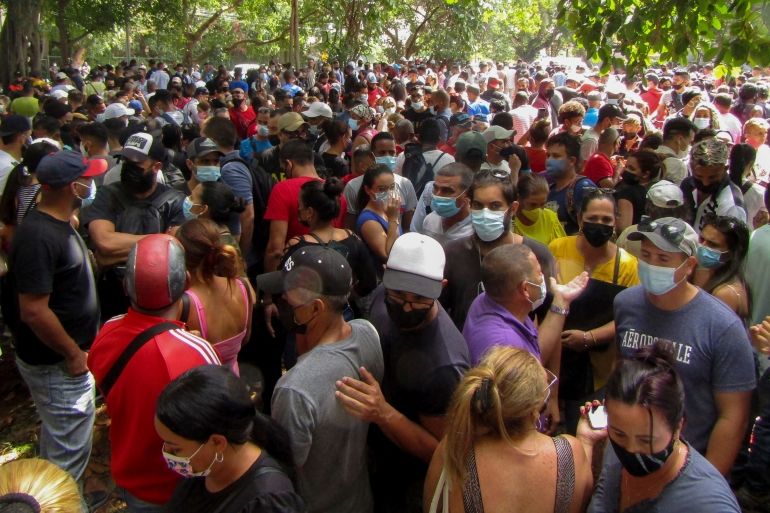
Along with Natalia and her family, more than 400 people gathered in front of Panama’s embassy in Havana on March 9, after a new visa requirement was announced that would make fleeing the island more difficult. It requires all Cubans to buy a transit visa at the embassy 15 days before entering Panama.
 Panama is an important hub for passengers travelling anywhere in the Caribbean, Central and North America
The requirement was to take effect just a few days after the announcement, throwing into chaos the travel plans of many Cubans who had planned to fly out during the last two weeks of March. After angry residents flooded the embassy area, the Panamanian government slightly extended the implementation date until March 15.
Although Panamanian authorities have said the transit visa requirement would be in place for just three months, some Cubans told Al Jazeera they feared more stringent restrictions lay ahead – adding to the constantly evolving hurdles facing Cubans as they attempt to travel beyond their country’s borders.
Planning far in advance
In recent years, Panama has functioned as a middleman between Cuba and the rest of Latin America, as many countries do not offer direct flights to Havana.
“I’m going to Mexico through Panama,” a woman sitting outside the embassy told Al Jazeera in mid-March, noting that her son’s father was already living there. She had come back to Cuba to visit family and was now stuck waiting for a transit visa en route to Panama City.
Another woman waiting to enter the embassy said she had been living in Colombia for years, and was prepared to wait in the hot sun as long as necessary to facilitate her return trip through Panama: “I got here at 8am, and I heard they’ll be processing visas maybe until 9pm, so I’ll stay here all day – and then, maybe I’ll have to change the flight and come again tomorrow.”
The visa costs $50, a significant price for many Cubans, and the requirement to obtain it two weeks in advance means that Cubans coming into the capital from far-flung provinces must piece together housing in Havana for weeks. Some, like Natalia, have resorted to sleeping on the grass outside the embassy; on a recent afternoon, the area was littered with plastic water cups, blankets and dirty socks.
 Experts say the new restrictions could dampen the rate of Cuban migration
The new visa requirement complicates an already expensive journey, as flights to Panama from Cuba can cost more than $1,000. Most Cubans need assistance from family abroad to save up enough for the journey, and those without financial aid must plan years in advance. They are required to purchase round-trip tickets, even if they never plan to return to Cuba.
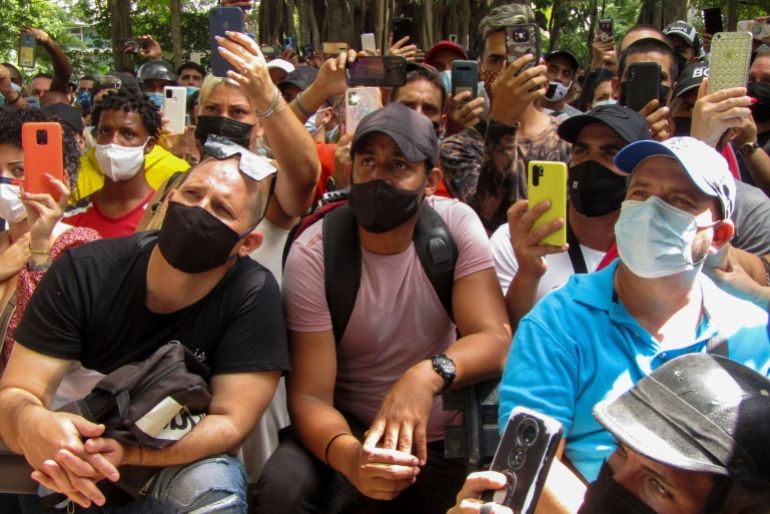
The Panamanian government said the new visa requirement was meant to ensure “security and control”, but many Cubans protesting in the park on March 9 said they felt it was just another way to stem the flow of thousands of people leaving the island to settle elsewhere. The Costa Rican government imposed a similar transit visa restriction on Cuban nationals in February, a decision that also sparked protests.
‘We’re just tired’
In the first two months of 2022, US Customs and Border Protection (CBP) reported encountering more than 25,000 Cubans, the vast majority at the US-Mexico border – a surge more than four times higher than the same period of 2021. The island is currently crippled by widespread food and oil shortages.
Jorge Duany, head of the Cuban Research Institute at Florida International University, told Al Jazeera that the new restrictions could, at least temporarily, dampen the rate of Cuban migration. The new Panamanian and Costa Rican regulations “will likely lead more Cubans to follow the air route from Havana to Managua”, Duany said.
Though Nicaragua does not require Cuban nationals to obtain a visa, flights from Havana to Managua are less frequent, and demand is already sky-high.
Andres Pertierra, a Cuba historian at the University of Wisconsin-Madison, told Al Jazeera that the migration surge will continue as long as the country’s severe economic challenges persist. And if fewer Cubans are able to leave the island, the strain on food and oil supplies will only intensify.
“[The] indefinite, crisis-level scarcity is set to stay for a while,” Pertierra said. “The big trigger is that there seems to be no future there … Who wants to raise a family or build a career in that context if they can avoid it?”
Meanwhile, Natalia and her mother know they will face more obstacles on their way to the US, many of which will involve waiting in lines for hours, days or even weeks.
“We’re not anxious or excited,” she said. “We’re just tired.”