

Mexican armed forces knew about attack on 43 students, report says
Evidence obtained by the Interdisciplinary Group of Independent Experts (GIEI), an independent panel tasked with investigating the notorious case, revealed that Navy and Army officials kept secret that the students from the Ayotzinapa Rural Teachers' College were under real-time surveillance by the state leading up to and during their abduction.
"Security authorities had two intelligence processes underway, one to follow the actions of organized crime in the area and the other to track the students," the investigators said in the report, which was based on declassified documents.
The students were under surveillance because their college, which has strong ties to left-wing social movements in Mexico, was viewed as a potential hotbed of subversion, the GIEI said.
Neither the Army nor the Navy immediately responded to requests for comment.
The kidnapping of the students on the night of Sept. 26, 2014, in the southwestern city of Iguala sparked national and international protests, and remains one of the most infamous incidents in the history of Mexico's struggle with drug gangs.
The official documents reviewed by the GIEI included transcripts of conversations between soldiers and their superiors detailing the students' arrival in Iguala.
From Iguala, the students had planned to travel to Mexico City to attend a protest, but were instead kidnapped by corrupt local police and handed over to a local gang.
The students were then massacred and their bodies incinerated, according to the previous government. The GIEI later picked holes in that version of events and the current government ordered the case to be re-opened.
So far the remains of only two of the missing students have been definitively identified. The report did not conclude what happened to the rest of the students.
Mexico's armed forces have long denied having information about the crime and the students' whereabouts.
Communications intercepts by the armed forces could have been used at the time to locate the students after they were kidnapped, the report found.
But the armed forces denied that such intercepts existed and did not hand them over, it said.
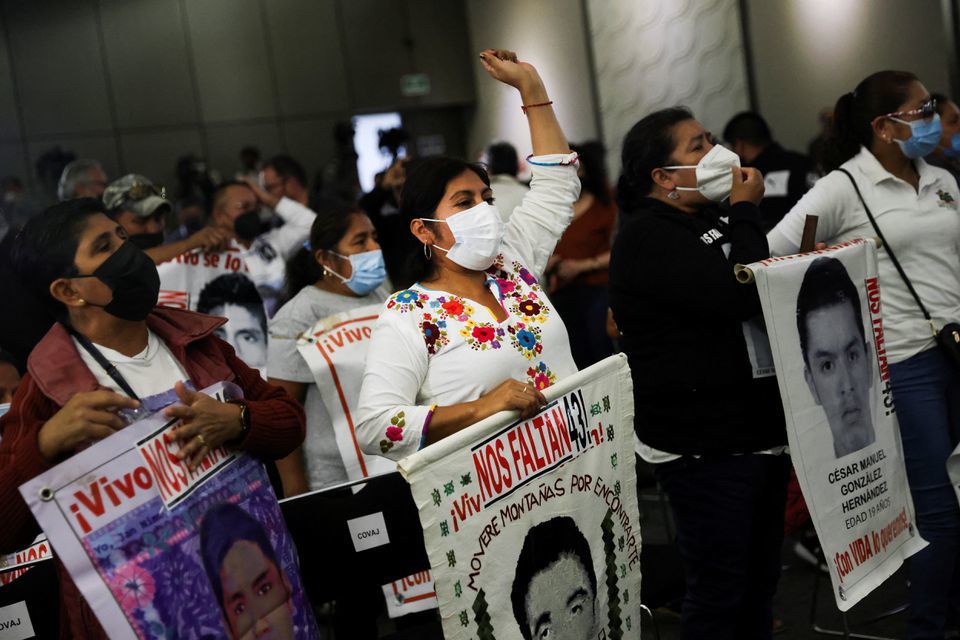 Relatives of the 43 missing students of the Ayotzinapa teacher's
training college attend the delivery of a report on the 43 missing
students of the Ayotzinapa teacher training college by members of a team
of international experts, at the Interior Ministry building in Mexico
City, Mexico, March 28, 2022.
Relatives of the 43 missing students of the Ayotzinapa teacher's
training college attend the delivery of a report on the 43 missing
students of the Ayotzinapa teacher training college by members of a team
of international experts, at the Interior Ministry building in Mexico
City, Mexico, March 28, 2022.
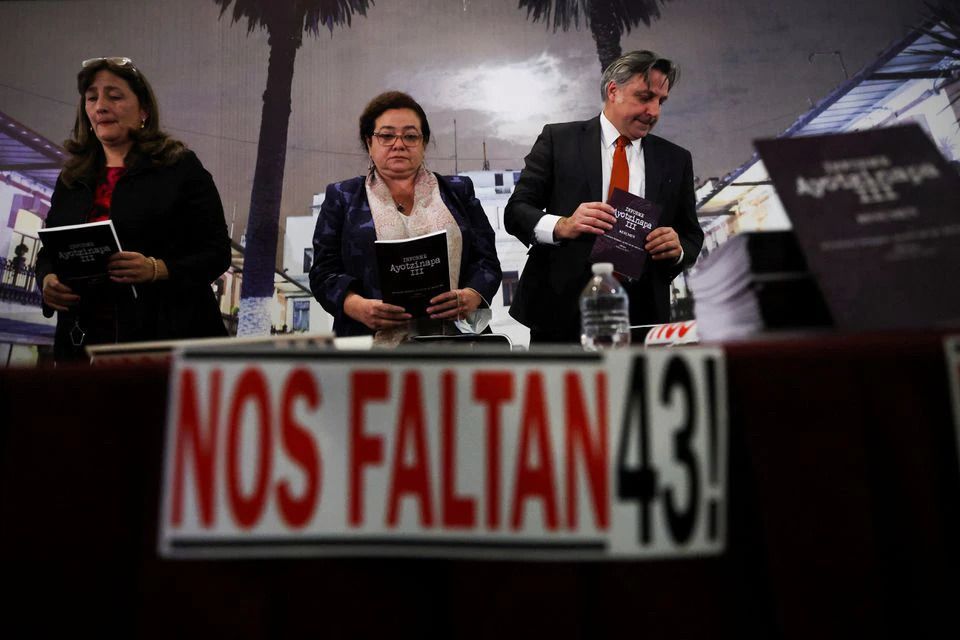 Angela Buitrago, Claudia Paz and Francisco Cox, members of a team of
international experts, attend the delivery of a report on the 43 missing
students of the Ayotzinapa teacher training college, at the Interior
Ministry building in Mexico City, Mexico, March 28, 2022.
Angela Buitrago, Claudia Paz and Francisco Cox, members of a team of
international experts, attend the delivery of a report on the 43 missing
students of the Ayotzinapa teacher training college, at the Interior
Ministry building in Mexico City, Mexico, March 28, 2022.
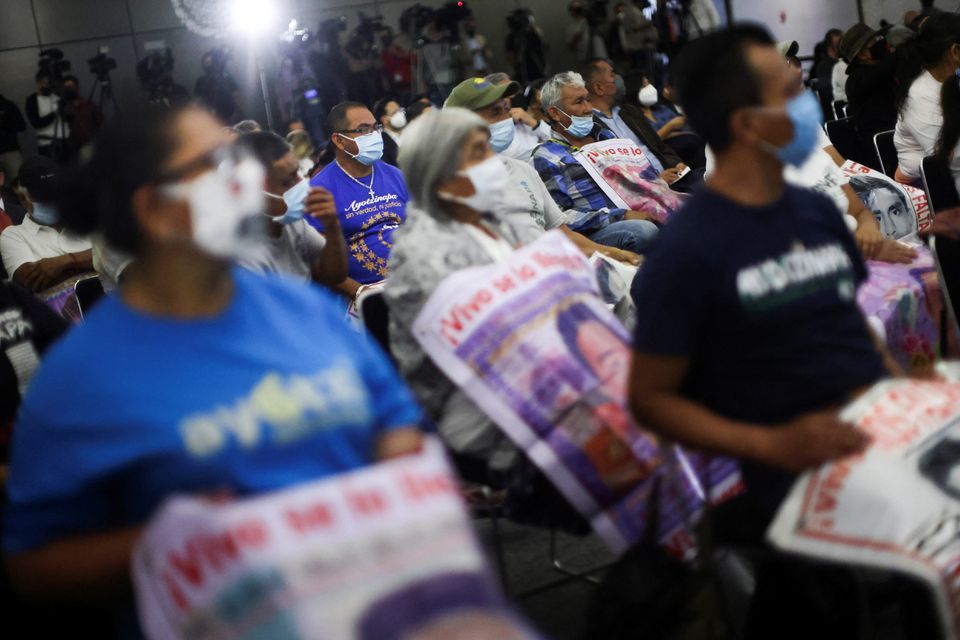 Relatives of the 43 missing students of the Ayotzinapa teacher's
training college attend the delivery of a report on the 43 missing
students of the Ayotzinapa teacher training college by members of a team
of international experts, at the Interior Ministry building in Mexico
City, Mexico, March 28, 2022.
Relatives of the 43 missing students of the Ayotzinapa teacher's
training college attend the delivery of a report on the 43 missing
students of the Ayotzinapa teacher training college by members of a team
of international experts, at the Interior Ministry building in Mexico
City, Mexico, March 28, 2022.
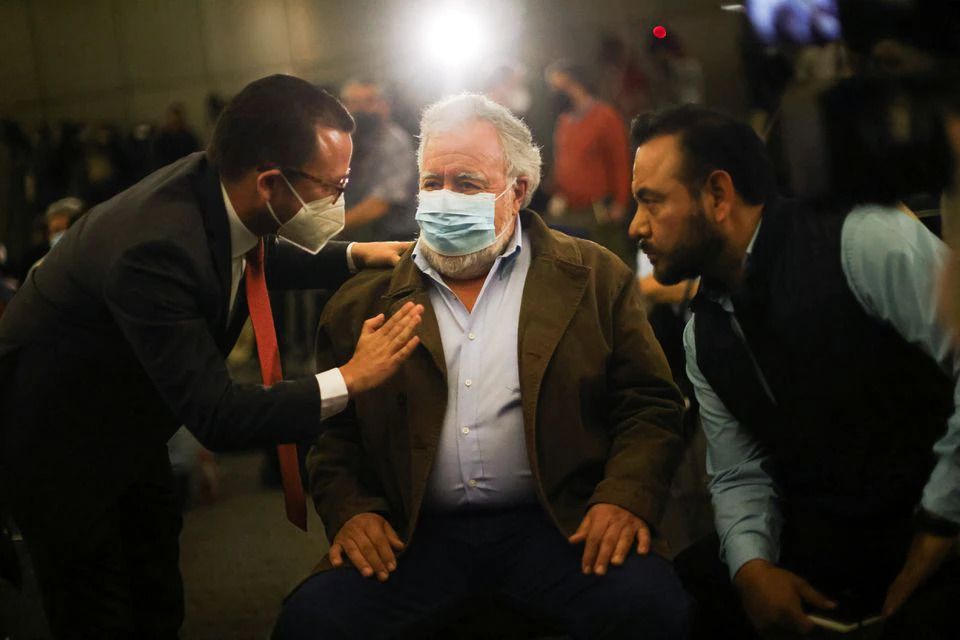 Mexico's Undersecretary of Human Rights Alejandro Encinas attends the
delivery of a report on the 43 missing students of the Ayotzinapa
teacher training college by members of a team of international experts,
at the Interior Ministry building in Mexico City, Mexico, March 28,
2022.
Mexico's Undersecretary of Human Rights Alejandro Encinas attends the
delivery of a report on the 43 missing students of the Ayotzinapa
teacher training college by members of a team of international experts,
at the Interior Ministry building in Mexico City, Mexico, March 28,
2022.