

Chile’s plan for state control in lithium dismays business
President Gabriel Boric announced in a national broadcast Thursday night that private companies will have to partner with the government in exploiting Chile’s lithium, a metal used to make rechargeable batteries.
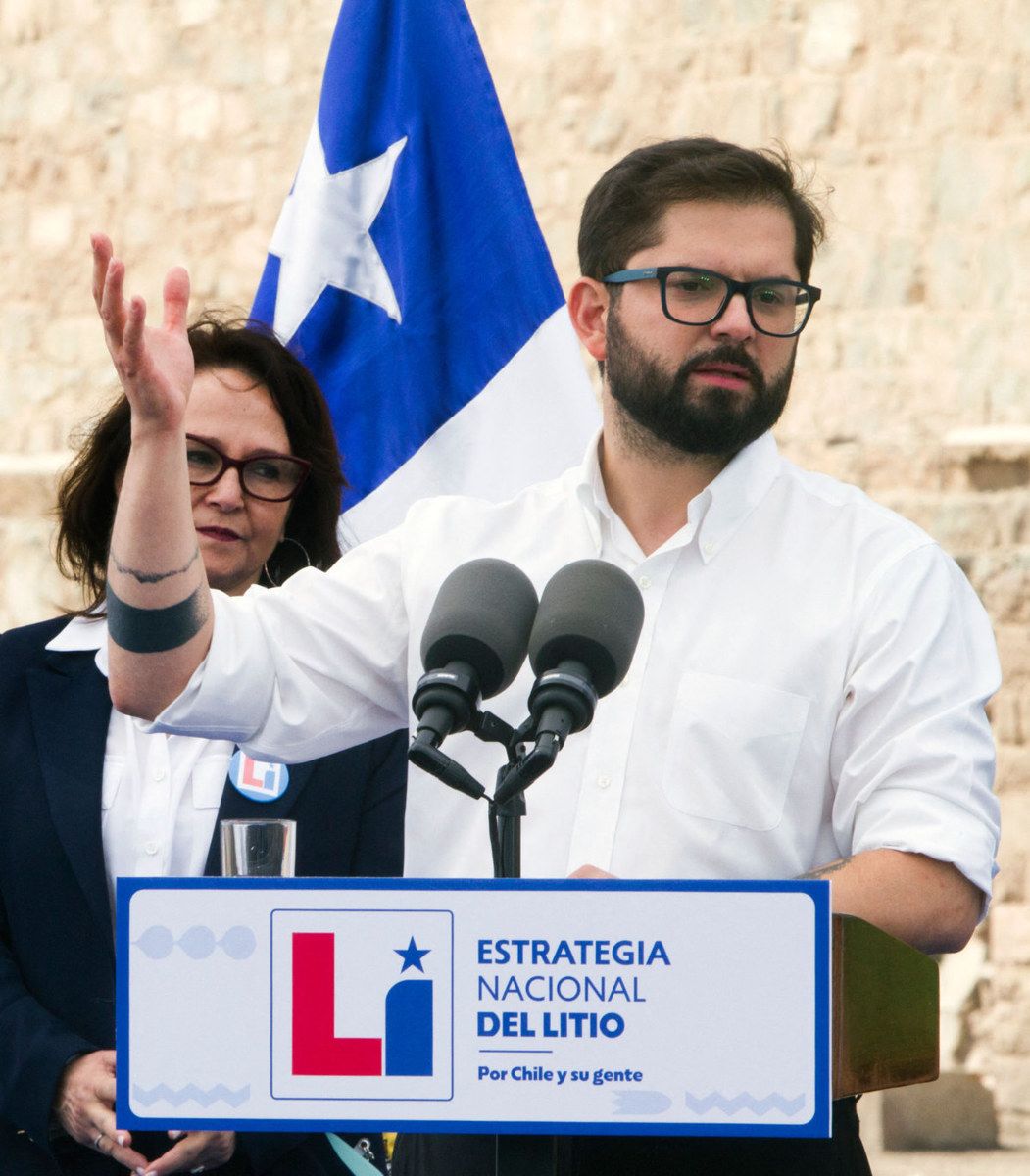 Chile's President Gabriel Boric speaks during an event to present the
National Lithium Strategy in Antofagasta, Chile, on April 21, 2023.
Boric said the state would take a controlling interest in each partnership, leading some to call it a nationalization of the industry, while others disagreed.
“Phrasing it as nationalization is too strong … it’s a quasi-nationalization in that the playing field will now be leveled in favor of the state,” said Nicolás Saldías, senior analyst at the Economist Intelligence Unit for Latin America and the Caribbean. “There is no level playing field for the private sector in Chile.”
Chile is the second largest producer of lithium and holds the world’s third largest reserves of the metal. Demand for lithium is expected to soar amid the transition to renewable energy around the world and the growth in electric vehicles that are powered by lithium batteries.
The South American country has recently been losing ground to others in the race to exploit the metal so there was much anticipation over what Boric, a leftist, would announce as the country’s strategy for the industry.
“There were no great surprises, which doesn’t mean that it isn’t a very important change in the model,” said Mariano Machado, principal analyst for the
Americas at Verisk Maplecroft, a global risk intelligence firm.
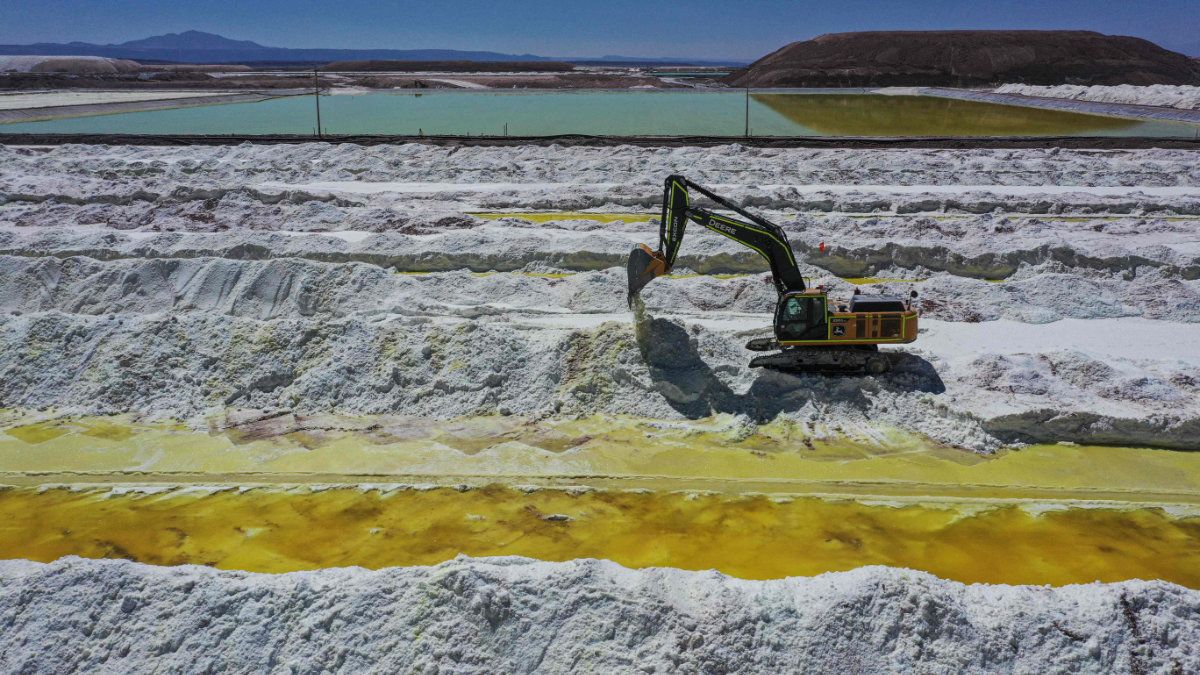 Aerial view of brine ponds and processing areas of the lithium mine of
the Chilean company SQM (Sociedad Quimica Minera) in the Atacama Desert,
Calama, Chile.
Under the plan, all companies wanting to work in Chile’s lithium sector will have to take on the yet-to-be created National Lithium Company as a partner and the “state will have control,” Boric said Thursday. Existing contracts will be honored, but Boric expressed optimism they could find a way to boost state participation in their operations before they expire.
“It’s not a theft of the concessions, it’s a changing of the rules rather than abruptly breaking them,” said Emily Hersh, CEO of Luna Lithium, a lithium exploration company with projects in the Americas.
Two companies currently mine lithium in Chile, Albemarle Corp. of the United States and local company SQM with concessions set to expire in 2043 and 2030, respectively. Shares in the two companies plunged Friday following Boric’s announcement.
Creation of the new company would require approval from Congress, which has already shot down several of Boric’s key initiatives.
Until then, two other state-owned companies, Codelco, the world’s largest copper producer, and state mining company Enami will figure out how the private-public partnerships will operate.
Chile’s president traveled Friday to Antofagasta, some 1,300 kilometers (800 miles) from the Chilean capital to deliver more details about his proposal to local authorities.
“We’re calling for a dialogue and participation process to gather visions and knowledge regarding the new governance of lithium and salt flats,” Boric said.
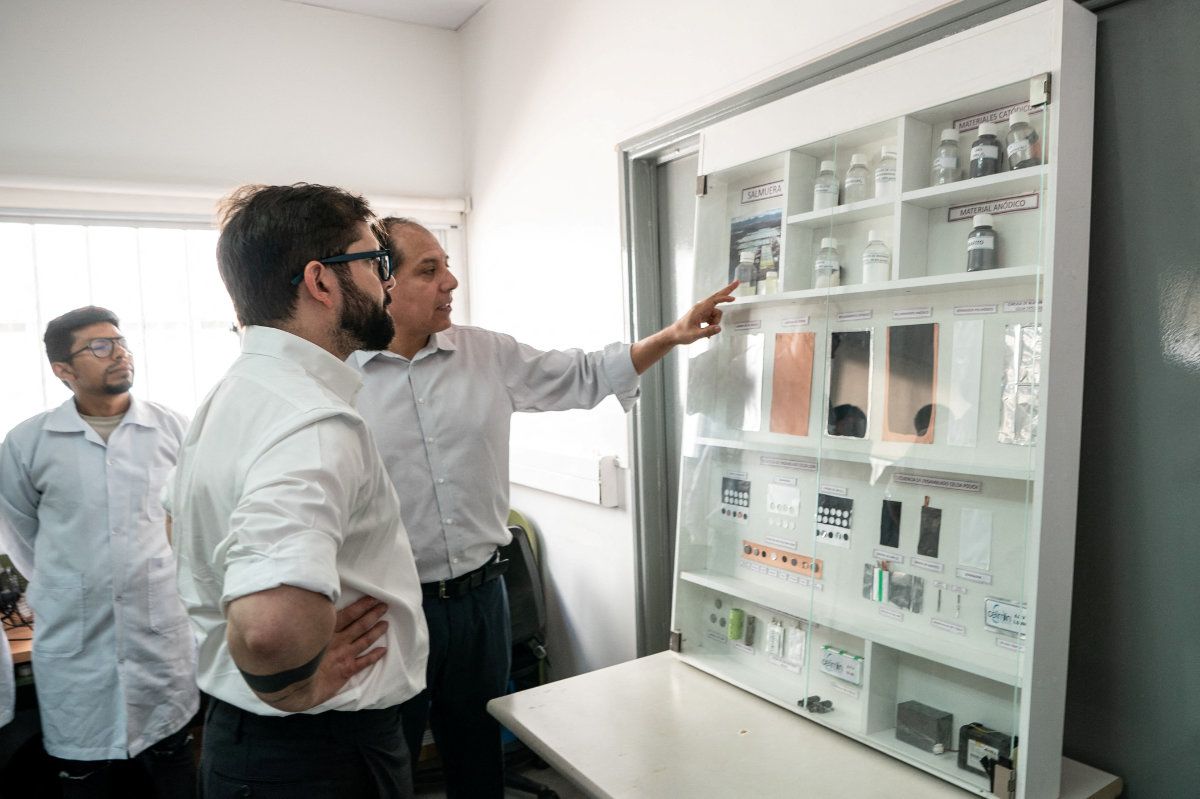 Chile's President Gabriel Boric is shown lithium samples and
applications while visiting Universidad de Antofagasta venue on April
21, 2023.
But Chile’s business sector expressed concern.
“We were quite disconcerted” by Boric’s announcement, said Ricardo Mewes, head of the Confederation of Production and Trade, an association that represents Chile’s business community.
Mewes said business leaders had expected there would be a “great private sector participation” in the lithium sector and now the “state will be the one that will control” the industry.
Several analysts said those concerns may go too far.
Saldías, at the Economist Intelligence Unit, said the proposal “actually provides the private sector more opportunity than the existing framework because … there would be more ability to partake in projects than currently exists.”
He cautioned, though, that environmental restrictions on the way lithium is produced and the push for more consultation with local communities could lead to “an increase in the costs of doing business” in Chile.
Machado at Verisk Maplecroft said that “Chile appears to have gone for a model that is in the middle in which the state has the upper hand, given that it’s a resource that is considered strategic.”
That is a different model from neighboring Bolivia, in which the state has full control of the sector, and Argentina, in which the state simply grants concessions for companies to operate.
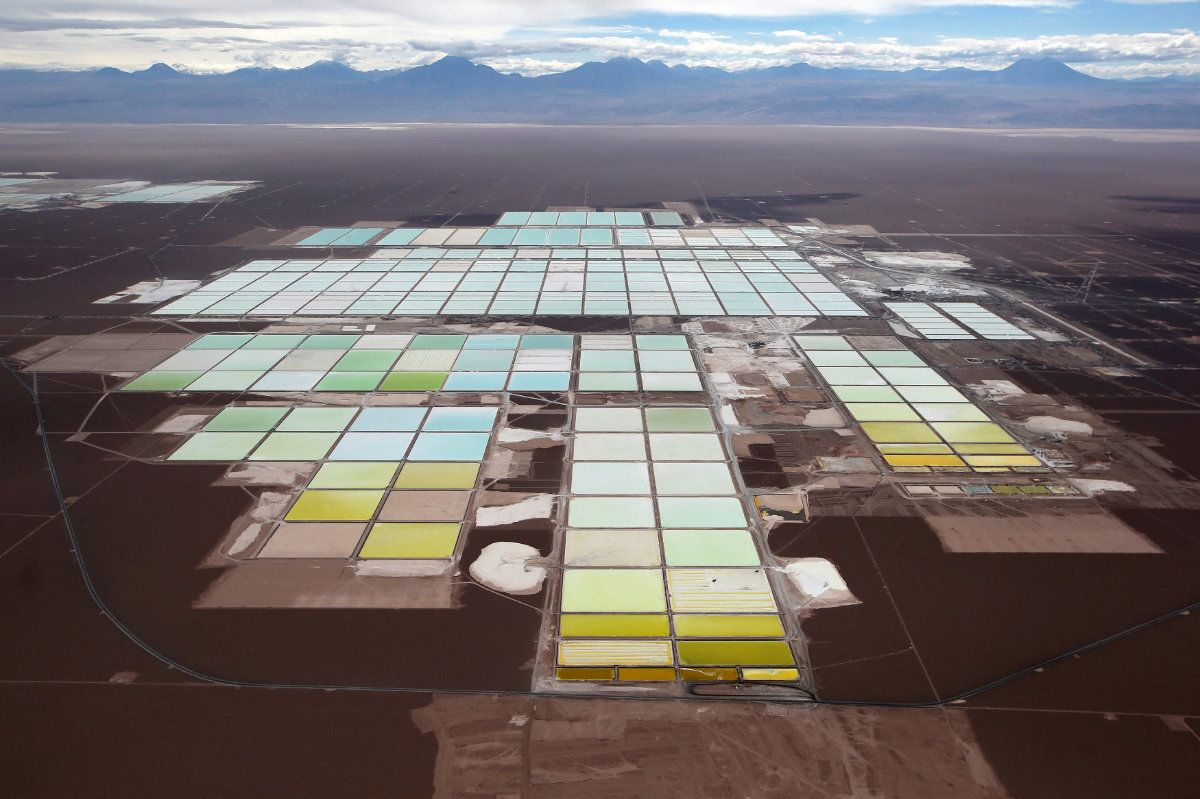 An aerial view shows the brine pools and processing areas of the
Soquimich (SQM) lithium mine on the Atacama salt flat in the Atacama
desert of northern Chile on January 10, 2013.
Finance Minister Mario Marcel called for calm in the business community. He said that under the plan, private companies will contribute capital, technological knowledge and experience, while the state provides ”financing” and at the same time safeguards environmental conditions of the salt flats and the “relationship with the Indigenous peoples” of the affected area.
It remains unclear whether the government would contribute capital in direct proportion to its ownership stake.
Boric also said the government will go beyond just being involved in mining lithium, saying it will promote the development of lithium products with added value as it strives to become the world’s leading lithium producer.
Boric’s plan is in line with the “direction that the world is going,” said Hersh at Luna Lithium.
“The push to have more added value where minerals are produced and to have a grater share of revenues from the mining activities are understandable long term trends,” she said.
For Hersh the real concern isn’t necessarily Chile, a country with a robust mining industry and existing lithium production. She worries about what message this sends to others in the region that are trying to build up nascent industries, considering Mexico already nationalized its lithium sector.
“You kind of have a rush to the party, you can’t be seen as the uncool president who isn’t doing it,” Hersh said.