PanamaTimes

Thursday, Aug 20, 2026

China and NASA are racing to the moon. Side-by-side photos hint NASA has the edge, but China's secrecy makes the race hard to call.

China and NASA are racing to the moon. Side-by-side photos hint NASA has the edge, but China's secrecy makes the race hard to call.

NASA and China each just launched landmark missions in their efforts to put astronauts back on the moon. The spaceflights are very different.

China and NASA are racing toward the moon, each vying for the first human moon landing since 1972. Two recent launches show that NASA may have the edge, but there is no clear winner yet.
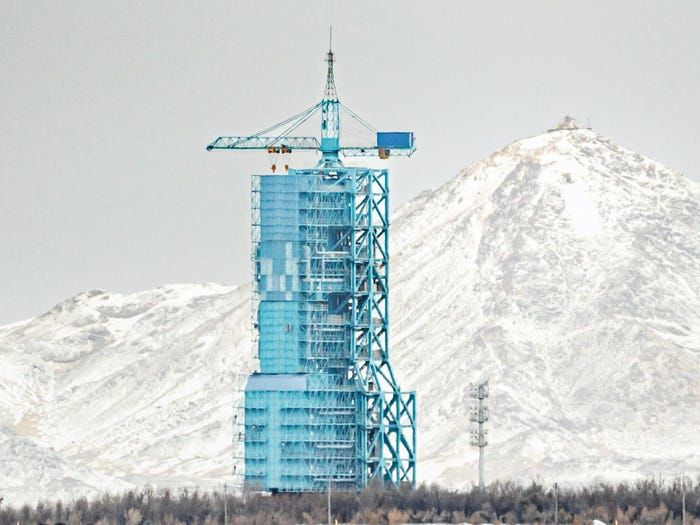
A Long March-2F rocket carrying China's Shenzhou-15 mission stands at Jiuquan Satellite Launch Center in Gansu Province of China.
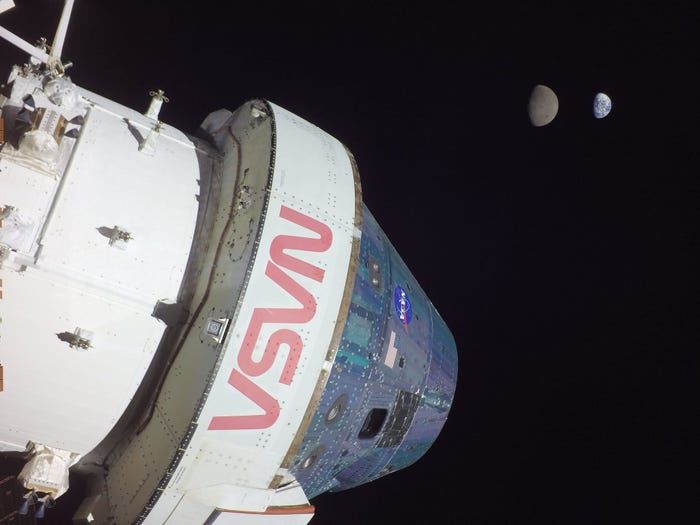
NASA just launched its new lunar rocket for the first time on November 15, carrying the Orion spaceship, designed to ferry astronauts on future moon missions. Now Orion is circling the moon, uncrewed, in a test flight to ensure it can safely take human passengers next time.

Orion, the moon, and Earth as the spaceship reaches its farthest point from our planet.


China, meanwhile, launched a new crew of taikonauts (Chinese astronauts) toward its new space station on Tuesday. The rocket roared through the Gobi Desert skies, past a quarter-full moon looming low on the horizon.

China built the Tiangong station over the last year and a half, and just completed it in October. This launch establishes the beginning of regular rotations of taikonauts staffing the orbiting laboratory.
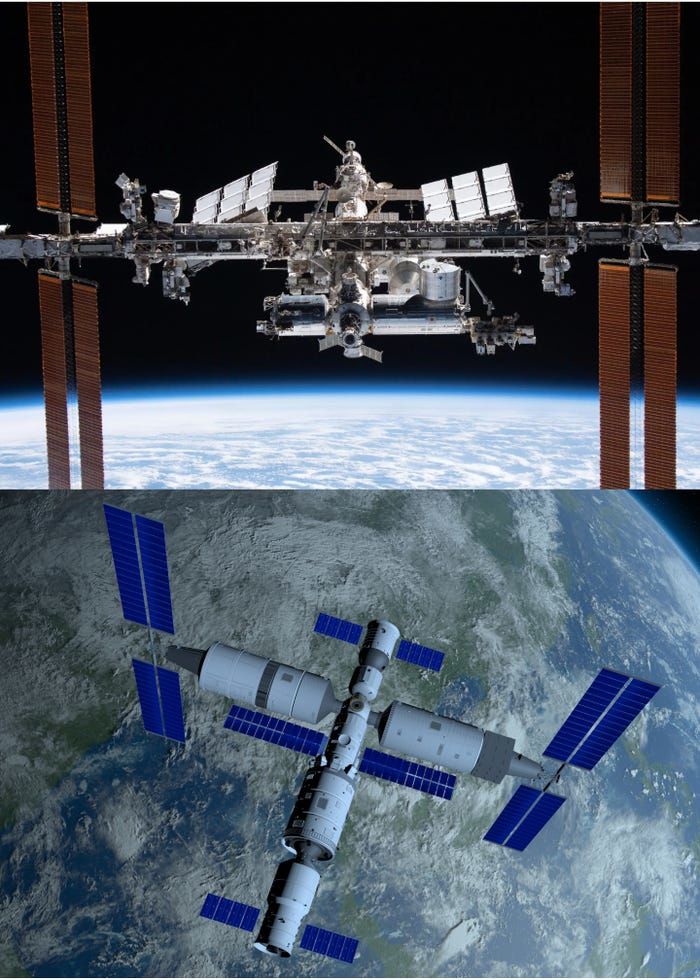
The International Space Station, top, and an illustration of China's Tiangong space station, bottom.


While NASA is testing its moon hardware in lunar orbit, China is stuck firmly in Earth's orbit. Chinese officials say their space station is a crucial step toward the moon, and they're developing the hardware for a lunar landing. With the limited information China has shared about its lunar program, it's hard to assess how close it is behind NASA.


NASA's chief sees China as an 'aggressive competitor' for the moon
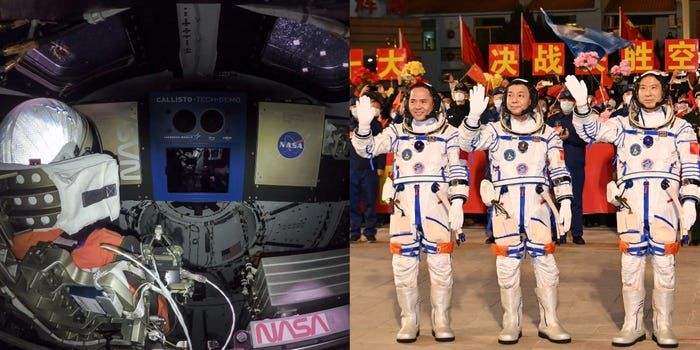
A mannequin is onboard NASA's Orion spaceship, left, while China's launch sends three taikonauts, right, to its space station.


On paper, NASA is aiming to land its astronauts on the moon's south pole by 2025, but many experts and the agency's Inspector General say that timeline is unrealistic.

China could land its own people on the moon by 2030, Chinese lunar program designer and engineer Ye Peijian told state broadcaster CCTV in November 2021, according to Andrew Jones, the leading English-language journalist covering Chinese space programs.

The secrecy of China's lunar program makes it difficult for outside analysts to assess that timeline, but NASA's chief has expressed a sense that the race is tight.

"We have every reason to believe that we have a competitor, a very aggressive competitor, in the Chinese going back to the moon with taikonauts," Bill Nelson, NASA's administrator, said in a press briefing in November 2021.

"It's the position of NASA and, I believe, the United States government that we want to be there first, back on the moon after over a half-century," he added.
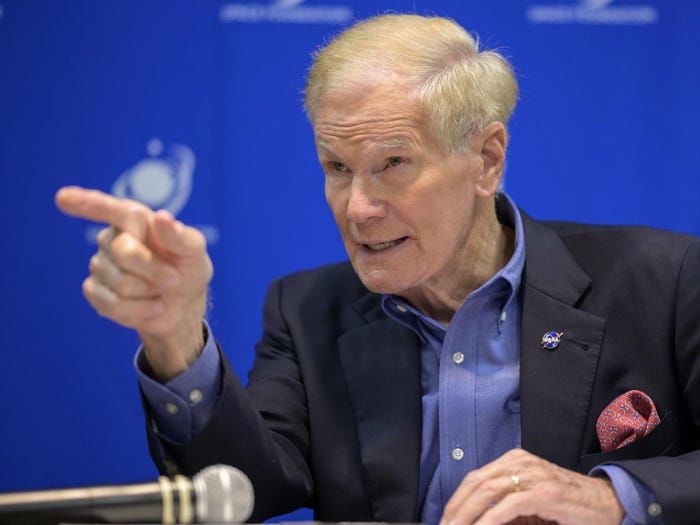
Administrator Bill Nelson said NASA wants to get to the moon before China.


Nelson, other Congress members, and past NASA administrators have previously pointed to China's ambitions in space as cause for concern, and a reason to increase NASA funding.

"The Chinese space program is increasingly capable of landing Chinese taikonauts much earlier than originally expected, but whatever," Nelson said, adding, "We are going to be as aggressive as we can be in a safe and technically feasible way to beat our competitors with boots on the moon."


Base-building on the moon is groundwork for the bigger space race: Mars
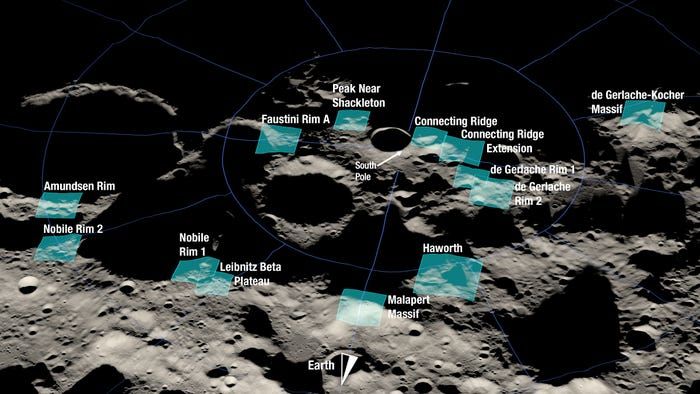
NASA has identified these 13 regions as potential targets for its next human moon landing.


China and NASA have identified some of the same target landing sites on the lunar south pole, Jones reported.

Both have long-term plans to construct permanent stations on the lunar surface, and they're building coalitions to work with other nations there — but not with each other.

The south pole of the moon could become especially valuable real estate, since it seems to hold much of the moon's water. That will be a critical resource for space programs that plan to send astronauts from the moon to Mars — as NASA plans — since they can break the water down into hydrogen and oxygen for rocket fuel.

Mars is the tighter space race, according to Doug Loverro, NASA's former associate administrator.

"If the target is to land on the moon and back, clearly the US is going to beat China. There's no question about it," Loverro told CNN. "But if the target is landing the first humans on Mars, the answer is a lot less certain."

Newsletter

Related Articles

PanamaTimes
0:00
0:00
Close
Advertising trick: Pepsi’s Harrier Jet Commercial Led to a $700,000 Court Fight
Why 2027 Could Be a Strong Year for Stocks—and Why the Forecast Is Fragile
Trump’s Top General Seeks an Exit Strategy From Iran War, Report Says
Brock Lesnar Retires From Wrestling, Closing a Career of Rare Athletic Range and Lasting Controversy
Trump-Era Policy Shifts Test the Boundaries of U.S. Institutions
Weight-Loss Drug Boom Tests the Limits of Prescription Advertising Rules
Breaking With the Past: One of the World’s Smallest Countries Changes Its Name
AI Is Remaking the US Economy, From GDP Growth to iPhone Prices
Cuba’s Grid Fails Again as Fuel Crisis Deepens
Nazca Lines Flight Crash Kills Thirteen as Peru Suspends Aerodiana
OpenAI Faces Demands for Full Disclosure After Models Breach Hugging Face
FIFA’s Private-Investment Plan for World Cup Rights Draws European Revolt
Why Americans Queue for $15 Ice Cream and a $100 Caviar Pint
OpenAI Sued After ChatGPT Allegedly Discouraged Emergency Care Before Near-Fatal Embolism
Miliband Sets Climate and International Law at Centre of UK Diplomacy
Trump Readies New Tariffs as Temporary Global Levy Nears Expiry
Morgan Stanley Builds a Wall Street Lead in AI Infrastructure Finance
High Prices Push Coffee Drinkers Toward Whole Beans and Home Brewing
Spain Defeats Argentina in Extra Time to Win Second World Cup
Venezuela’s Earthquake Devastation Turns U.S. Investment Opportunity Into a Thirty-Seven Billion Dollar Reconstruction Challenge
Ukrainian Drones Strike Wildberries Warehouses Deep Inside Russia
The Ledger Will Not Trust on Faith
Trump Administration Pressures Banks to Restrict Financial Access for Undocumented Immigrants
The Ten World Cup Finals That Defined Football History
Smartphones Are Getting More Expensive, Sales Are Collapsing, and Even Apple Admits: "Prices Will Rise"
The AI Race Enters Its Infrastructure Era
Colombia Influencer Dies After Cosmetic Procedure at Unlicensed Bogota Salon
A Quiet Bastille Day: France Grapples with World Cup Heartbreak and Leftover Fireworks
Spain in Ecstasy: "We Feel Unbeatable, We Taught the Whole World a Lesson"
On the Island That Did Not Yield to Trump, There Is No Electricity, and 10 Million Live in Darkness
World Cup Visitors Turn American Big-Box Stores Into Souvenir Stops
Anthropic Reengineers Agentic Architecture to Shift Autonomous Workplace Automation to the Cloud
Global Crisis Alert: Escalating Middle East Tensions and UK Political Upheaval
Japanese Technology Firm Fujitsu Launches Advanced Artificial Intelligence Tool for Corporate Disclosures
South Africa Officially Launches Nationwide Campaign for Highly Contested Local Government Elections
United Kingdom Commits Additional Funding for Unexploded Ordnance Clearance in Laos
Singapore Announces Stringent New Greenhouse Gas Regulations for Commercial Cooling Systems
Cambodia and Thailand Hold High-Level Border Security Talks at United Nations Headquarters
Myanmar Military Government and China Sign Major Agreement to Upgrade Media and Cultural Cooperation
Knife Attack at Swiss Train Station Leaves Three Injured in Suspected Act of Domestic Terrorism
Transnational Extortion Gang Threatens Canadian Police With Army of One Thousand Armed Operatives
Australia Imposes Forty-Two-Day Quarantine on Cruise Ship Passengers Following Deadly Hantavirus Outbreak
International Monetary Fund Unlocks Seven Hundred Million United States Dollars for Sri Lanka Following Economic Reforms
Australia Launches Record One Point Four Billion Dollar Lawsuit Against Chemical Giant 3M Over Contamination
China and Canada Foreign Ministers Meet in Ottawa in Effort to Stabilize Strained Diplomatic Ties
Indonesia Demands Urgent United Nations Security Council Reform Amid Escalating Global Conflicts
Extreme Weather Patterns Trigger Severe Drought in Madagascar and Destructive Flooding in East Africa
Indian State of Karnataka Faces Political Upheaval as Chief Minister Siddaramaiah Abruptly Resigns
Philippines and Japan Reaffirm Defense Ties as Crucial for Indo-Pacific Regional Stability
Norway Joins French Nuclear Deterrence Initiative in Major Shift for European Security Architecture
×