

China faces 'difficult set of choices' as it seeks to prevent its companies being delisted in the US
It was one of the few wrinkles during what was an exceptional year for Wall Street.
Just days after the Chinese ride-hailing app Didi made its stock market debut, in what was the biggest flotation of a Chinese company since Alibaba in 2014, Beijing launched a crackdown on its tech sector.
Shares of Didi and other Chinese tech companies fell sharply and investor confidence was severely rattled.
Amid a general deterioration in Sino-US relations, tensions flared in particular over a law passed by US Congress in May 2020, under which the Securities & Exchange Commission (SEC), the top US financial regulator, would be allowed to delist Chinese companies from US exchanges if American regulators were not allowed to review the audits of such companies for three consecutive years.
The legislation, which was written by both Republican and Democrat senators, was passed following a series of accounting scandals involving Chinese companies, most famously Luckin Coffee, which was forced to delist from the Nasdaq in April 2020 after admitting it had fabricated more than $300m worth of sales.
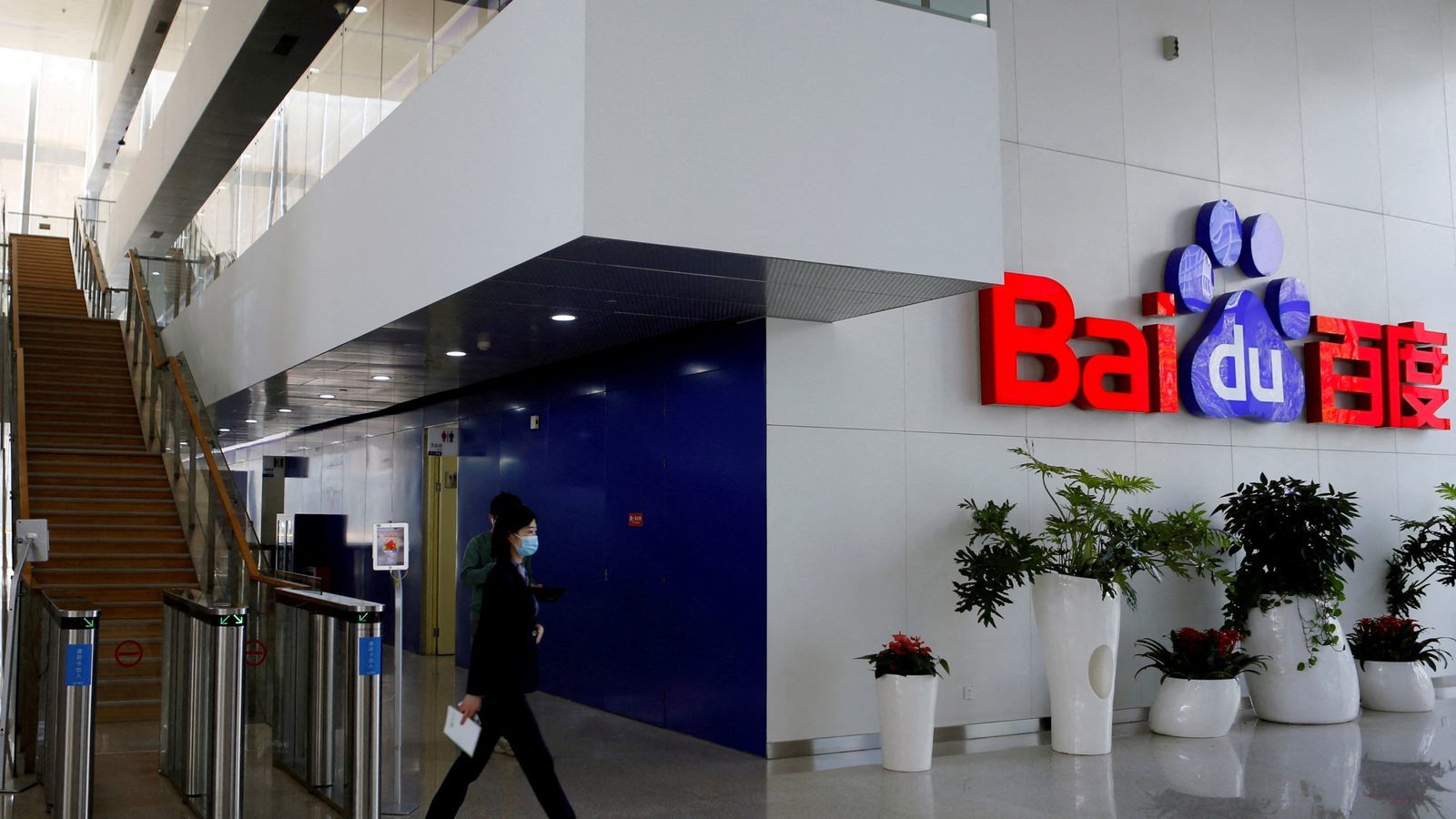 There is likely to be particular sensitivity around Chinese tech companies like Baidu
The law casts doubt on the ability of Chinese companies to raise as much money by listing on US stock exchanges as they have in the past. A number of big US-listed Chinese names, including Alibaba, Weibo and Baidu, responded by taking a dual listing in Hong Kong.
Forcing such companies to delist would also have huge ramifications for investors. Some 273 Chinese companies are listed in the US and they are worth a total of more than $2trn.
The SEC upped the ante last month by publishing a list of 11 Chinese companies - among them big names like Baidu, BeiGene and Yum China - that it said were in danger of being de-listed under the new law. Shares in all of the companies named fell on the news, with Baidu, the internet giant, coming off by 8%. BeiGene, a biotech company working on cancer treatments, saw its shares fall by a fifth.
But now peace is threatening to break out.
On Thursday, the China Securities Regulatory Commission (CSRC) said it had held several rounds of meetings with US regulators and that both sides had a "willingness" to solve the row. A day later, it told CNBC it had convened a meeting last week with some accounting firms and had told them to consider preparing for joint inspections.
It followed this up on Saturday by pledging to change confidentiality laws preventing its companies listed overseas from providing financial information to foreign regulators. The compromise is expected to do away with Beijing's current insistence that Chinese companies listed overseas can only be inspected on the ground by Chinese regulators.
It suggested this could include joint inspections by both Chinese and foreign regulators - provided companies took care not to disclose any state secrets to which they were party to the latter.
The news was enough to spark a rally in shares in Hong Kong on Monday and is expected to do the same when Shanghai reopens after a public holiday later on Monday.
Alvin Tan, an analyst with Royal Bank of Canada in Hong Kong, said: "[It] represents a major concession on the long-running dispute."
Janet Mui, head of market analysis at the wealth management firm Brewin Dolphin, added: "This lowers delisting risk, which is a key concern for investors."
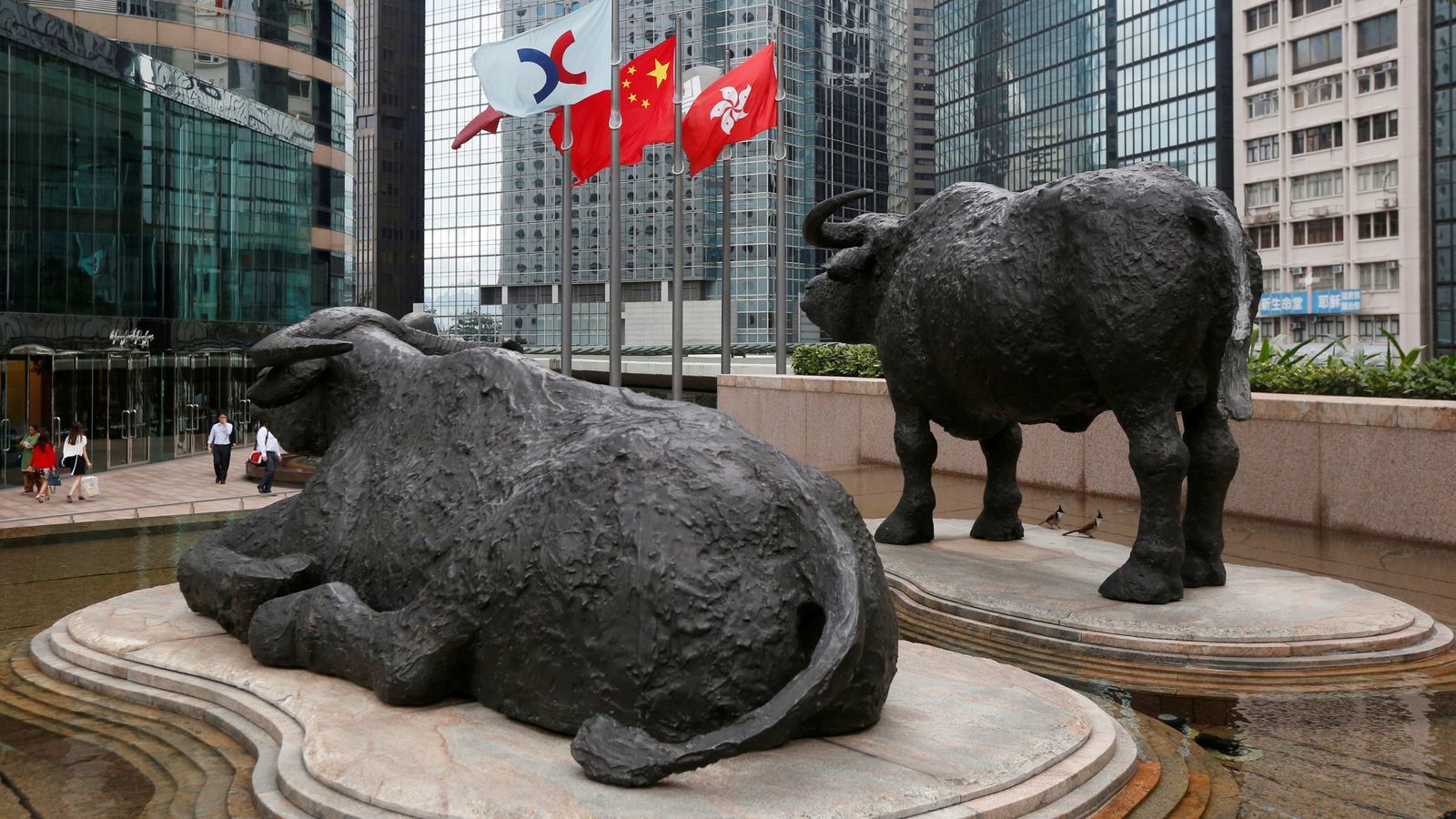 News of a possible compromise sparked a rally on the Hong Kong Stock Exchange
The big question is whether the compromise offered by the CSRC will be enough to satisfy its US counterpart. It is, for example, quite clear from what it has offered that Beijing is anxious about the prospect of US regulators unearthing state secrets as they poke around in the affairs of US-listed Chinese companies. There is likely to be particular sensitivity around Chinese tech companies like Baidu.
That may not be enough to satisfy the SEC if it wants American regulators to have full and unfettered access to the audits of US-listed Chinese companies.
Gary Gensler, the SEC chairman, admitted as much when, in an interview at the weekend, he said: "It's up to the Chinese authorities and, frankly, it could be a difficult set of choices for them."
He noted that audits seldom contain confidential state secrets.
So there is still plenty that can go wrong here. The Chinese will argue that US-listed Chinese companies must not be forced to give up state secrets. The US will argue that its regulators cannot have full confidence in the audits of US-listed Chinese companies if parts of those audits are redacted.
It may all boil down to whether both sides can agree on whether some material can be withheld and what kind of material is deemed sufficiently sensitive to be withheld.
A compromise would be in the interests of both investors and the companies themselves. In the meantime, though, the only winner would appear to be the Hong Kong Stock Exchange.