PanamaTimes

Friday, Sep 04, 2026

CO2 pollution from fossil fuels to hit all-time high this year

CO2 pollution from fossil fuels to hit all-time high this year

Aviation industry identified as a leading contributor to the rise in emissions as it recovers from the COVID-19 pandemic.

Carbon dioxide emissions from fossil fuels, the main driver of climate change, are on track to rise one percent in 2022 to reach an all-time high, according to scientists.

The Global Carbon Budget report, released on Friday during the United Nations COP27 climate summit, laid bare the gap between the promises governments, companies and investors have made to cut planet-warming emissions in future years, and their actions.

Emissions from oil, fuelled by the rebound in aviation after the COVID-19 pandemic, will probably rise more than two percent compared with last year, while emissions from coal – thought by some to have peaked in 2014 – will hit a new record.

“Oil is more driven by the recovery from COVID, and coal and gas are more driven by events in Ukraine,” Glen Peters, research director at CICERO climate research institute in Norway, told the AFP news agency.

Global CO2 emissions from all sources, including deforestation, will reach 40.6 billion tonnes, just below the record level in 2019, the report by more than 100 scientists showed. About 90 percent of that is the result of burning fossil fuels.

The data suggests the rise is consistent with underlying trends and deeply worrying, said Peters, a co-author of the study.

“Emissions are now five percent above what they were when the Paris Agreement was signed” in 2015, he noted.

“You have to ask: When are they going to go down?”


Aviation has rebounded from the COVID-19 pandemic, with the industry association saying passenger traffic reached 74 percent of pre-pandemic levels in September

The new figures show just how dauntingly hard it will be to reduce emissions fast enough to meet the Paris goal of capping global warming at 1.5 degrees Celsius (34.7 degrees Fahrenheit) above preindustrial levels.

Heating beyond that threshold, scientists warn, risks triggering dangerous tipping points in the climate system.

Barely 1.2C (34.2F) of warming to date has already unleashed more extreme weather, with heat waves, drought, flooding and tropical storms made more destructive by rising seas.

The report showed emissions this year are set to rise by 1.5 percent in the United States and six percent in India, the world’s second and third-biggest emitters, respectively.

CO2 output from China, the world’s biggest polluter, is likely to fall by 0.9 percent as a result of Beijing’s zero-COVID strategy, which has limited economic growth. And while Russia’s invasion of Ukraine has prompted a scramble for alternate sources of energy, including carbon-intensive coal, European emissions also decreased slightly.


‘Deeply depressing’


To achieve the Paris target, global greenhouse emissions must drop 45 percent by 2030 and be cut to net zero by mid-century, with any residual emissions compensated by removing CO2 from the atmosphere.

To be on track for a net-zero world, emissions would have to fall by seven percent annually over the next eight years.

Even in 2020, when much of the world was locked down because of the pandemic, emissions fell by only six percent.
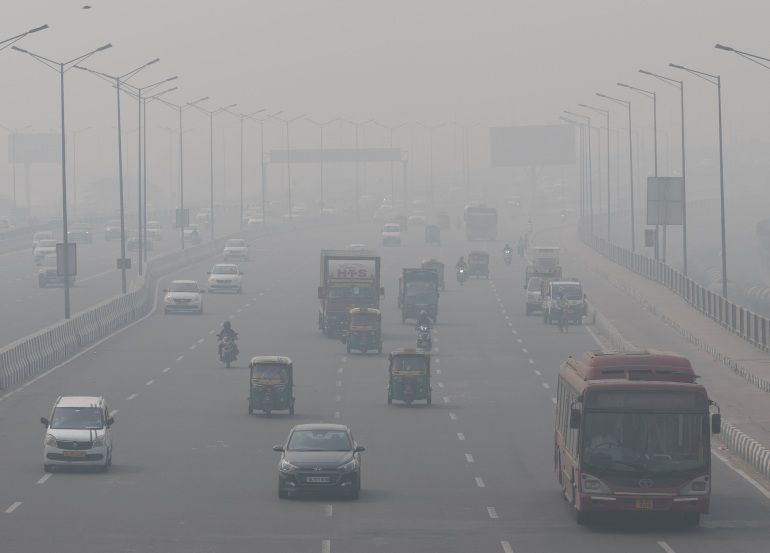
New Delhi is one of the world’s most polluted cities with dense smog covering the city earlier this month


The annual update also revealed that the ability of oceans, forests and soil to continue soaking up more than half of CO2 emissions has slowed.

“These ‘sinks’ are weaker than they would be if not for the impacts of a changing climate,” said co-author Corinne Le Quere, a professor at the University of East Anglia.

Scientists not involved in the findings said they were grim.

“Global Carbon Budget for 2022 is deeply depressing,” Mark Maslin, a professor of climatology at University College London, told AFP.

“To have any chance of staying below the international agreed 1.5C global warming target we need to have large annual cuts in emissions – which there is no sign of.”

Newsletter

Related Articles

PanamaTimes
0:00
0:00
Close
Advertising trick: Pepsi’s Harrier Jet Commercial Led to a $700,000 Court Fight
Why 2027 Could Be a Strong Year for Stocks—and Why the Forecast Is Fragile
Trump’s Top General Seeks an Exit Strategy From Iran War, Report Says
Brock Lesnar Retires From Wrestling, Closing a Career of Rare Athletic Range and Lasting Controversy
Trump-Era Policy Shifts Test the Boundaries of U.S. Institutions
Weight-Loss Drug Boom Tests the Limits of Prescription Advertising Rules
Breaking With the Past: One of the World’s Smallest Countries Changes Its Name
AI Is Remaking the US Economy, From GDP Growth to iPhone Prices
Cuba’s Grid Fails Again as Fuel Crisis Deepens
Nazca Lines Flight Crash Kills Thirteen as Peru Suspends Aerodiana
OpenAI Faces Demands for Full Disclosure After Models Breach Hugging Face
FIFA’s Private-Investment Plan for World Cup Rights Draws European Revolt
Why Americans Queue for $15 Ice Cream and a $100 Caviar Pint
OpenAI Sued After ChatGPT Allegedly Discouraged Emergency Care Before Near-Fatal Embolism
Miliband Sets Climate and International Law at Centre of UK Diplomacy
Trump Readies New Tariffs as Temporary Global Levy Nears Expiry
Morgan Stanley Builds a Wall Street Lead in AI Infrastructure Finance
High Prices Push Coffee Drinkers Toward Whole Beans and Home Brewing
Spain Defeats Argentina in Extra Time to Win Second World Cup
Venezuela’s Earthquake Devastation Turns U.S. Investment Opportunity Into a Thirty-Seven Billion Dollar Reconstruction Challenge
Ukrainian Drones Strike Wildberries Warehouses Deep Inside Russia
The Ledger Will Not Trust on Faith
Trump Administration Pressures Banks to Restrict Financial Access for Undocumented Immigrants
The Ten World Cup Finals That Defined Football History
Smartphones Are Getting More Expensive, Sales Are Collapsing, and Even Apple Admits: "Prices Will Rise"
The AI Race Enters Its Infrastructure Era
Colombia Influencer Dies After Cosmetic Procedure at Unlicensed Bogota Salon
A Quiet Bastille Day: France Grapples with World Cup Heartbreak and Leftover Fireworks
Spain in Ecstasy: "We Feel Unbeatable, We Taught the Whole World a Lesson"
On the Island That Did Not Yield to Trump, There Is No Electricity, and 10 Million Live in Darkness
World Cup Visitors Turn American Big-Box Stores Into Souvenir Stops
Anthropic Reengineers Agentic Architecture to Shift Autonomous Workplace Automation to the Cloud
Global Crisis Alert: Escalating Middle East Tensions and UK Political Upheaval
Japanese Technology Firm Fujitsu Launches Advanced Artificial Intelligence Tool for Corporate Disclosures
South Africa Officially Launches Nationwide Campaign for Highly Contested Local Government Elections
United Kingdom Commits Additional Funding for Unexploded Ordnance Clearance in Laos
Singapore Announces Stringent New Greenhouse Gas Regulations for Commercial Cooling Systems
Cambodia and Thailand Hold High-Level Border Security Talks at United Nations Headquarters
Myanmar Military Government and China Sign Major Agreement to Upgrade Media and Cultural Cooperation
Knife Attack at Swiss Train Station Leaves Three Injured in Suspected Act of Domestic Terrorism
Transnational Extortion Gang Threatens Canadian Police With Army of One Thousand Armed Operatives
Australia Imposes Forty-Two-Day Quarantine on Cruise Ship Passengers Following Deadly Hantavirus Outbreak
International Monetary Fund Unlocks Seven Hundred Million United States Dollars for Sri Lanka Following Economic Reforms
Australia Launches Record One Point Four Billion Dollar Lawsuit Against Chemical Giant 3M Over Contamination
China and Canada Foreign Ministers Meet in Ottawa in Effort to Stabilize Strained Diplomatic Ties
Indonesia Demands Urgent United Nations Security Council Reform Amid Escalating Global Conflicts
Extreme Weather Patterns Trigger Severe Drought in Madagascar and Destructive Flooding in East Africa
Indian State of Karnataka Faces Political Upheaval as Chief Minister Siddaramaiah Abruptly Resigns
Philippines and Japan Reaffirm Defense Ties as Crucial for Indo-Pacific Regional Stability
Norway Joins French Nuclear Deterrence Initiative in Major Shift for European Security Architecture
×