
Apple’s ‘Skinny’ iPhone Air Falls Flat as Early Sales and User Feedback Disappoint
Ultra-thin design fails to offset performance limits, high pricing, and growing user dissatisfaction.
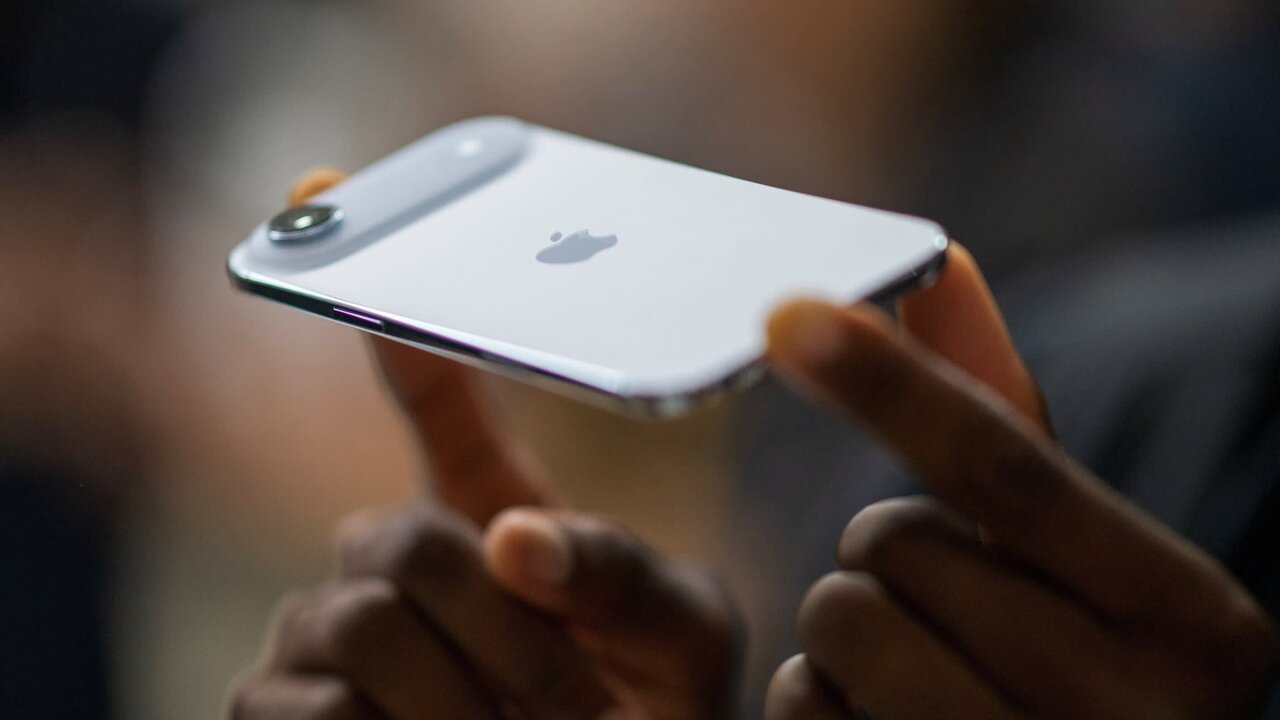
Apple’s iPhone Air, promoted as the company’s thinnest and most lightweight smartphone, has entered the global market to a notably weak reception.
Despite strong pre-launch attention, early data from retailers and supply-chain partners show slower-than-expected demand, prompting Apple to scale back planned production just weeks after launch.
Analysts now consider the model a rare miscalculation in Apple’s tightly controlled product strategy.
The device—marketed as a breakthrough ‘skinny’ iPhone—has struggled to convince users that its ultra-thin profile compensates for its reduced capabilities.
Consumer feedback highlights several core complaints: the iPhone Air is not significantly thinner than competitive Android models released over the past year; it supports only a single physical SIM with limited eSIM flexibility; the camera system is substantially weaker than similarly priced devices; battery endurance is modest; and the overall performance-to-price ratio is perceived as poor.
Across Asia and Europe, where multi-SIM capabilities and battery longevity are central purchasing factors, users have expressed pointed frustration.
Many note that competing devices—often half the price of the iPhone Air—offer dual-SIM or triple-SIM options, larger batteries, faster charging, higher-resolution cameras with optical zoom, and lighter builds despite having more powerful hardware.
Multiple reviewers describe Apple’s design as elegant but technologically behind the curve.
The criticism extends beyond hardware.
Some long-time users argue that Apple’s broader value proposition is weakening: innovation feels incremental, user-experience improvements slower, and the company’s privacy positioning increasingly questioned amid dependence on cloud-based AI features.
Others say the gaps in daily usability—SIM restrictions, limited battery life, basic camera features—make the device feel like a regression rather than a refinement.
Early sales data reflect this sentiment.
Retailers in several major markets report that while the flagship iPhone 17 Pro line continues to perform strongly, the iPhone Air is converting poorly and often loses out to mid-range competitors.
Multiple supply-chain sources indicate that Apple has reduced iPhone Air production significantly, redirecting manufacturing capacity toward better-selling models.
For Apple, the iPhone Air was intended to revive excitement with a bold design shift.
Instead, its launch highlights a deeper challenge: design alone can no longer guarantee market dominance in a smartphone landscape where performance, durability, versatility and value are equally decisive.
The muted reception raises questions about whether Apple’s ultra-slim experiment will survive beyond this generation—and whether future iterations can reconcile style with substance in a fiercely competitive market.
Despite strong pre-launch attention, early data from retailers and supply-chain partners show slower-than-expected demand, prompting Apple to scale back planned production just weeks after launch.
Analysts now consider the model a rare miscalculation in Apple’s tightly controlled product strategy.
The device—marketed as a breakthrough ‘skinny’ iPhone—has struggled to convince users that its ultra-thin profile compensates for its reduced capabilities.
Consumer feedback highlights several core complaints: the iPhone Air is not significantly thinner than competitive Android models released over the past year; it supports only a single physical SIM with limited eSIM flexibility; the camera system is substantially weaker than similarly priced devices; battery endurance is modest; and the overall performance-to-price ratio is perceived as poor.
Across Asia and Europe, where multi-SIM capabilities and battery longevity are central purchasing factors, users have expressed pointed frustration.
Many note that competing devices—often half the price of the iPhone Air—offer dual-SIM or triple-SIM options, larger batteries, faster charging, higher-resolution cameras with optical zoom, and lighter builds despite having more powerful hardware.
Multiple reviewers describe Apple’s design as elegant but technologically behind the curve.
The criticism extends beyond hardware.
Some long-time users argue that Apple’s broader value proposition is weakening: innovation feels incremental, user-experience improvements slower, and the company’s privacy positioning increasingly questioned amid dependence on cloud-based AI features.
Others say the gaps in daily usability—SIM restrictions, limited battery life, basic camera features—make the device feel like a regression rather than a refinement.
Early sales data reflect this sentiment.
Retailers in several major markets report that while the flagship iPhone 17 Pro line continues to perform strongly, the iPhone Air is converting poorly and often loses out to mid-range competitors.
Multiple supply-chain sources indicate that Apple has reduced iPhone Air production significantly, redirecting manufacturing capacity toward better-selling models.
For Apple, the iPhone Air was intended to revive excitement with a bold design shift.
Instead, its launch highlights a deeper challenge: design alone can no longer guarantee market dominance in a smartphone landscape where performance, durability, versatility and value are equally decisive.
The muted reception raises questions about whether Apple’s ultra-slim experiment will survive beyond this generation—and whether future iterations can reconcile style with substance in a fiercely competitive market.