
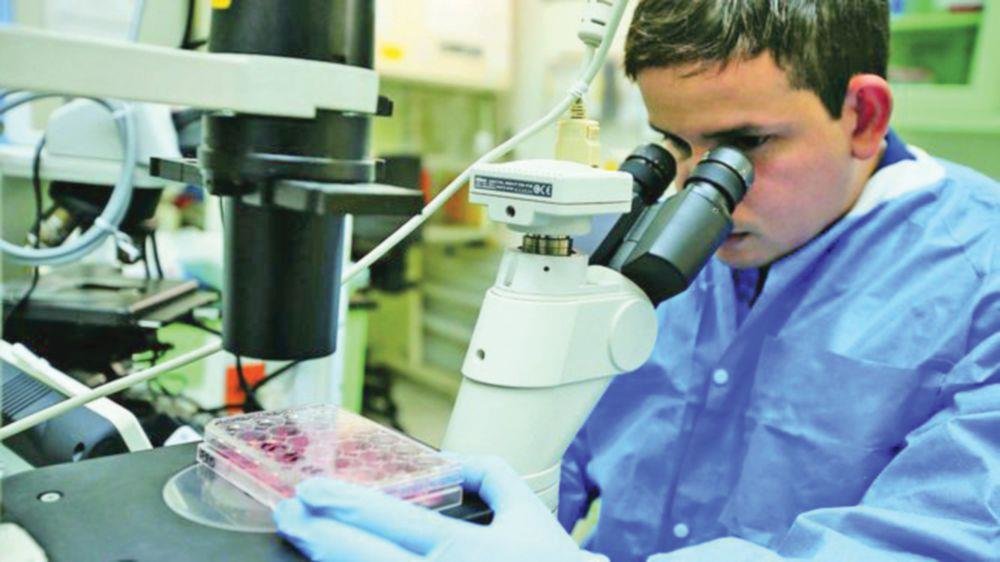
Coronavirus arrived in Panama between February and March
The sequencing of the SARS-CoV-2 virus from 120 patient samples has allowed them to obtain 110 complete genomes, which reveal more about the origin of the virus in the country.
A team of scientists from the Virology and Biotechnology, and Genomics and Proteomics departments of the Gorgas Commemorative Institute for Health Studies (Icges) began to obtain answers about the lineage or origin of the SARS-CoV-2 virus, as well as its arrival to the country.
Genetic sequencing of patient samples obtained over three weeks (from March 9 to 30) has established that patient zero was in Panama in February, but they have not yet been able to identify him or her.
Alexander Martínez, head of the Genomics and Proteomics department, revealed that they have sequenced the virus from 120 patient samples, which has allowed them to obtain 110 complete genomes. In the rest of the samples it was not possible to sequence the complete genome, only partial. But the work does not end there. They continue to carry out analyzes with a high-generation system.
The data obtained in the studies have established that there are 8 lineages (strains) that have an import origin and a lineage of local origin.
In this sense, Martínez explained that the A2 strain (Spain) that arrived in the country mutated and fixed a transmission among the population, possibly originating the local A2 PAN strain.
He added that the preliminary results, with statistical probabilities of 95%, allow establishing that the local lineage A2 PAN could have arrived between February 9 and March 4.
Martínez stated that, according to the results, the imported viruses all arrived simultaneously after Carnival, with travelers visiting countries where there was active infection with the new coronavirus.
Researchers continue to sequence the virus to learn more about transmission among the Panamanian population.
Gorgas scientists decoding the virus
Since the first case was reported in the country, on March 9, scientists at the Gorgas Commemorative Institute for Health Studies (Icges) have not only been conducting laboratory tests to confirm new daily cases of Covid-19, but continue to decipher the SARS-CoV-2 virus genome.
Genome sequence is important for four reasons: it provides independent information on the origins of the epidemic and new lineages (strains); it explains the transmission source of an infected person; provides data on the epidemic dynamics of past diseases; and sheds light on the adaptation of the pathogen in the population.
Scientific Cafe of the National Secretariat of Science, Technology and Innovation, Alexander Martínez, head of the Department of Research in Genomics and Proteomics, explained that the sequence of the virus genome provides information on the source of infection, because the specific virus that affected the patient is analyzed.
It also allows, after locating patient 1 and 2, to sequence both viruses and obtain similar results, to establish a link between the patients; and look for mutations that make the virus better transmitted in the population, the scientist explained.
For these reasons, this Gorgas team works on the sequencing of the virus and already has the first answers about the lineage and arrival of the virus in the country, among other details.
110 complete genomes
Alexander Martínez explained that they classified the patients in the following way: if they knew how they had been infected, if they had a history of a trip, if they were a worker in the first line of the pandemic response, a relative of a positive contact, or if they had a history of travel to a site with an active outbreak of the SARS-CoV-2 virus.
The data obtained in the studies have allowed the identification of 8 strains that have an import origin (Spain, Italy and the United States) and one possibly of local origin, that is, that arrived, established and mutated by fixing transmission chains effective in the population.
After establishing the origin of the lineage, the Genomics and Proteomics team also studied when the virus arrived in Panama. They analyzed the most common ancestor of strains A1 (United States), A2 (Spain), A2 PAN (local origin and probably descendant of A2), B1 (Italy), and other strains. It is an analysis, in which a date is placed to the sequencing and specialized software identifies the ancestor nodes.
The preliminary results, with statistical probabilities of 95%, allow us to establish that the local lineage A2 PAN could have arrived between February 9 and March 4.
Other analyzes also showed that the A1 strain (United States) arrived between February 6 and February 26, that is, a little before A2 PAN; and B1 (Italy), between January 21 and March 2.
Martínez said that, according to the results, patient zero was already in Panama in February, and that the imported viruses all arrived simultaneously after Carnival with travelers who visited countries where there was active infection with the new coronavirus.
However, he clarified that they continue to decipher the virus and seek more answers about its presence and behavior in the country.
Virus isolation
Sandra López Vergés, head of the Icges Department of Virology and Biotechnology Research, said that they work on the daily diagnosis of new cases of Covid-19 to find and isolate them to be able to decrease the transmission of the virus.
They also work on various techniques that will be very useful for different fields of research. For the moment, she said, the results obtained in the sequencing, phylogenetics and analysis of the virus are very interesting.
The scientist indicated that this virus is from the coronaviridae family, which, for many years after being identified, was not paid attention to because most of these viruses are of animal origin, and medical virology did not focus on them.
Few viruses in this coronaviridae family, which can affect humans cause intestinal or respiratory infections.
In the 1960s and 1970s, the first respiratory coronaviruses that could infect humans were identified, and the four that are endemic worldwide and our country cause the common cold: 229E, OC43, NL63, and HKU1.
Coronaviruses infect animals (mammals), especially alphacoronaviruses (229E and NL63) and betacoronaviruses (OC43, HKU1 MERS, SARS-CoV and SARS-CoV-2), and that is where the different emerging viruses come from. These viruses have now managed to infect humans, explained López Vergés.
She noted that all the emerging viruses that passed from animal to human have managed to adapt in such a way that human-to-human transmission is efficient. The only one that failed was MERS, which is the deadliest.