

Covid: Why are so many people catching it again?
That's not the case any more, especially since the Omicron variant emerged in late November 2021.
Why are more people catching Covid again?
Part of it is Omicron itself - a variant that's better at sneaking past defences built on old infections.
Part of it is a numbers game. So many of us have already been infected at some point, that a rising proportion of new infections are a second bout.
But getting Covid twice in a short space of time is still pretty unlikely, even with the latest version of Omicron which is widespread in the UK.
And for most people a second infection is less likely to make them very ill.
How likely are you to catch Covid twice?
Eventually, pretty likely - immunity fades and coronaviruses evolve.
Most people can expect to catch the other coronaviruses, such as those which cause common cold symptoms, many times in their life.
But early in the pandemic, that didn't seem to be the case with Covid.
Fewer than 1% of all cases recorded in the UK before November 2021 were labelled as reinfections.
But then Omicron took over. This looks very different to the versions of coronavirus that we saw before.
Its differences give it a better chance of sneaking past the body's early defences, which were based on exposure to previous Covid infections.
And so the rates of reinfection have been about 10 times higher this year compared with rates seen earlier in the pandemic.
How is the new version of Omicron different?
This new "Spring" Omicron - known as BA.2 - has driven UK infections back up to record levels.
The Office for National Statistics said that about one in 16 people across the UK had Covid in the week ending 19 March.
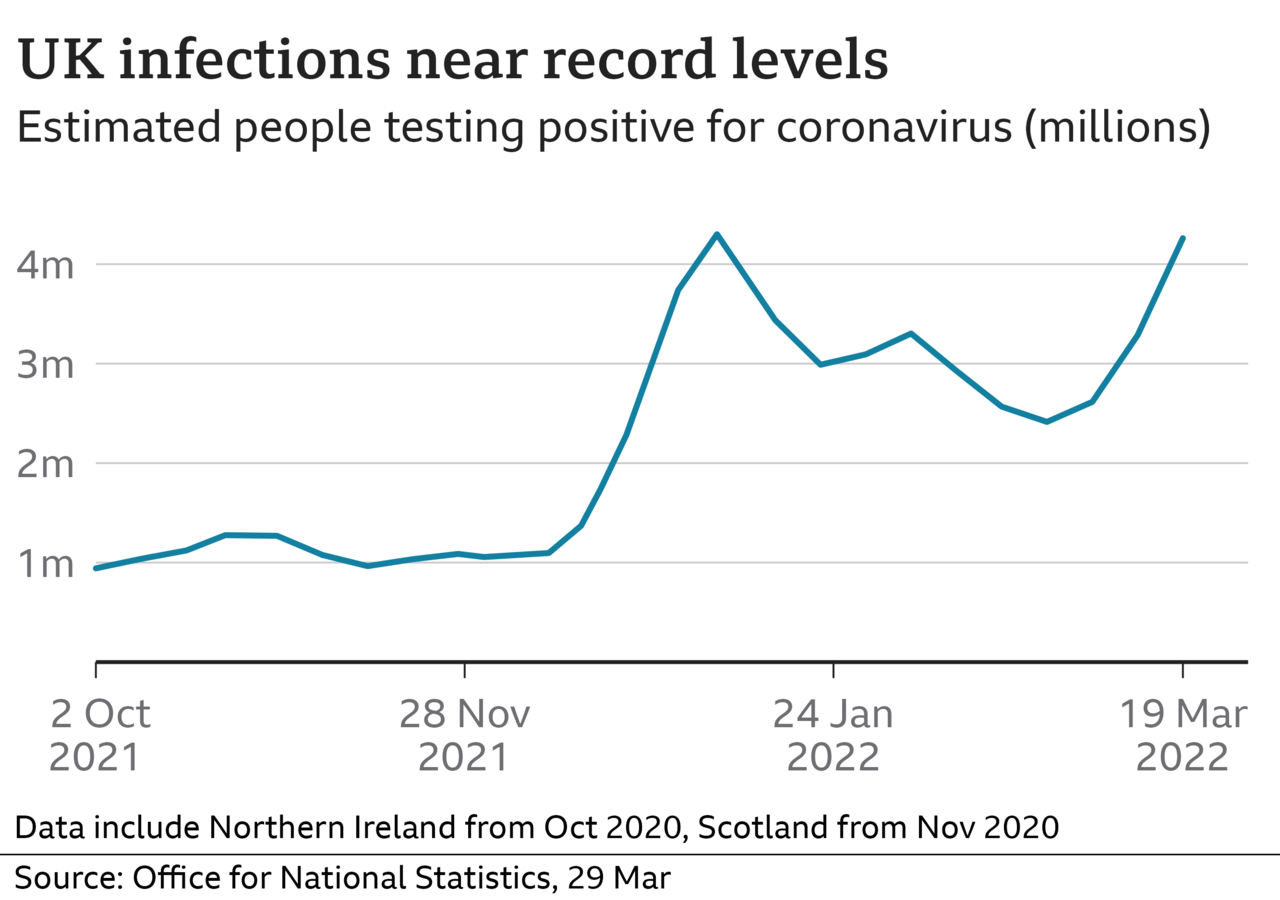
It is similar to - but even more infectious than - the version that came before, "Christmas" Omicron (BA.1).
If you've had Covid in the past few months, it's likely to have been a version of Omicron, which in turn should give you good protection against a second bout of it.
The data we have so far suggest that a second Omicron infection is "rare, but can occur". More reinfections have been seen among younger people and those who haven't been vaccinated.
Laboratory studies suggest that a combination of an Omicron infection and vaccination could leave your body even better prepared to fight off a new infection than one infection alone.
About 4.5 million people have had a Covid booster dose since the start of the year, with another two million getting their second dose.
And tens of millions of us have protection from a recent infection. About one in three of us caught Covid during the first Omicron wave.
But even if there's only a small chance of any one person catching Omicron a second time, you're quite likely to hear about it happening. It's a small chance multiplied by the tens of millions of people who have recently had Covid.
Will it make me sicker?
So far, it looks like a case of BA.2 is no more likely to put you in hospital than a case of BA.1 was.
And even if you do test positive again, that "is not the same as being sick with Covid-19," according to immunologist Prof Eleanor Riley. "It means there is virus in your nose and throat."
The protection provided by vaccination or having had a previous infection is more useful at preventing the virus from getting into your body and doing serious damage, than it is at keeping the virus out of your nose and throat.
Prof Riley thinks if you test positive again but feel well, "your main concern should be whether you might pass it on to someone who is particularly vulnerable".
An infection can still land some people in hospital, particularly those with weakened immune systems or underlying health conditions.
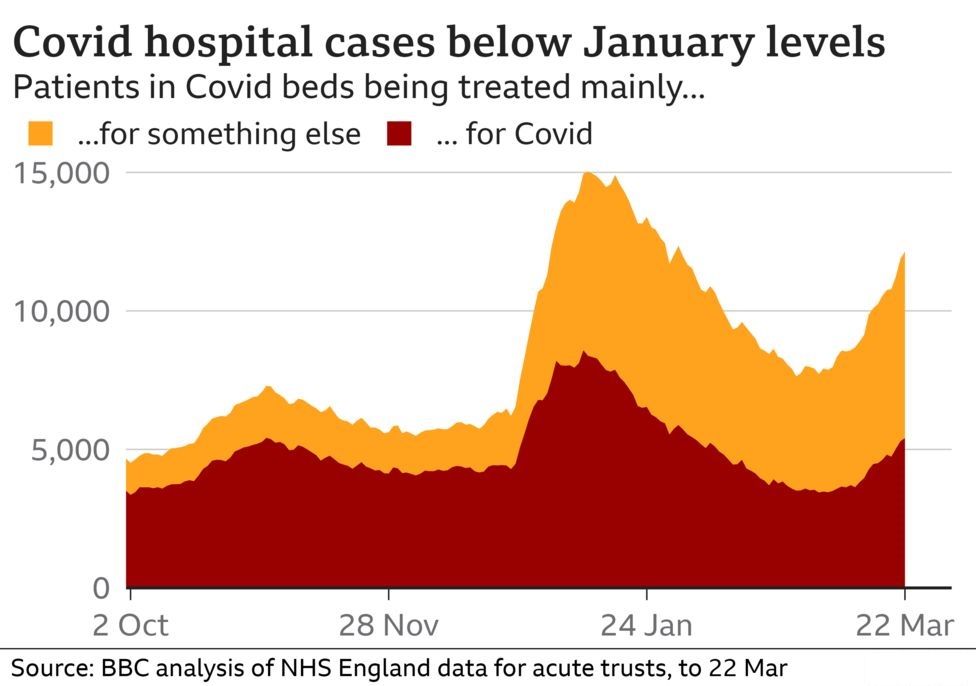
But despite the record numbers of Covid infections, the current wave is putting even fewer people in hospital than we saw in January - precisely because so many of us now have a combination of protection from vaccination and previous infections.
During January's peak, about 55% of people in Covid beds in English hospitals were being treated mainly for their Covid. The most recent figures, for 22 March, say that figure is down to about 45%.
And the total numbers of people in hospital with Covid are less than half of what we saw in January 2021.
The government hopes the spring booster vaccine rollout will help top up immunity for the most vulnerable, and make it even harder for Omicron to cause serious illness, whether it strikes once or twice.