

Cubans are arriving to the US in record numbers. Smugglers are profiting from their exodus
In March, more than 32,000 Cubans arrived at the US-Mexico border, almost twice the number from the previous month, according to US Customs and Border Protection data.
Desperate to leave Cuba, Claudia, her husband and their young son managed to obtain visas to Mexico in Havana -- the first step in a journey that placed them in the hands of criminal smuggling networks that are known to charge migrants thousands of dollars for safe passage to the US border.
Claudia, who requested her real name not be used in this story for her safety, said she decided to leave Cuba after the July 2021 widespread protests over power outages, food shortages and a lack of civil liberties, boiled over.
The Cuban government said the protests were orchestrated by Washington to topple the communist government. Prosecutors have charged over 700 people with sedition and civil disobedience in the largest mass trials since the beginning of the Cuban revolution.
"I was done after July 11," Claudia told CNN. "I am leaving for my son, for his future. I spent all day waiting in lines so he can have yogurt. I work at a [government] hospital for $50 a month. I basically work for free."
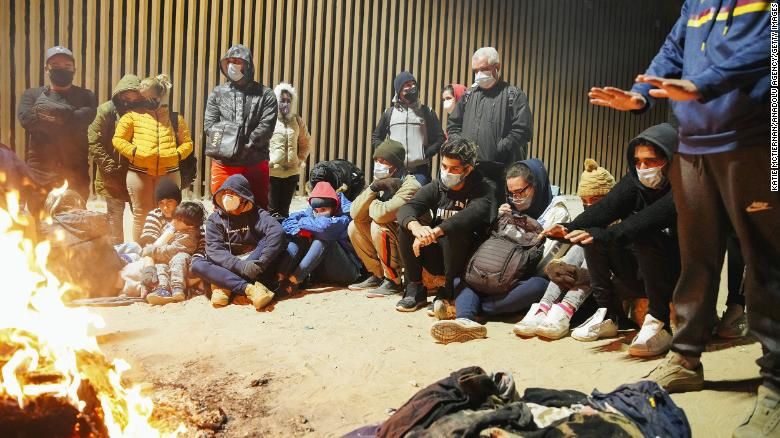 Cubans that have just crossed the US-Mexico border huddle near a fire in Yuma, Arizona in February.
After pretending to be tourists for two days in Cancún, Mexico, Claudia and her family were told by the Mexican smugglers they contacted to fly from Mexico City to Mexicali, a city of more than one million inhabitants right on the US border.
Claudia said the small plane to Mexicali was full of fellow Cubans. She said the smugglers had warned her that Mexican police would stop them as they arrived at the Mexicali airport and to place $100 in each of their passports.
Claudia said Mexican police detained all of the Cubans from their flight and from another flight -- from Guadalajara, that was carrying mostly Cuban passengers -- that arrived at the same time.
The Cubans from the two flights were taken to a nearby police station and the officers kept their passports, she said. There, she said, the police let her and her family, along with the other Cubans who had placed a $100 bribe in their passports go free. The others remained detained, she said.
Police in Mexicali did not respond to a CNN request for comment. Migrants regularly complain that police in Mexico solicit bribes and rob them.
After leaving police custody, Claudia said that the smuggler they had been in contact with picked them up in a car and drove them to an unfinished house in the Mexican desert.
There, she said a handful of armed smugglers told more than 30 migrants to wait in two stiflingly hot rooms until they could attempt the border crossing. One room was full of people from different countries, she said.
"There were Colombians, Bangladeshis, Venezuelans, Nicaraguans, Haitians. It felt like the whole world was in there," she said. The other room, Claudia said, was packed with Cubans.
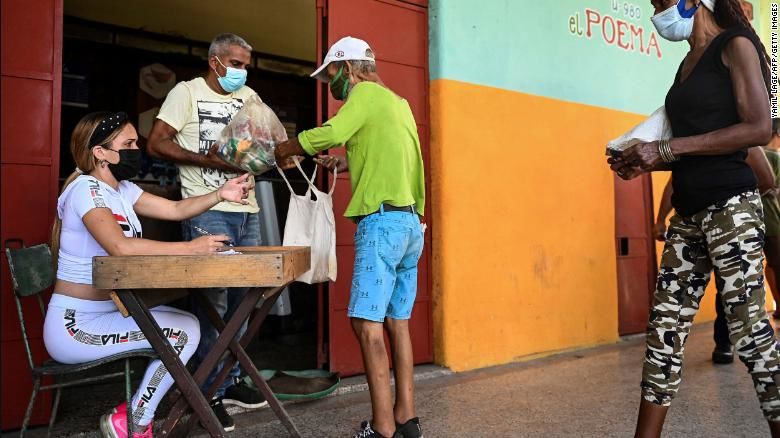 Cubans collect donated food at a supermarket in Havana in August 2021.
A mass exodus
Cubans have mass emigrated in waves throughout the years.
In 1994, some 35,000 Cubans made the dangerous journey to the US on makeshift rafts. And in 1980, during the "Mariel Boatlift," an estimated 125,000 Cubans fled to the US on a flotilla of boats.
However, this current exodus is on track to be even larger. According to US Customs and Border Protection data, nearly 80,000 Cubans reached the US border from Mexico from October through March.
The rise in migration comes as the Cuban government has begun to ease Covid-19 related travel restrictions.
For much of the pandemic, the government kept the island on a tight lockdown. People wanting to travel often waited months to get a spot on one of the handful of weekly flights out.
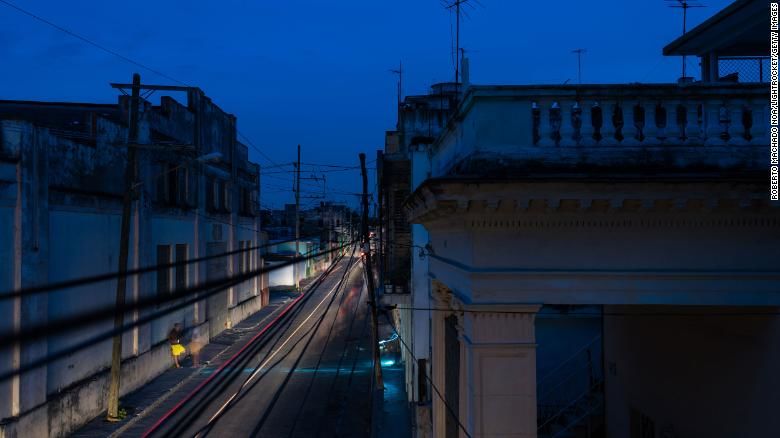
As Cuba relaxed the restrictions in November, the Cuban government's ally Nicaragua lifted their visa requirements for Cubans -- sparking a surge of people who tried to travel to the Central American nation as a way to eventually reach the US.
Suddenly Cubans began posting online ads selling their homes with "everything inside" to pay for the expensive airfare. Others joked about "going to visit the volcanos" in Nicaragua, a tongue-in-cheek way of saying they were emigrating to the US.
Many Cubans flew through Panama to reach Nicaragua -- and in March, when the Panamanian government said it would require Cubans traveling via the country to obtain a transit visa, a large crowd of desperate Cubans mobbed Panama's embassy in Havana.
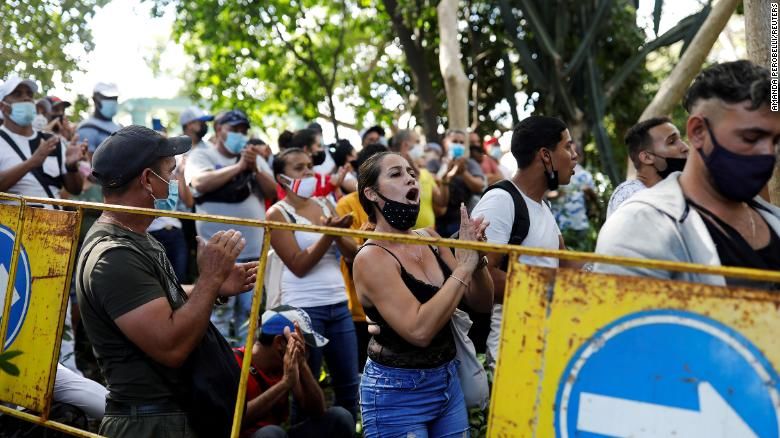 Cubans protest outside the Panama Embassy in Havana as the country tightens visa requirements in March.
Increasing shortages on basic goods are what's driving many people to leave the island, English teacher Kailen Rodríguez told CNN in April as she waited outside Panama's embassy for a visa.
"We don't have the possibility to buy many things here. There [outside of Cuba] we can buy all the things," she said.
Critics say the economic crisis and subsequent migration is the fault of the Cuban government which then uses the wave of migrants to force the US to the negotiating table.
"Tyrannies cause massive migrations," said Senator Marco Rubio (R-FL) in April. "It's not just a hostile act, if it reaches a certain level, it's considered an act of war."
Cuban officials say that increased sanctions, put in place under former US President Donald Trump's administration are contributing to the economic turmoil on the island.
"In the case of Cuba, it's not just the consequence of the pandemic, it's the consequences of the reinforcement of the policy of maximum economic pressure of the US towards Cuba," Cuban Vice Minister of Foreign Affairs Josefina Vidal told CNN in an interview last month.
The US and Cuba held their first migration talks in four years in April, but failed to reach a new agreement.
Meanwhile, migrants like Claudia will likely continue to pay criminal organizations to take them on the dangerous and uncertain journey to the US.
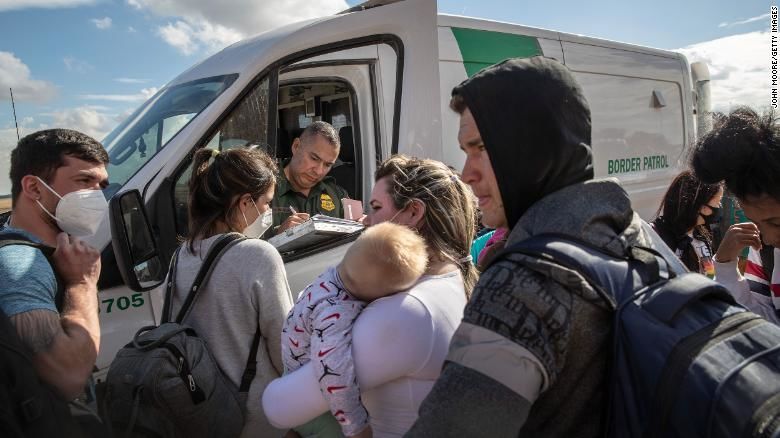 A family from Cuba waits to be transported to a US Border Patrol processing center in December 2021 in Yuma, Arizona.
'I feel liberated'
Claudia said smugglers left her and the other migrants on a dirt road close to the US border in the dark after signaling the path to take.
The path was littered with trash and the coats of other migrants who had gone before them.
"They told us to not use the lights on our phones and to keep the children quiet," Claudia said.
But the group quickly got disorientated until one of the people in the group, a Colombian, used a map application on his phone to guide them back towards the US border, she said.
As they reached the border, Claudia said the group could see lights -- a McDonalds -- from the Arizona side.
The migrants then reached a gap in the wall where someone had left a case of water and bars of chocolate, she said. Shortly after, US Customs and Border Protection agents arrived to transport them to a detention center in Yuma, where they were interviewed, fingerprinted and tested for Covid. Claudia's son was examined by a pediatrician, she said.
Less than 24 hours later, the family was released after they requested asylum. They contacted their relatives in Florida who bought them airplane tickets to Miami.
Under the 1996 Cuban Adjustment Act, Cubans who spend a year in the US are able to apply to become permanent residents.
Claudia says she is still disorientated by life in the US, but that her family's dangerous journey was worth the risks.
"I feel liberated," Claudia said. "I am another person now, I feel reborn."