
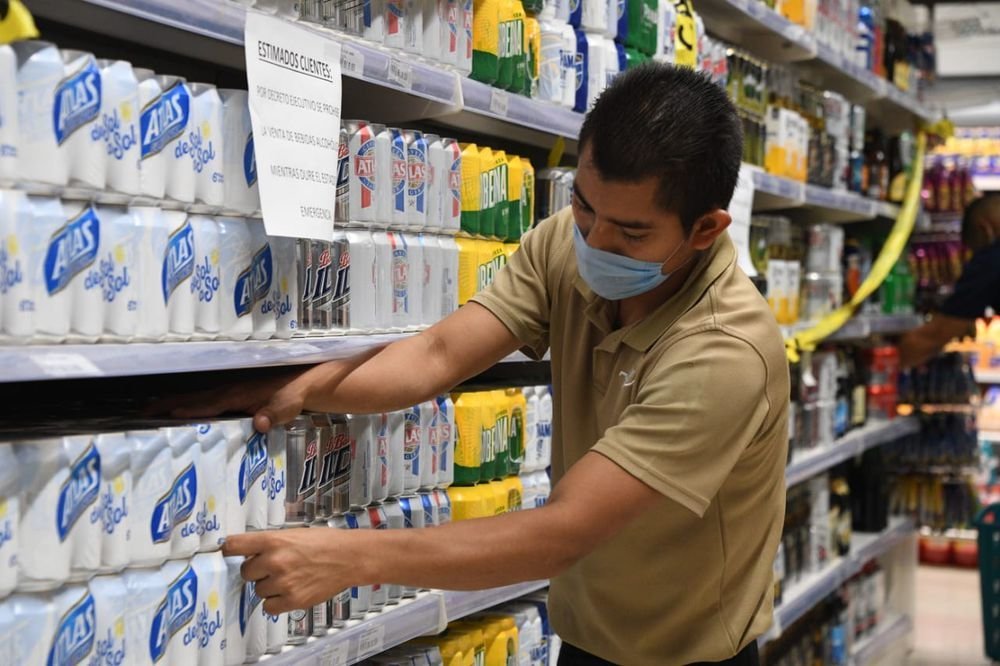
Decree issued to lift the Dry Law in Panama: controlled sale of alcoholic beverages
Through Executive Decree No. 612 on 8 May 2020, the Government of Panama lifted the Dry Law throughout the national territory and established the rules for the controlled sale and consumption of alcoholic beverages.
According to the Decree, each person can buy a maximum of six beers or a bottle of liquor or wine, for home consumption.
The use of the digital voucher, any type of subsidy or economic aid granted by the Government is prohibited for the purchase of alcoholic beverages.
The sale can only be made in commercial establishments that have the proper authorization for dealing with alcoholic beverages. Alcohol can only be sold in retail and in closed containers.
Restaurants that offer home delivery, are only allowed to sell one unit of alcoholic drink per order.
The distribution, sale and consumption of beverages is prohibited in communities, regions or provinces that are under sanitary fences and where they may subsequently be subject to this sanitary measure.
The Ministry of Commerce and Industries (MICI) will be responsible for carrying out inspections in establishments that sell alcoholic beverages.
Meanwhile, the Authority for Consumer Protection and Defense of Competition (Acodeco) will execute and ensure compliance with this decree.
The temporary closure of places and sports, recreation and recreation is maintained, and the generation of noise is prohibited through the use of sound equipment, sound amplifiers, and other means or systems that exceed the maximum noise limits are established in the health regulations.
The municipalities that for administrative or economic reasons have difficulties in complying with this measure, must coordinate with the Ministry of Government and the National Secretariat for Decentralization for its implementation, the decree states.
The Association of Municipalities of Panama (Amupa) had expressed its rejection of the lifting of this measure, considering that allowing the consumption of alcoholic beverages during the confinement by COVID-19, could provoke situations such as cases of domestic violence and disturbances of public order.
Several mayors had announced earlier that they will maintain the prohibition of sale and consumption of liquor in their districts until June 7. Among these: Santiago, Penonomé, Antón, La Pintada, Arraiján, Chame, Colón, Changuinola, Pinogana, among others.
The mayor of the Panama district said he would welcome the gradual lifting of the Dry Law.
The Ministry of Health (Minsa) ordered the Dry Law in Panama March 24, as a measure to prevent the spread of COVID-19, however this led to the emergence of a black market for liquor.
Weekly reports of seizures of alcoholic beverages increased, in some cases there were loads valued at several thousand dollars.
The Transnational Alliance to Combat Illegal Trade (Tracit) recommended that the Government of Panama review this measure, which it considered a "wrong policy", precisely because it fostered illegal trade.