PanamaTimes

Sunday, Oct 25, 2026

Facebook Reportedly Has Loopholes to Harass Famous People

Facebook Reportedly Has Loopholes to Harass Famous People

Facebook has thousands of moderators that daily search through billions of posts to clean “inappropriate” content such as hate-mongering, bulling, fake information, pornography, suicide and so on. The rules keep changing, showing no mercy, even to world leaders, but users are so diverse that in the end no one is satisfied with the result.

Facebook’s moderation policies allow users to attack “public figures,” including with “calls for death,” without being suspended, The Guardian reported on Tuesday, citing leaked guidelines.

Public figures are characterized by internal moderator instructions as renowned persons who may become an object of discussion in social media. The list varies from politicians of all stripes to local celebrities, journalists who write or speak publicly, or users with an audience of over 100,000 people. It also includes “people who are mentioned in the title, subtitle or preview of 5 or more news articles or media pieces within the last 2 years.”

Facebook, according to the Guardian, assumes that they may become targets for certain types of abuse, as discussions “often include critical commentary of people who are featured in the news.” It's legitimate to attack famous people, if they are not “purposefully exposed,” for example, tagged in a post, which is prohibited when it comes to private individuals.

“For public figures, we remove attacks that are severe as well as certain attacks where the public figure is directly tagged in the post or comment. For private individuals, our protection goes further: we remove content that’s meant to degrade or shame, including, for example, claims about someone’s sexual activity,” it says.

According to Imran Ahmed, founder of the Center for Countering Digital Hate, the differentiation between private and public individuals is “flabbergasting” as it endangers the safety of officials and other well-known people.
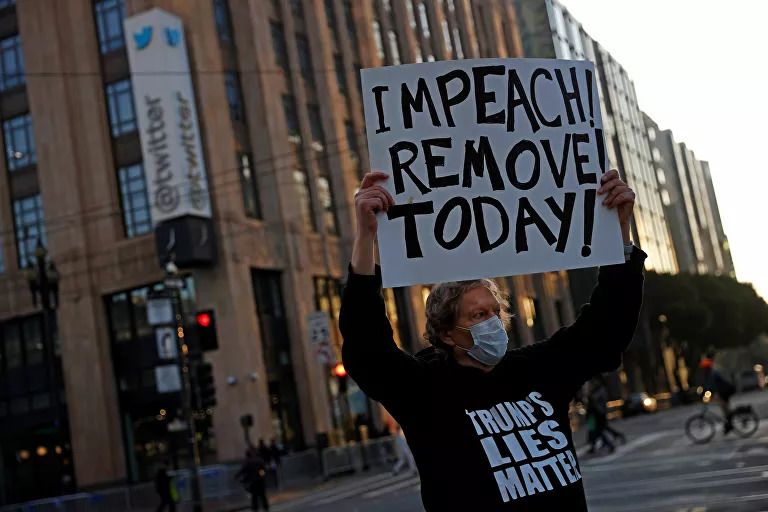
Protest outside Twitter headquarters in San Francisco


“Despite high-profile attacks in recent years, including the murder of Jo Cox MP and the US Capitol domestic terrorist attacks, promoting violence against public servants is sanctioned by Facebook if they aren’t tagged in the post,” Ahmed said.

“Highly visible abuse of public figures and celebrities acts as a warning – a proverbial head on a pike – to others. It is used by identity-based hate actors who target women and minorities to dissuade participation by the very groups that campaigners for tolerance and inclusion have worked so hard to bring into public life. Just because someone isn’t tagged doesn’t mean that the message isn’t heard loud and clear,” he said.

A Facebook spokesperson told the Guardian that the platform believes that it is important to allow critical discussion about politicians and other figures, but it doesn’t mean Facebook allows “people to abuse or harass them” on the apps.

“We remove hate speech and threats of serious harm no matter who the target is, and we’re exploring more ways to protect public figures from harassment. We regularly consult with safety experts, human rights defenders, journalists and activists to get feedback on our policies and make sure they’re in the right place,” they stated.

Content moderation is a long-standing challenge for Facebook, constantly leading to scandals in a variety of situations, including interference in elections and the spread of the coronavirus. Recently, the social media platform has been accused of failing to provide a "safe" environment for users. Last week, Paris-based advocacy organization Reporters Without Borders filed a lawsuit alleging that Facebook's policies are "largely mendacious" and contradicted by "the large-scale dissemination of hate speech and false information on its networks."

Newsletter

Related Articles

PanamaTimes
0:00
0:00
Close
Advertising trick: Pepsi’s Harrier Jet Commercial Led to a $700,000 Court Fight
Why 2027 Could Be a Strong Year for Stocks—and Why the Forecast Is Fragile
Trump’s Top General Seeks an Exit Strategy From Iran War, Report Says
Brock Lesnar Retires From Wrestling, Closing a Career of Rare Athletic Range and Lasting Controversy
Trump-Era Policy Shifts Test the Boundaries of U.S. Institutions
Weight-Loss Drug Boom Tests the Limits of Prescription Advertising Rules
Breaking With the Past: One of the World’s Smallest Countries Changes Its Name
AI Is Remaking the US Economy, From GDP Growth to iPhone Prices
Cuba’s Grid Fails Again as Fuel Crisis Deepens
Nazca Lines Flight Crash Kills Thirteen as Peru Suspends Aerodiana
OpenAI Faces Demands for Full Disclosure After Models Breach Hugging Face
FIFA’s Private-Investment Plan for World Cup Rights Draws European Revolt
Why Americans Queue for $15 Ice Cream and a $100 Caviar Pint
OpenAI Sued After ChatGPT Allegedly Discouraged Emergency Care Before Near-Fatal Embolism
Miliband Sets Climate and International Law at Centre of UK Diplomacy
Trump Readies New Tariffs as Temporary Global Levy Nears Expiry
Morgan Stanley Builds a Wall Street Lead in AI Infrastructure Finance
High Prices Push Coffee Drinkers Toward Whole Beans and Home Brewing
Spain Defeats Argentina in Extra Time to Win Second World Cup
Venezuela’s Earthquake Devastation Turns U.S. Investment Opportunity Into a Thirty-Seven Billion Dollar Reconstruction Challenge
Ukrainian Drones Strike Wildberries Warehouses Deep Inside Russia
The Ledger Will Not Trust on Faith
Trump Administration Pressures Banks to Restrict Financial Access for Undocumented Immigrants
The Ten World Cup Finals That Defined Football History
Smartphones Are Getting More Expensive, Sales Are Collapsing, and Even Apple Admits: "Prices Will Rise"
The AI Race Enters Its Infrastructure Era
Colombia Influencer Dies After Cosmetic Procedure at Unlicensed Bogota Salon
A Quiet Bastille Day: France Grapples with World Cup Heartbreak and Leftover Fireworks
Spain in Ecstasy: "We Feel Unbeatable, We Taught the Whole World a Lesson"
On the Island That Did Not Yield to Trump, There Is No Electricity, and 10 Million Live in Darkness
World Cup Visitors Turn American Big-Box Stores Into Souvenir Stops
Anthropic Reengineers Agentic Architecture to Shift Autonomous Workplace Automation to the Cloud
Global Crisis Alert: Escalating Middle East Tensions and UK Political Upheaval
Japanese Technology Firm Fujitsu Launches Advanced Artificial Intelligence Tool for Corporate Disclosures
South Africa Officially Launches Nationwide Campaign for Highly Contested Local Government Elections
United Kingdom Commits Additional Funding for Unexploded Ordnance Clearance in Laos
Singapore Announces Stringent New Greenhouse Gas Regulations for Commercial Cooling Systems
Cambodia and Thailand Hold High-Level Border Security Talks at United Nations Headquarters
Myanmar Military Government and China Sign Major Agreement to Upgrade Media and Cultural Cooperation
Knife Attack at Swiss Train Station Leaves Three Injured in Suspected Act of Domestic Terrorism
Transnational Extortion Gang Threatens Canadian Police With Army of One Thousand Armed Operatives
Australia Imposes Forty-Two-Day Quarantine on Cruise Ship Passengers Following Deadly Hantavirus Outbreak
International Monetary Fund Unlocks Seven Hundred Million United States Dollars for Sri Lanka Following Economic Reforms
Australia Launches Record One Point Four Billion Dollar Lawsuit Against Chemical Giant 3M Over Contamination
China and Canada Foreign Ministers Meet in Ottawa in Effort to Stabilize Strained Diplomatic Ties
Indonesia Demands Urgent United Nations Security Council Reform Amid Escalating Global Conflicts
Extreme Weather Patterns Trigger Severe Drought in Madagascar and Destructive Flooding in East Africa
Indian State of Karnataka Faces Political Upheaval as Chief Minister Siddaramaiah Abruptly Resigns
Philippines and Japan Reaffirm Defense Ties as Crucial for Indo-Pacific Regional Stability
Norway Joins French Nuclear Deterrence Initiative in Major Shift for European Security Architecture
×