

Fears for Honduran children as poverty worsens pneumonia’s toll
The last time Guadalupe Castellano, a health volunteer, saw Michael Padilla alive was in February, when he was two months old. His mother had brought him to her house in the village of Apausupo, in southern Honduras, to be weighed.
Castellano looked at the baby and saw immediately that something was wrong. “He was underweight and pale. He wasn’t moving or even crying,” she says. “I asked what was wrong and [the mother] said he wasn’t breastfeeding, and he was ill.
“I told her to take him to the health centre to see the doctor. I knew the mother wasn’t eating enough. They are very poor.”
Four days later, mother and baby left the village to visit family. The boy was not seen by the doctor, and he died in March of pneumonia in hospital in the city of Choluteca.
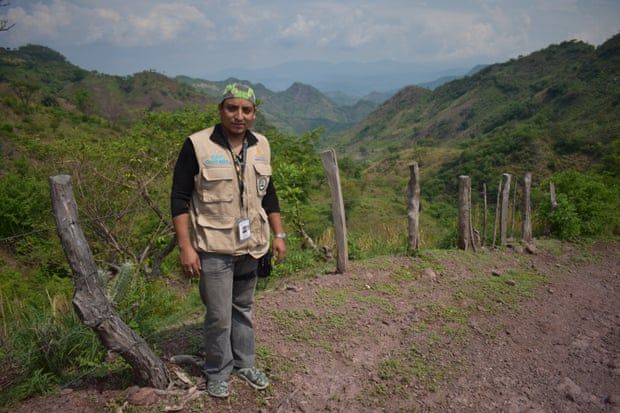 Dr Jorge Medina says: ‘I’m scared that, as a
result of the drought, the situation will get worse and there will be
more pneumonia, especially in children.’
There are fears that the threat posed by pneumonia – already one of the leading causes of child death in Honduras – is growing. Child deaths caused by the disease are strongly linked to malnutrition, lack of safe water and sanitation, and inadequate access to healthcare.
In the south of Honduras, damage to crops from unpredictable weather, the Covid pandemic, and now the war in Ukraine have created a worsening poverty crisis that provides a perfect setting for the disease to thrive.
Honduras was already vulnerable. According to the World Bank, the Central American country is one of the poorest and most unequal countries in the Latin America and Caribbean region. Data for the latest available year (2019) – before the double impact of Covid and hurricanes Eta and Iota – shows that 4.8 million people, almost half the population, live on less than $5.50 (£4.40) a day, the second-highest poverty rate in the region after Haiti.
Levels of hunger are rapidly getting worse. According to the Central American Integration System (SICA), a regional intergovernmental body, 2.6 million Hondurans will experience crisis or emergency levels of food insecurity between now and August, up from 2.2 million at the beginning of the year. In the south, which lies within the “dry corridor” of Central America – through parts of Honduras, Guatemala, El Salvador and Costa Rica – experts predict famine within months.
Ramón Turcios, southern regional director for the Honduran agriculture ministry, says: “Hunger is definitely going to get worse. We can’t give a good prognosis.
“In the south, there is a good chance there will be a famine, possibly in September,” he says. “I am very worried.”
Turcios blames the change in government, which has temporarily halted any progress being made, as well as the climate crisis for the worsening drought and inconsistent rains that are wreaking havoc on the region and people’s lives.
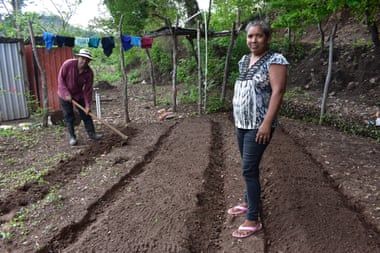 ‘I want everyone to have enough, but that’s not how it is,’ says Guadalupe Castellano, a health volunteer.
The south of Honduras is a mountainous area where many communities have no safe drinking water or opportunities for work. People here grow maize and beans to survive. Due to the weather, crops have been ruined year after year.
Apausupo, where Padilla was born, has no water supply and lies five miles away from the nearest health service, in the town of Vado Ancho – a three-hour walk on an unpaved track in poor condition.
According to Nahun García, mayor of Vado Ancho, which counts Apausupo within its borders, the number of families living in extreme poverty has tripled in the last five years. “We have 300 families who can’t afford to feed themselves. They are living on less than one dollar a day,” he says. “We need food. This is primordial.”
In Vado Ancho, the World Food Programme is providing supplementary nutrition for children under two. Dr Jorge Medina, who works at the local health centre, says this has helped, but the outlook remains bleak.
“I’m scared that, as a result of the drought, the situation will get worse and there will be more cases of pneumonia, especially in children under five,” he says. “We have a lot of problems with nutrition in some areas.”
In Apausupo, Omar García, the uncle of baby Michael, who died at three months old, stands outside his house. His brother, who lives next door, has left the village to join his wife. “Neither me nor my brother has anything,” says Garcia. “We don’t have land to grow food, and work has dried up because there’s been no rain. This house is all I have. No one has anything round here. There are people dying of hunger.”
The health volunteer, Castellano, who lives nearby, says: “If I could go back, I would follow up and make sure the mother took the baby to see a doctor. It pains me to see a child in this situation but I had nothing to offer.
“I can’t see a way out of this poverty. I want everyone to have enough, but that’s not how it is.”