

Flight delays and cancellations will likely impact millions of Christmas travelers. What to do when your airline experiences disruptions.
A winter storm is expected to wreak havoc on parts of the Midwest and Northeast this weekend, potentially affecting millions of travelers right as the Christmas holiday travel season kicks off in full force.
The National Weather Service has predicted strong winds, freezing temperatures, and heavy snow will move across several US states starting on Wednesday and lasting through Christmas Eve on Saturday.
The agency said the storm will be dangerous in some cities — with near-blizzard conditions. It
warned people that it may be safer to change or cancel travel plans and stay home.
Nevertheless, nearly 30 million people are expected to depart US airports over the Christmas week from December 18 to December 26, which is a 4% increase from 2019, according to travel website Hopper. And, the busiest days are slated to be Thursday and Friday — the time when AccuWeather meteorologists say 66% of US flights will likely be affected by weather.
Major airports like Denver, New York, Indianapolis, and Detroit could face significant delays, creating a snowball effect across the country due to displaced aircraft and flight crews. Many airlines are already gearing up for the expected chaos, with carriers like American Airlines, Delta Air Lines, and Southwest Airlines offering travel waivers for certain airports across the nation.
And, with ongoing issues plaguing the industry, like staffing shortages that contributed to thousands of flight cancelations over the summer, the winter storm is not the only factor at play.
With all of the uncertainty coming this holiday weekend, here is the best advice for what to do if your flight is canceled or delayed.
1. Know your rights as an airline passenger in the US
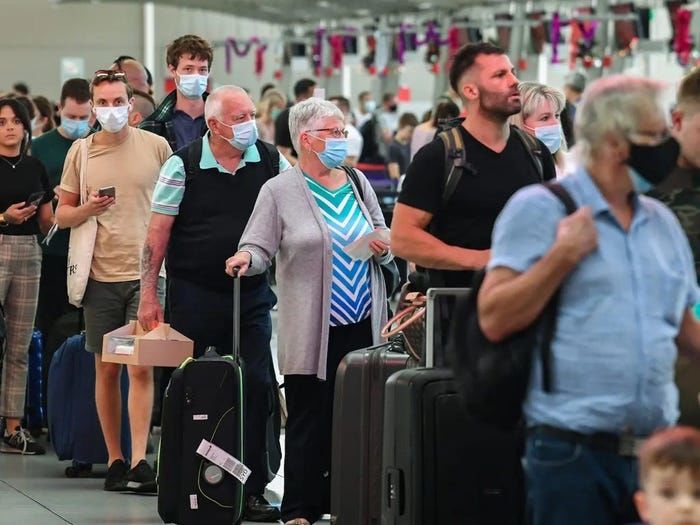
The only rule carriers must follow is to refund customers in the event of cancelations, even for non-controllable events. And that does not mean travel credits or vouchers — it has to be cash.
When you get that dreaded notification of a delay or cancelation, ask a customer service agent for the reason, in writing if possible, so you know what you are entitled to in terms of reimbursement. Many carriers have their own internal policies regarding what passengers can get if the reason is within their control, like crew staffing or maintenance.
This information is collected in the DoT's Airline Customer Service Dashboard, which rolled out in September and outlines what each carrier will offer for controllable disruptions, like rebooking on a different carrier or getting a comped meal.
The guide represents the US's 10 largest airlines and their regional affiliates, which make up about 96% of domestic scheduled flights.
2. Monitor your airline's app for rebooking options
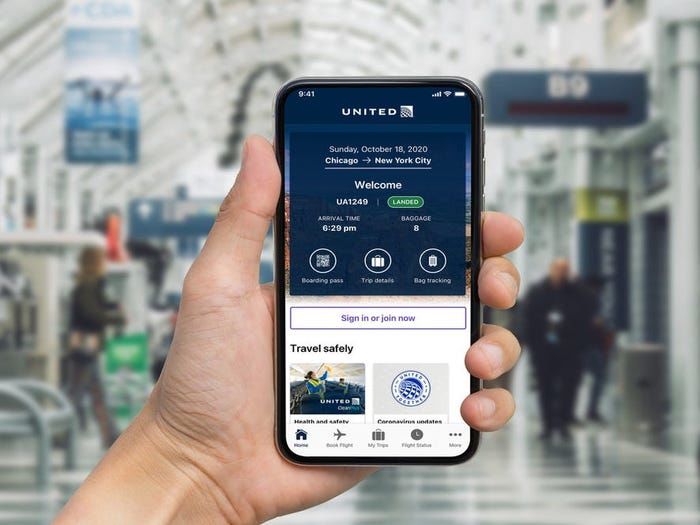 United mobile app.
Wait times can be painfully long, and the best alternatives will likely go quickly. But, some airlines offer to rebook on their website or mobile app and waive any fees, so it's sometimes easier to make changes online than in person.
However, if all the available options are gone, have a plan B, like waiting to talk to a live agent, contacting the airline via social media, or grabbing a hotel for the night. Direct messaging on Facebook or Twitter can actually act as a virtual placeholder, and you may hear back via chat before you speak to a live agent.
Here are the phone numbers for each airline:
* Alaska: 1-800-252-7522
* Allegiant: 1-702-505-8888
* American: 1-800-433-7300
* Avelo: 1-346-616-9500
* Breeze: No phone number to call, but you can text the airline at 501-273-3931. You can also contact Breeze via email or Facebook Messenger.
* Delta: 1-800-221-1212
* Frontier: No phone number. The best way to contact Frontier is via chat or email.
* JetBlue: 1-800-538-2583
* Southwest: 1-800-435-9792
* Spirit: 1-855-728-3555
* Sun Country: 1-651-905-2737
* United: 1-800-864-8331
3. Ask for a hotel or meal voucher
 Vendors in Delta's Terminal C at LaGuardia Airport.
For delays or cancelations that result in a customer waiting at least three hours for a new flight, or requiring an overnight stay, several airlines will offer meal or hotel vouchers.
Carriers offering both are Alaska Airlines, Allegiant Air, American Airlines, Delta Air Lines, Hawaiian Airlines, JetBlue Airways, Southwest Airlines, Spirit Airlines, and United Airlines, according to the DoT dashboard. Frontier Airlines is the only carrier that does not offer accommodations in the case of an overnight delay or cancelation.
For US airlines not on the dashboard, or in cases where the compensation is not clear, just ask. It never hurts to request a meal or hotel during flight disruptions, and you might get lucky with a goodwill gesture from the carrier.
4. Check if your credit card company offers travel insurance
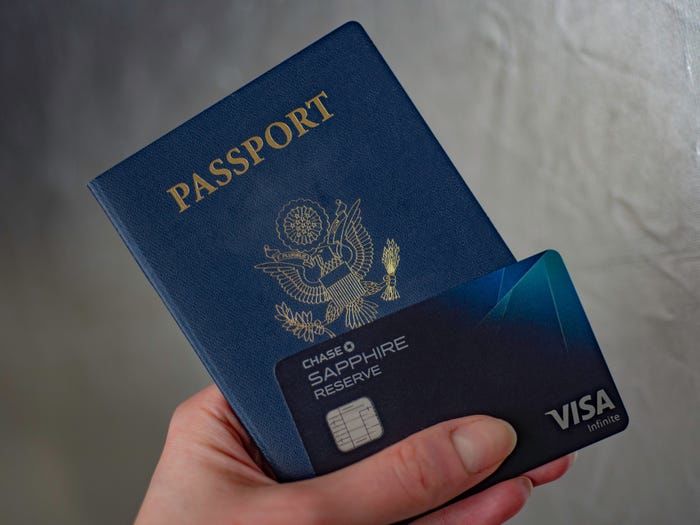 Passport and Chase Sapphire Reserve credit card
Several major banks offer credit cards that come with travel insurance, like Chase's Sapphire Reserve or American Express's Platinum Card. Both offer trip protection, meaning customers who purchased their flight with that specific card can reap the benefits.
For example, in the case of a winter storm, it's likely many passengers will end up stranded in random cities across the US. However, banks with travel insurance included can reimburse cardholders for unexpected expenses outside their control, including hotels, meals, and transportation.
Travel insurance does not apply in all circumstances, like short delays, so be sure to check your policy before making a claim — but it also doesn't hurt to make the claim anyway, even if the answer is no.
5. Know when to walk away
 Man hailing a cab outside an airport.
During the holidays, it's easy to get tunnel vision on the mission — like seeing friends and family, or just getting away from home for a few days. However, delays and cancellations are bound to happen, especially this weekend.
But, don't spend all day sitting around waiting — give yourself a cut-off time. Once that moment passes, consider other means of getting to your destination, like driving or taking a train (which may also be covered with travel insurance), though these options may not be doable during a winter storm.
If you are stuck in another city and there is no other option other than to get a hotel or sit at the airport, decide how you want to spend the time and make a plan.