PanamaTimes

Sunday, Oct 25, 2026

Hong Kong investors could take financial stake in Northern Metropolis plan

Hong Kong investors could take financial stake in Northern Metropolis plan

Financial Secretary Paul Chan says funding arrangements for transforming city’s border area with mainland China should be creative, tailor-made for each stage of development.

Individual Hong Kong investors may be allowed to take a financial stake in the city’s ambitious new plan to transform its sleepy border area with mainland China into a Silicon Valley-style tech hub, the financial secretary has said.

Paul Chan Mo-po unveiled elements of the Northern Metropolis development’s financing model – along with his assessment of Hong Kong’s future amid ongoing US-China tensions– during an interview for the October 13-14 China Institute Executive Summit 2021.

First proposed by Chief Executive Carrie Lam Cheng Yuet-ngor in her yearly policy address last week, the Northern Metropolis is intended to serve as a strategic growth engine, ease housing shortages and integrate the city into the Greater Bay Area, Beijing’s scheme to turn Hong Kong, Macau and nine Guangdong cities into an economic powerhouse.
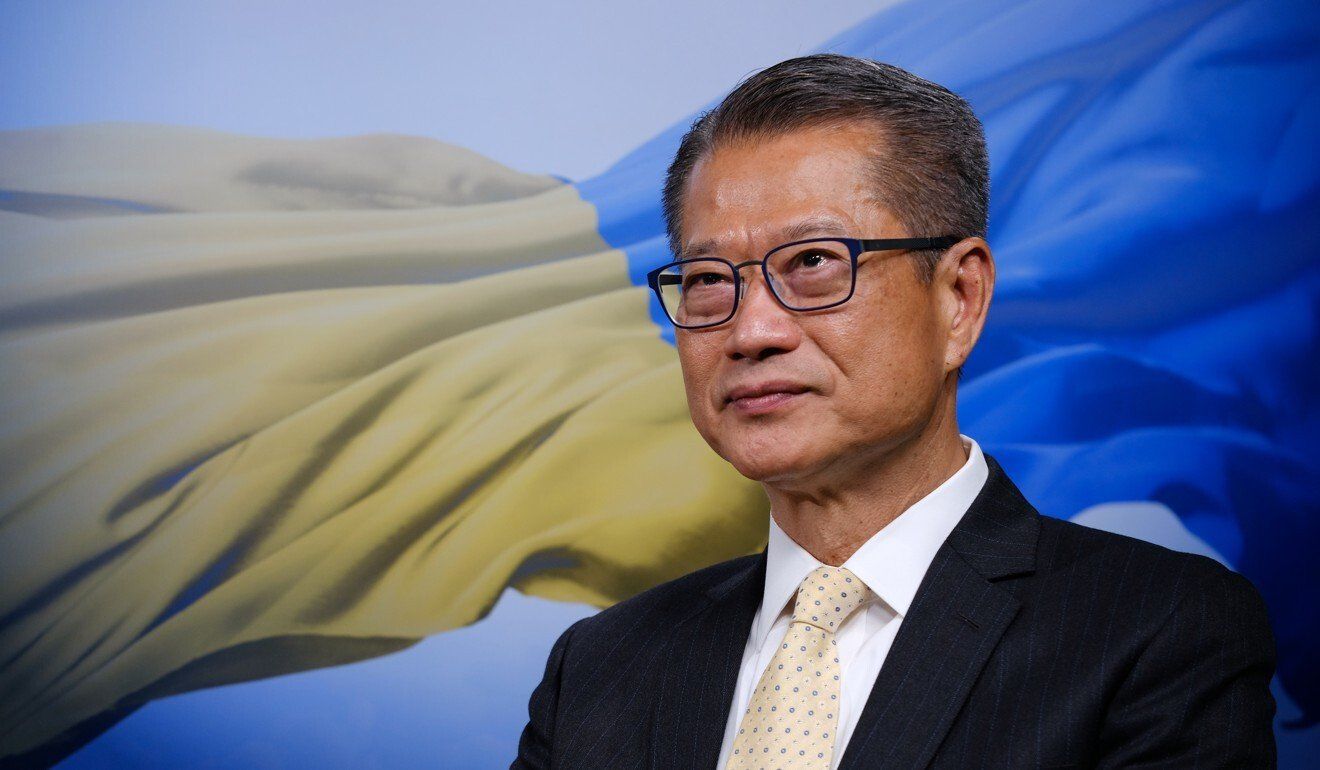
Financial Secretary Paul Chan.


“We need to do it by phases and have to be creative in terms of coming up with a package of financing arrangements,” Chan told the Post, a strategic partner in the event, this year dubbed “The View From China”.

“For certain activities that could involve public-private partnership, whether we should issue green bonds … apart from institutions, perhaps we may involve retail investors so Hong Kong people can own this particular vision and benefit from it.”

Chan predicted that financing packages would be tailor-made for each stage of the project’s development.

To be built up over the next two decades, the planned Northern Metropolis spans an area of 300 sq km, including seven land-based boundary control points, existing towns in Tin Shui Wai, Yuen Long, Fanling and Sheung Shui and their neighbouring rural areas, and six new development areas now in the planning or construction stage.

The development will eventually be home to 2.5 million people, or about a third of Hong Kong’s existing population, and is forecast to generate 650,000 jobs, of which nearly a quarter will be related to innovation and technology.

The government has pledged to conserve about 2,000 hectares (4,942 acres) of ecologically sensitive sites such as wetlands despite the massive changes.

The Northern Metropolis has been heralded as an attempt to create a second centre of power away from Hong Kong Island in the south, with the chief executive calling the new development the city’s “most important area”, as it was intended to facilitate greater integration with plans on the mainland.

“The southern part of Hong Kong is financial services, while the north of Hong Kong will be innovation and technology,” Chan said. “This is not just for industry development; it also releases land to provide housing and other facilities for Hong Kong people.”

He explained that the new development’s placement would allow Hong Kong’s IT industry to tap into the vibrant ecosystem just across the border.

“Working with the mainland in IT development is important, because it has developed clusters of commercial innovation in [Guangdong province’s] Dongguan and a robust consumer market,” he said.

He added that railways would be the transport backbone that wove the two sides together.

Chan separately shed some light on the report he released earlier this month detailing the damage inflicted on the city’s business environment and investment prospects by the anti-government protests of 2019, for which he held the US responsible.

Accusing Washington of using the city as a pawn to suppress China by inciting and supporting the protests, he said he expected Sino-US tensions to last through at least the next decade.

“There may be high times and low times, but the competitive situation will not go away,” he said.

“Hong Kong will face consequences, including more volatility in the financial market. We will have to be very careful in maintaining the market’s financial stability, in devising contingency plans so we are well-prepared for different scenarios.”

Newsletter

Related Articles

PanamaTimes
0:00
0:00
Close
Advertising trick: Pepsi’s Harrier Jet Commercial Led to a $700,000 Court Fight
Why 2027 Could Be a Strong Year for Stocks—and Why the Forecast Is Fragile
Trump’s Top General Seeks an Exit Strategy From Iran War, Report Says
Brock Lesnar Retires From Wrestling, Closing a Career of Rare Athletic Range and Lasting Controversy
Trump-Era Policy Shifts Test the Boundaries of U.S. Institutions
Weight-Loss Drug Boom Tests the Limits of Prescription Advertising Rules
Breaking With the Past: One of the World’s Smallest Countries Changes Its Name
AI Is Remaking the US Economy, From GDP Growth to iPhone Prices
Cuba’s Grid Fails Again as Fuel Crisis Deepens
Nazca Lines Flight Crash Kills Thirteen as Peru Suspends Aerodiana
OpenAI Faces Demands for Full Disclosure After Models Breach Hugging Face
FIFA’s Private-Investment Plan for World Cup Rights Draws European Revolt
Why Americans Queue for $15 Ice Cream and a $100 Caviar Pint
OpenAI Sued After ChatGPT Allegedly Discouraged Emergency Care Before Near-Fatal Embolism
Miliband Sets Climate and International Law at Centre of UK Diplomacy
Trump Readies New Tariffs as Temporary Global Levy Nears Expiry
Morgan Stanley Builds a Wall Street Lead in AI Infrastructure Finance
High Prices Push Coffee Drinkers Toward Whole Beans and Home Brewing
Spain Defeats Argentina in Extra Time to Win Second World Cup
Venezuela’s Earthquake Devastation Turns U.S. Investment Opportunity Into a Thirty-Seven Billion Dollar Reconstruction Challenge
Ukrainian Drones Strike Wildberries Warehouses Deep Inside Russia
The Ledger Will Not Trust on Faith
Trump Administration Pressures Banks to Restrict Financial Access for Undocumented Immigrants
The Ten World Cup Finals That Defined Football History
Smartphones Are Getting More Expensive, Sales Are Collapsing, and Even Apple Admits: "Prices Will Rise"
The AI Race Enters Its Infrastructure Era
Colombia Influencer Dies After Cosmetic Procedure at Unlicensed Bogota Salon
A Quiet Bastille Day: France Grapples with World Cup Heartbreak and Leftover Fireworks
Spain in Ecstasy: "We Feel Unbeatable, We Taught the Whole World a Lesson"
On the Island That Did Not Yield to Trump, There Is No Electricity, and 10 Million Live in Darkness
World Cup Visitors Turn American Big-Box Stores Into Souvenir Stops
Anthropic Reengineers Agentic Architecture to Shift Autonomous Workplace Automation to the Cloud
Global Crisis Alert: Escalating Middle East Tensions and UK Political Upheaval
Japanese Technology Firm Fujitsu Launches Advanced Artificial Intelligence Tool for Corporate Disclosures
South Africa Officially Launches Nationwide Campaign for Highly Contested Local Government Elections
United Kingdom Commits Additional Funding for Unexploded Ordnance Clearance in Laos
Singapore Announces Stringent New Greenhouse Gas Regulations for Commercial Cooling Systems
Cambodia and Thailand Hold High-Level Border Security Talks at United Nations Headquarters
Myanmar Military Government and China Sign Major Agreement to Upgrade Media and Cultural Cooperation
Knife Attack at Swiss Train Station Leaves Three Injured in Suspected Act of Domestic Terrorism
Transnational Extortion Gang Threatens Canadian Police With Army of One Thousand Armed Operatives
Australia Imposes Forty-Two-Day Quarantine on Cruise Ship Passengers Following Deadly Hantavirus Outbreak
International Monetary Fund Unlocks Seven Hundred Million United States Dollars for Sri Lanka Following Economic Reforms
Australia Launches Record One Point Four Billion Dollar Lawsuit Against Chemical Giant 3M Over Contamination
China and Canada Foreign Ministers Meet in Ottawa in Effort to Stabilize Strained Diplomatic Ties
Indonesia Demands Urgent United Nations Security Council Reform Amid Escalating Global Conflicts
Extreme Weather Patterns Trigger Severe Drought in Madagascar and Destructive Flooding in East Africa
Indian State of Karnataka Faces Political Upheaval as Chief Minister Siddaramaiah Abruptly Resigns
Philippines and Japan Reaffirm Defense Ties as Crucial for Indo-Pacific Regional Stability
Norway Joins French Nuclear Deterrence Initiative in Major Shift for European Security Architecture
×