PanamaTimes

Saturday, Oct 24, 2026

How do I spot the symptoms of coronavirus?

How do I spot the symptoms of coronavirus?

A new continuous cough and fever are also symptoms but how do you know what to look for?
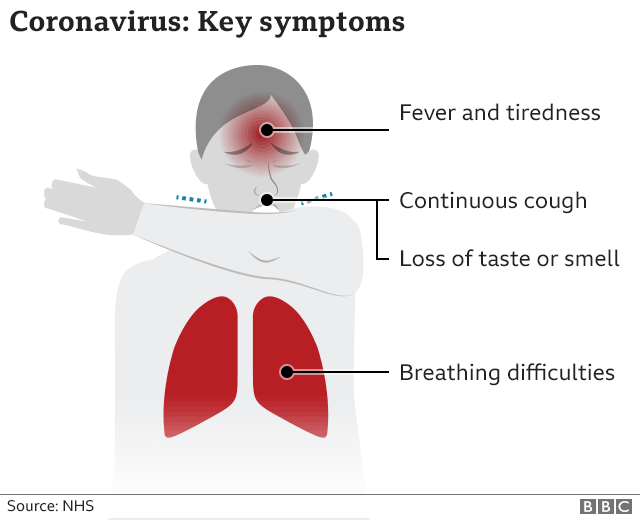
The NHS lists three main symptoms of coronavirus, that people should be aware of and ready to act upon.

What are the symptoms?


* A new, continuous cough, where you cough a lot for more than an hour, or have three or more coughing episodes in 24 hours

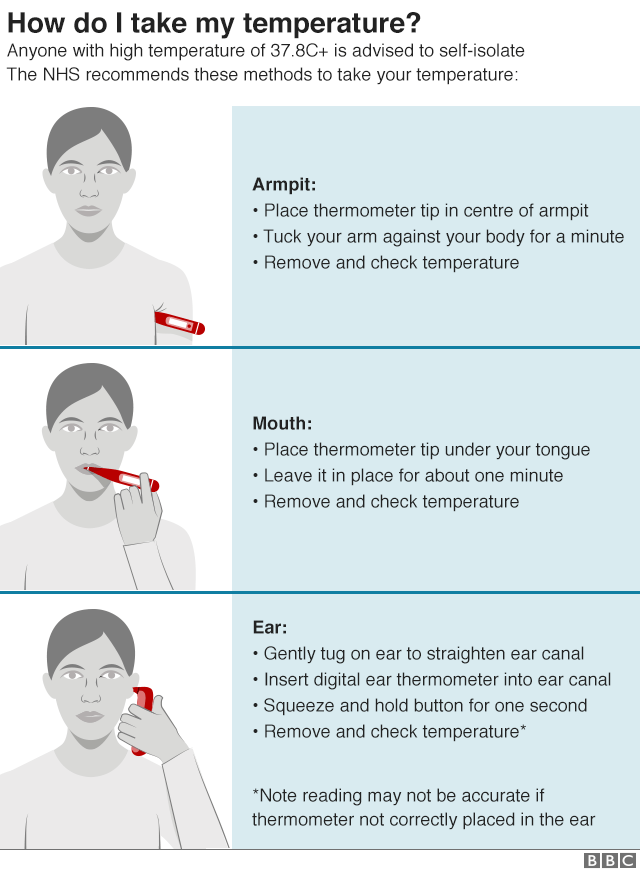
* Fever - where your temperature is above 37.8C

* Loss of smell or taste

If you, or someone you live with, has any of these symptoms the advice is stay at home to stop the risk of giving coronavirus to others.

The US Centers for Disease Control and Prevention's list of symptoms also includes chills, repeated shaking, muscle pain, sore throat, nausea or vomiting and diarrhoea.

And UK researchers think that vomiting, diarrhoea and abdominal cramps could be a sign of coronavirus infection in children.

It takes five days on average to start showing the symptoms, but some people will get them much later. The World Health Organization says it can take up to 14 days.


When do people need to go to hospital?


The majority of people with coronavirus will recover after rest and pain relief (such as paracetamol).

The main reason people need hospital treatment is difficulty breathing.

Doctors may scan the lungs to see how badly they are affected and give support, such as oxygen or ventilation, if needed.

However, people should not go to A&E if they are concerned. In the UK, the NHS 111 website will guide you through what to do.

If you are so breathless that you are unable to speak more than a few words you will be told to call 999, as this is a medical emergency.

If you become so ill that you've stopped doing all of your usual daily activities then it will advise speaking to a nurse by dialling NHS 111.

What happens in intensive care?


Intensive care units are specialist wards for people who are very ill.

Coronavirus patients will get oxygen support, which can involve using a facemask or a tube in the nose.

The most invasive way - for the most seriously ill patients - is ventilation where air, with increased levels of oxygen, is pushed into the lungs via a tube in the mouth, nose or through a small cut in the throat.

What should I do if I have mild symptoms?


Patients with mild symptoms should self-isolate at home for at least 10 days.

People are advised not to ring NHS 111 to report their symptoms unless they are worried. They should also not go to their GP, or A&E.



Details for Scotland are to check NHS inform, then ring your GP in office hours, or 111 out-of-hours. In Wales call NHS 111, and in Northern Ireland, call your GP.

If you have come into contact with somebody who may be infected, you may be told to self-isolate.

The World Health Organization has also issued advice for the public.


Older people, and those with pre-existing medical conditions (such as asthma, diabetes, heart disease, high blood pressure), are more likely to become severely ill. Men are at slightly higher risk of dying from the virus than women.

How do I protect myself?


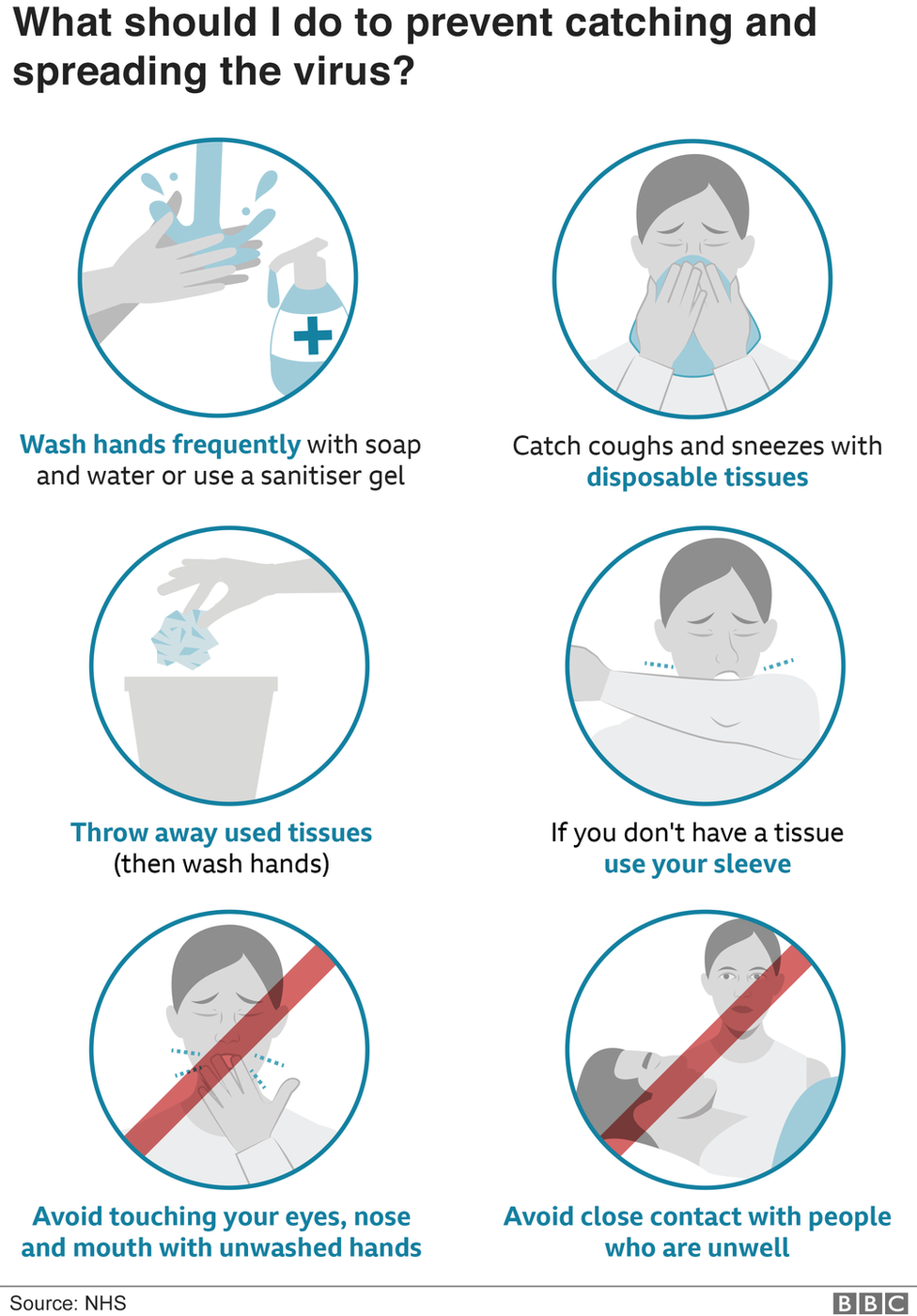
The best thing is regular and thorough hand washing, preferably with soap and water.

Coronavirus spreads when an infected person coughs or sneezes small droplets - packed with the virus - into the air. These can be breathed in, or cause an infection if you touch a surface they have landed on, then your eyes, nose or mouth.

So, coughing and sneezing into tissues, not touching your face with unwashed hands, and avoiding close contact with infected people are important.

People will be most infectious when they have symptoms, but some may spread the virus even before they are sick.

Face coverings are also becoming compulsory in many indoor settings across the UK.


Newsletter

Related Articles

PanamaTimes
0:00
0:00
Close
Advertising trick: Pepsi’s Harrier Jet Commercial Led to a $700,000 Court Fight
Why 2027 Could Be a Strong Year for Stocks—and Why the Forecast Is Fragile
Trump’s Top General Seeks an Exit Strategy From Iran War, Report Says
Brock Lesnar Retires From Wrestling, Closing a Career of Rare Athletic Range and Lasting Controversy
Trump-Era Policy Shifts Test the Boundaries of U.S. Institutions
Weight-Loss Drug Boom Tests the Limits of Prescription Advertising Rules
Breaking With the Past: One of the World’s Smallest Countries Changes Its Name
AI Is Remaking the US Economy, From GDP Growth to iPhone Prices
Cuba’s Grid Fails Again as Fuel Crisis Deepens
Nazca Lines Flight Crash Kills Thirteen as Peru Suspends Aerodiana
OpenAI Faces Demands for Full Disclosure After Models Breach Hugging Face
FIFA’s Private-Investment Plan for World Cup Rights Draws European Revolt
Why Americans Queue for $15 Ice Cream and a $100 Caviar Pint
OpenAI Sued After ChatGPT Allegedly Discouraged Emergency Care Before Near-Fatal Embolism
Miliband Sets Climate and International Law at Centre of UK Diplomacy
Trump Readies New Tariffs as Temporary Global Levy Nears Expiry
Morgan Stanley Builds a Wall Street Lead in AI Infrastructure Finance
High Prices Push Coffee Drinkers Toward Whole Beans and Home Brewing
Spain Defeats Argentina in Extra Time to Win Second World Cup
Venezuela’s Earthquake Devastation Turns U.S. Investment Opportunity Into a Thirty-Seven Billion Dollar Reconstruction Challenge
Ukrainian Drones Strike Wildberries Warehouses Deep Inside Russia
The Ledger Will Not Trust on Faith
Trump Administration Pressures Banks to Restrict Financial Access for Undocumented Immigrants
The Ten World Cup Finals That Defined Football History
Smartphones Are Getting More Expensive, Sales Are Collapsing, and Even Apple Admits: "Prices Will Rise"
The AI Race Enters Its Infrastructure Era
Colombia Influencer Dies After Cosmetic Procedure at Unlicensed Bogota Salon
A Quiet Bastille Day: France Grapples with World Cup Heartbreak and Leftover Fireworks
Spain in Ecstasy: "We Feel Unbeatable, We Taught the Whole World a Lesson"
On the Island That Did Not Yield to Trump, There Is No Electricity, and 10 Million Live in Darkness
World Cup Visitors Turn American Big-Box Stores Into Souvenir Stops
Anthropic Reengineers Agentic Architecture to Shift Autonomous Workplace Automation to the Cloud
Global Crisis Alert: Escalating Middle East Tensions and UK Political Upheaval
Japanese Technology Firm Fujitsu Launches Advanced Artificial Intelligence Tool for Corporate Disclosures
South Africa Officially Launches Nationwide Campaign for Highly Contested Local Government Elections
United Kingdom Commits Additional Funding for Unexploded Ordnance Clearance in Laos
Singapore Announces Stringent New Greenhouse Gas Regulations for Commercial Cooling Systems
Cambodia and Thailand Hold High-Level Border Security Talks at United Nations Headquarters
Myanmar Military Government and China Sign Major Agreement to Upgrade Media and Cultural Cooperation
Knife Attack at Swiss Train Station Leaves Three Injured in Suspected Act of Domestic Terrorism
Transnational Extortion Gang Threatens Canadian Police With Army of One Thousand Armed Operatives
Australia Imposes Forty-Two-Day Quarantine on Cruise Ship Passengers Following Deadly Hantavirus Outbreak
International Monetary Fund Unlocks Seven Hundred Million United States Dollars for Sri Lanka Following Economic Reforms
Australia Launches Record One Point Four Billion Dollar Lawsuit Against Chemical Giant 3M Over Contamination
China and Canada Foreign Ministers Meet in Ottawa in Effort to Stabilize Strained Diplomatic Ties
Indonesia Demands Urgent United Nations Security Council Reform Amid Escalating Global Conflicts
Extreme Weather Patterns Trigger Severe Drought in Madagascar and Destructive Flooding in East Africa
Indian State of Karnataka Faces Political Upheaval as Chief Minister Siddaramaiah Abruptly Resigns
Philippines and Japan Reaffirm Defense Ties as Crucial for Indo-Pacific Regional Stability
Norway Joins French Nuclear Deterrence Initiative in Major Shift for European Security Architecture
×