
How likely are you to catch Coronavirus outdoors or swimming?
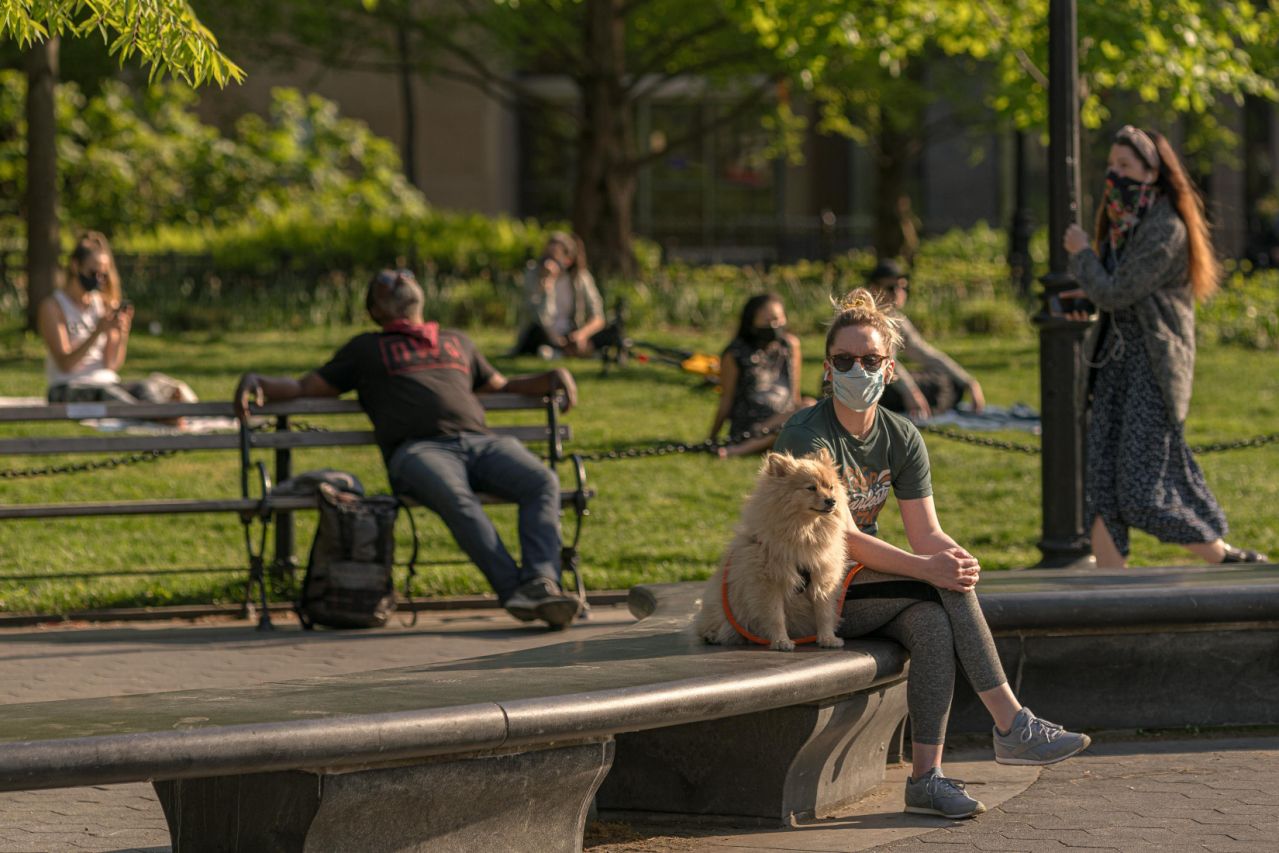
Is it safe to meet friends in the park, as long as they stay 6 feet away, on the other side of a blanket? What about a burger and beer at an outdoor restaurant? How risky is a trip to the beach or swimming pool with the kids?
The good news: Interviews show a growing consensus among experts that, if people are going to leave their homes, it’s safer to be outside than in the office or the mall. With fresh air and more space between people, the risk goes down.
But experts also expressed particular caution about outdoor dining, using locker rooms at pools and crowds in places like beaches. While going outside can help people cope with quarantine fatigue, there is a risk they will lower their guard or meet people who are not being safe.
“I think going outside is important for health,” said Julia L. Marcus, an epidemiologist and assistant professor at Harvard Medical School. “We know that being outdoors is lower risk for coronavirus transmission than being indoors. On a sunny, beautiful weekend, I think going outside is indicated, but I also think there are things to do to reduce our risk.”
The different approaches have left many people bewildered about what is safe behavior outside. Experts have a simple answer: Practice social distancing and wear a mask.
Ideally, people should socialize only with people who live in their homes, they say. If you decide to meet friends, you’re increasing your risk, but you can take precautions. It’s important to keep gatherings small. Don’t share food, utensils or beverages; keep your hands clean; and keep at least 6 feet from people who don’t live in your home.
“I think outdoors is so much better than indoors in almost all cases,” said Linsey Marr, an engineering professor and aerosol scientist at Virginia Tech. “There’s so much dilution that happens outdoors. As long as you’re staying at least 6 feet apart, I think the risk is very low.”
Pandemic life is safer outdoors, in part, because even a light wind will quickly dilute the virus. If a person nearby is sick, the wind will scatter the virus, potentially exposing nearby people but in far smaller quantities, which are less likely to be harmful.
“The virus load is important,” said Eugene Chudnovsky, a physicist at Lehman College and the City University of New York’s Graduate Center. “A single virus will not make anyone sick; it will be immediately destroyed by the immune system. The belief is that one needs a few hundred to a few thousand of SARS-CoV-2 viruses to overwhelm the immune response.”
While the risk of outdoor transmission is low, it can happen. In one study of more than 7,300 cases in China, just one was connected to outdoor transmission. In that case, a 27-year-old man had a conversation outdoors with a traveler who had just returned from Wuhan. Seven days later, he had his first symptoms of COVID-19.
“The risk is lower outdoors, but it’s not zero,” said Shan Soe-Lin, a lecturer at the Yale Jackson Institute for Global Affairs. “And I think the risk is higher if you have two people who are stationary next to each other for a long time, like on a beach blanket, rather than people who are walking and passing each other.”
One recent study found that just talking can launch thousands of droplets that can remain suspended in the air for eight to 14 minutes. But the risk of inhaling those droplets is lower outdoors.
Experts say that a person walking, jogging or cycling too close for a few seconds is not a big worry. But they recommend joggers wear a mask or a buff if they’re going to come close to other people.
If someone sets up a picnic blanket within your 6-foot perimeter and plans to stay a while, that’s a bigger concern. Try to avoid a confrontation. That only increases your risk of exposure. Such conflicts could spike as more people head outside.
Even outside, there is a risk of contracting the virus by touching a contaminated surface — a restaurant menu, park bench or lawn chair — and then touching your face. Studies have shown the virus can last three days on hard surfaces like steel and plastic and about 24 hours on cardboard under laboratory conditions. The virus is also more stable in heat and humidity than many other viruses are.
According to Chudnovsky, a sunny day is better than a cloudy day, because there’s more sunlight to kill the virus and more wind to dilute it. If you want to take extreme precautions, position yourself upwind from other people. “This may be especially important at the beach, where people tend to spend a long time at one localized place,” he said.
Experts said that although outdoor restaurant patrons can’t wear masks while eating, servers should. The main risk of exposure is if the guests within a few feet at the table aren’t from your household. Sitting and talking for extended periods of time as well as sharing food and common serving utensils are also potential sources of exposure if one of the guests is infected and doesn’t know it.
Another worry: Because it can take two weeks for symptoms to appear after a person is infected, there is no way to know if you’re going to the beach or the park in the midst of an invisible local outbreak, experts said. It’s yet another reason to take precautions.
“If we now go back to the old normal and don’t follow the social distancing strategy anymore, it’s like a ticking time bomb,” said Peter Jüni, an epidemiologist at the University of Toronto and St. Michael’s Hospital. “You never know where it blows up and when.”
FAMILIES WITH KIDS
For families with small children, navigating the outdoors can produce a special anxiety.
Gabriel said her brother, who is 6, had wanted to go to the playground, but her mother wouldn’t allow it. She worries about the virus lingering on slides and swings and about a mysterious inflammatory syndrome linked to the virus that has been sickening and killing some children.
“It’s hard for a child to understand,” Gabriel said. “At least we can stay 6 feet apart. You can’t tell a little kid that.”
One challenge in dense cities is finding 6 feet to call your own on a running path or in a bicycle lane. An open-air cafe may seem safe, until people start walking by on the sidewalk without masks.
SWIMMING
As temperatures heat up and summer sets in, people will be looking for ways to cool off. As swimming facilities consider reopening and swimmers ponder a dip, it’s worth understanding how swimming influences your risk of catching or spreading Covid-19.
The short answer? Swimming itself, in a pool or body of natural water, doesn’t appear to pose any extra risks virus-wise. But that doesn’t mean pool parties get the green light, scientists caution. Ernest Blatchley is an environmental engineer at Purdue University who studies how disinfectants in swimming pools react with contaminants and pathogens.
"In a well-operated pool, the water itself should present minimal risk and probably an acceptable risk for most people," Blatchley tells Inverse.
"But the risks for disease transmission in a pool setting are not zero because we don't spend all our time underwater."
Swimmers might become infected with Covid-19 from a viral droplet from a strangers' sneeze, or by touching surfaces in the changing room or shower. Research shows the Covid-19 virus can survive for up to 72 hours on plastic and stainless steel surfaces, which may include a pool ladder, deck chair, or door handle.
"There's nothing about a pool that would eliminate the need for social distancing, avoiding contaminated surfaces, or not breathing air from somebody who's close by," Blatchley says.
Experts agreed that the risk of swimming in pools, lakes or the ocean is not from the water, but from exposure to people in and near the water.
Although scientists don’t have data on the novel coronavirus specifically, other coronaviruses are not stable in water and are very sensitive to chlorine, said Angela Rasmussen, a virologist at the Columbia University Mailman School of Public Health.
“In my opinion, pool water, fresh water in a lake or river, or seawater exposure would be extremely low transmission risk even without dilution (which would reduce risk further),” Rasmussen said in an email. “Probably the biggest risk for summer water recreation is crowds — a crowded pool locker room, dock or beach, especially if coupled with limited physical distancing or prolonged proximity to others. The most concentrated sources of virus in such an environment will be the people hanging out at the pool, not the pool itself.”
CAN THE COVID-19 VIRUS LIVE IN WATER?
According to the Centers for Disease Control, there is “no evidence” that the virus that causes COVID-19 can be spread to people through the water in pools, hot tubs, spas, or water play areas.
That's because chlorine and other common disinfectants, like bromine, ozone, or UV sanitizers, likely kill SARS-CoV-2 in treated water. Chlorine is thought to disarm microorganisms in as little as 30 minutes.
Charles Gerba is a microbiologist and virologist at the University of Arizona who studies how viruses survive in water. He tells Inverse that chlorine does "an excellent job of killing bacteria and viruses — even viruses that are more difficult to kill than coronaviruses like SAR-CoV-2."
But while chlorine is a potent and popular disinfectant, how the chemical actually deactivates viruses isn't well understood.
It's theorized that chlorine damages viral proteins and nucleic acids, which can keep the virus from infecting a host cell and inhibits their reproduction — effectively rendering them harmless, Blatchley explains.
UV light — from UV pool sanitizers or the sun — also damages bacteria and virus's nuclear material. It's often used in tandem with chlorine to wipe out microorganisms in water. Exposure to sunlight may generally make surfaces around outdoor pools less risky virus-wise compared to indoor pools, Blatchley says.
"But that's going to be different in North Dakota than it's going to be in Miami," he says. "And it's going to be different on a cloudy day than on a sunny day."
Currently, there's no data exploring how common water disinfectants affect the Covid-19 virus specifically, Blatchley says. But data on other viruses with similar structure suggests SARS-CoV-2 would be killed by these disinfectants.
"There's nothing about this virus that I know of that would prevent it from being effectively inactivated by these conventional disinfectants that we use," Blatchley explains. That is, unless there's something "really weird," like a possible resistance to disinfectants in certain parts of the virus.
It's possible that the virus may be more sensitive to chlorine and other common water disinfectants than other viruses because it has an envelope structure. Enveloped viruses tend to be sort of "wimpy viruses," Blatchley says. They're relatively fragile, sensitive to physical or chemical stress, and tend to be inactivated quickly by disinfectants.
Saltwater pools are also likely to be low-risk, because the salt and water react to generate chlorine. Meanwhile, swimming in a river, lake, or ocean isn't likely to be radically different risk-wise to pool water.
"Viruses which infect humans usually survive less in seawater than freshwater — so seawater contamination would be seen as a lower risk," Gerba says.
Some of these venues might also be safer as they tend to be less crowded.
"I don't see the risk really coming from the water itself," Blatchley says. "It's really the things that surround the water that present the risk."
If you're in a crowded area, you have increased your risk of becoming infected, Blatchley says.
"It doesn't matter that you happen to be standing in water or standing at the mall," he points out. "It's really that air that you're breathing that other people are affecting."
IS IT SAFE TO SWIM?
Ultimately, the decision to swim or not to swim is a personal one that depends on a range of factors: if facilities are open, how crowded they may be, and the potential mental and physical benefits of the activity.
If you do decide to jump in, there are key precautions advised by public health authorities: practice social distancing, avoid potentially contaminated surfaces and practice good hand hygiene. This means washing your hands, using hand sanitizer, and avoiding touching your face.
Gerba also says showering before going into the pool would be a good idea.
"As long as the pool is chlorinated and people practice safe distancing, I think pools are okay," Gerba says.