How Thailand’s Biggest Swimwear Label Went Sustainable
“When you live close to the beach and can see the pollution firsthand, it makes you feel responsible for it. You want to see things cleaned up and natural beauty preserved for the sake of the community.”
That perspective has informed how Balek is approaching her eponymous label. Launched in 2013, the brand is known for glamorous swimsuits favored by celebrities like Halle Berry, Naomi Campbell, and Miranda Kerr. This summer, a plunging red one-piece sold out after Berry posted some jaw-dropping snapshots on Instagram. The line has found great success on social media thanks to its distinctive bikinis. Still, Balek knows her customers are in search of more than their next great selfie. “It’s not just about looking sexy,” she says. “These are intelligent women with brains and beauty, who want to buy products that are good for the environment and give back. It always helps when people with large followings wear your designs because it spreads the message that sustainability is here to stay and can be incorporated into beautiful pieces.”
To that end, she’s been steadily moving towards a sustainable production model, though she launched in 2013. Presented with the opportunity to source environmentally friendly textiles back in 2018, Balek jumped at the chance to adapt. “We’ve never looked back,” she says. “It was critical to implement sustainable practices into our operations process from sampling to production.”

Balek and her team wanted to create a process that could become their new standard. That meant reevaluating their supply chain from top to bottom, asking their existing partners about eco-friendly options, and finding creative ways to explore new textile technology developments. “Whenever we meet with our suppliers, we ask if there are any groundbreaking sustainable fabrics we can source from,” explains Balek. “We also work closely with all our mills and factories. This way, we can share their sustainable processes with our clientele and be transparent. There are so many options now [in terms of fabric] there is no reason to opt for harmful materials.”

While gradually incorporating elements like Vita by Carvico, a techno fabric created from regenerated nylon, and knits made from recycled fishing nets into her designs, she sought to preserve the glamour her swimwear has become associated with. “We’re known for our color and prints. In the beginning, it was harder to remain true to that [look] using recycled materials,” she says. “Now it’s considerably easier thanks to all the advancements we’ve seen in the last few years.”

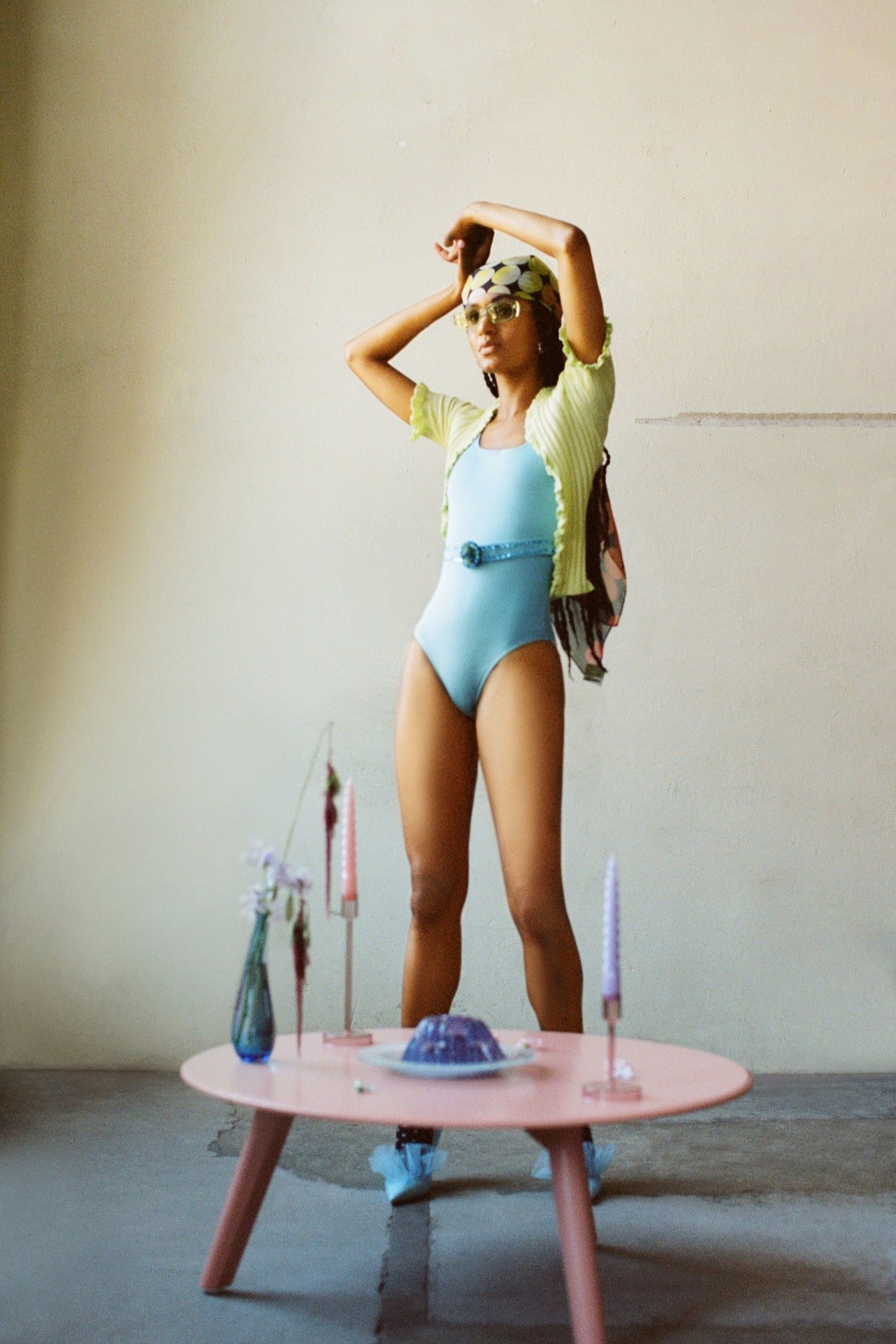
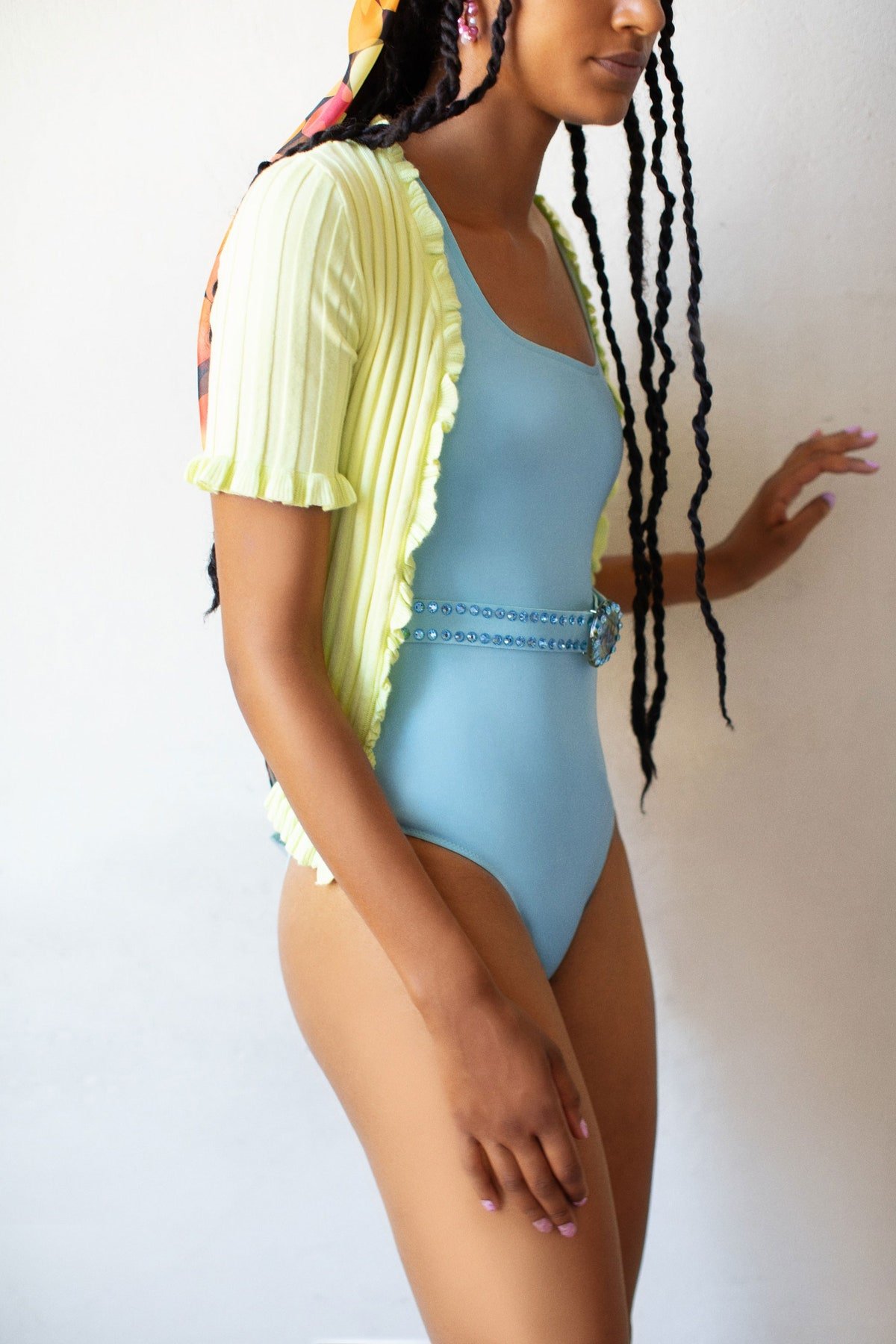
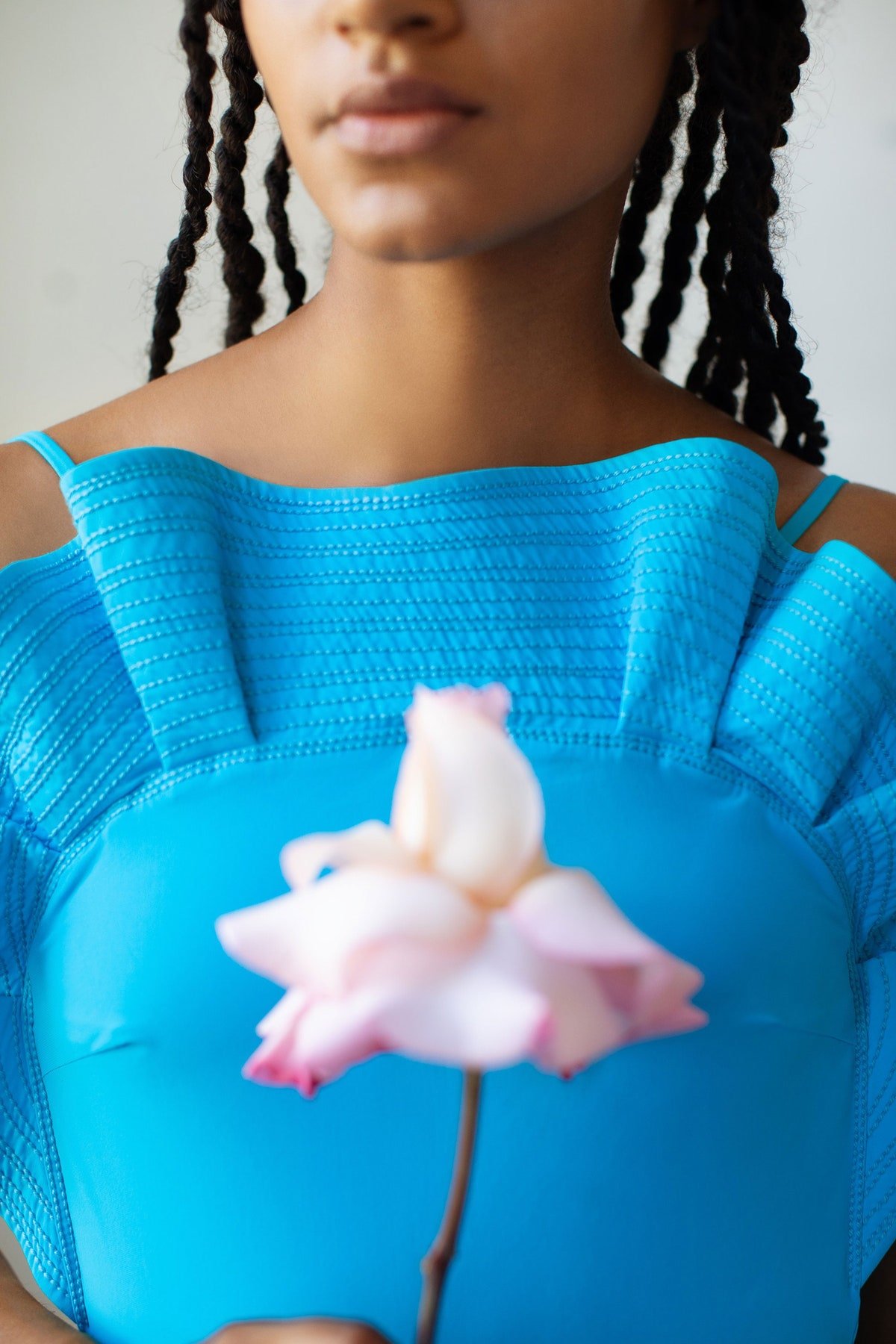
Her latest collection-the first to be 100% sustainably made-focuses on the joy of fashion. Dubbed ‘baby icing,’ it puts a foodie spin on swimwear with pastel tones and swirling shapes taken from the confectionary world. “It’s about not taking yourself too seriously,” says Balek. “Reminiscing on childhood and the carefree attitude we all once had.” The pastel one-pieces, neon cardigans, and v-neck swimsuits studded with crystals capture that feeling, as do the pattern-heavy caftans featuring abstract images of flower petals and woodblock prints. Accents bejeweled belts, ruffled tops, and even gloves push things into the ready-to-wear category. Fanciful as they are, it’s easy to imagine Balek’s pieces out on the town. “The designs work double-duty and can be worn outside of the beach in daily life,” she says. “Besides, who doesn’t love cake?”

The positive perspective is indicative of how Balek wants to live now. Like many she was constantly on the go for work before COVID-19, jetting to Paris and Milan for appointments with retailers and enjoying the nomadic existence of a global citizen. The necessity of 2020’s international travel restrictions has allowed her to refocus, working from home in Phuket and rediscovering what matters most. Namely, building a business that supports her community and does so sustainably. “Thailand is starting to wake up to the climate change revolution, and there is still a lot of work to be done,” she says. “We’ve been at the forefront, and I hope it can inspire other brands to join our mission. There is no need to have ten collections dropping in a year or constantly churning out new drops to entice the customer to buy, buy, buy. Having fewer collections a year allows the customer to shop for each season consciously.”
Though she still follows the collections and is passionate about exuberant design and art, she’s moved away from a consumerist mindset. “Living sustainably goes hand in hand with living a more minimal lifestyle,” she says. “These days I’m very conscious of every purchase I make, and I take time to consider what the item will add to my life and if it’s a necessity or luxury. It’s still ok to buy things because you want them, but not every day! It’s about finding a balance.” Shopping locally at boutiques, ditching single-use plastics, and starting a garden in her backyard where she grows fruits and vegetables have all been part of her personal evolution. Now active in finding ways to live intentionally as an entrepreneur and a person, she’s found a greater sense of purpose. “I’ve always wanted to help women feel beautiful and confident in their skin,” she says. "To do it in an eco-friendly way is the cherry on top.”