PanamaTimes

Monday, Oct 26, 2026

Huawei Mate X2 folding phone unveiled despite chip supply worries

Huawei Mate X2 folding phone unveiled despite chip supply worries

Huawei has unveiled a revamped foldable smartphone, which it says has a much smaller internal gap when closed than that of its main rival Samsung.

The Mate X2 marks a major redesign for the Chinese firm. When shut, the large display is now hidden inside the device rather than exposed over its exterior, as was the case with past generations.

But its price - about £2,000 ($2,800) - is likely to limit demand.

And US trade bans also threaten the firm's ability to produce them.

The company's consumer devices chief acknowledged the challenges it faced in his opening remarks about the new phone.

"US sanctions have posed great difficulties to our business operations and day-to-day work," Richard Yu said in a video recorded at the firm's headquarters near Shenzhen.

"However, thanks to the solid support of our partners, suppliers and in particular consumers around the world, we survived 2020."
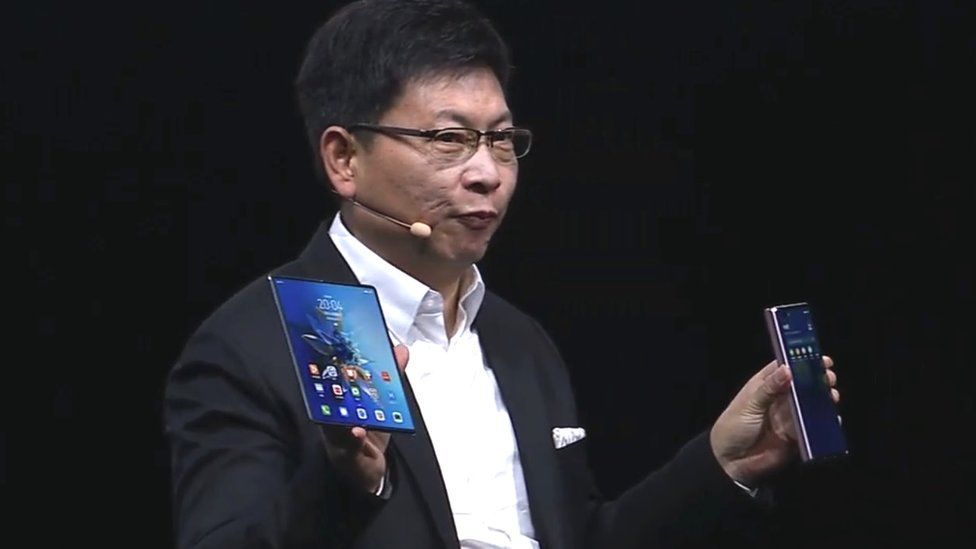
Consumer devices chief Richard Yu hosted the launch event

Unlike many of Huawei's past high-profile launches, this event was hosted in Mandarin Chinese rather than English, reflecting the fact that its sales are still growing in its home market and falling elsewhere.

But the firm has posted a subtitled version on YouTube.

Water drop cavity


Huawei says it developed a new robust hinge mechanism to safeguard its tablet-like display.

When closed, part of the flexible screen folds into a "water drop-shaped" cavity to prevent it coming under strain at the crease.
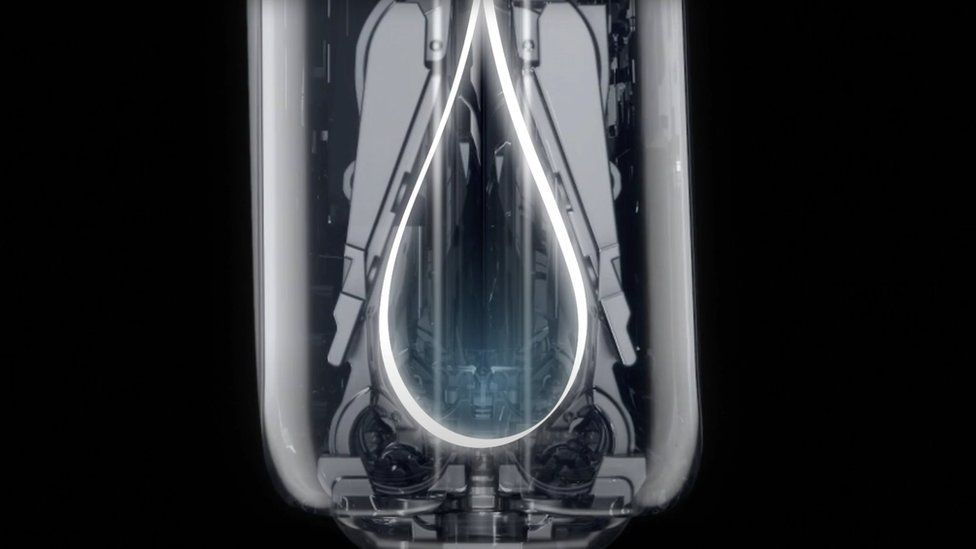
Huawei says its design incorporates high-intensity steel and a carbon fibre support

Mr Yu said an added benefit of the patented innovation was that the crease was also less visible when the screen was opened.

By contrast, the Samsung's Z Fold 2 angles its two halves to create an intentional gap along its spine.

Mr Yu also highlighted that Mate X2's 8-in (20.3cm) main screen was larger than its rival's 7.6-inch (19.3cm) equivalent, and claimed the dimensions of its exterior display - for when the phone is closed - was better suited for apps than its competitor.

In addition, he claimed the use of a new "nano-optical layer" meant the display was much less reflective.
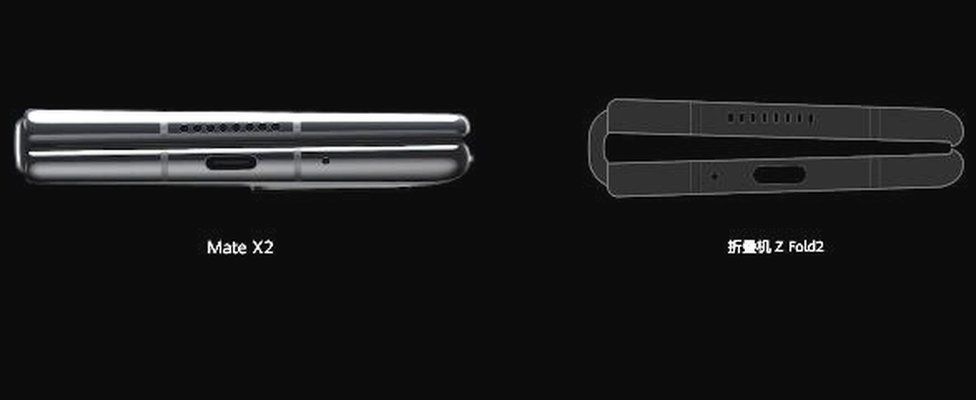
Huawei's design reduces the risk of objects sliding inside the closed flexible screen

But one company watcher said it was an unavoidable fact that Huawei had followed its rival's design lead.

"The original Mate X looked phenomenal with its soft flexible screen wrapped around the outside of the device, but it was instantly apparent that it was going to be extremely vulnerable," commented Ben Wood from CCS Insight.

"And all the ones that I saw failed early in their life."

He added, however, that the high cost of both companies' foldables meant neither would be bestsellers.

"This is more about technology bragging rights, but it signals a real desire to find a new disruptive form factor."

Sales slump


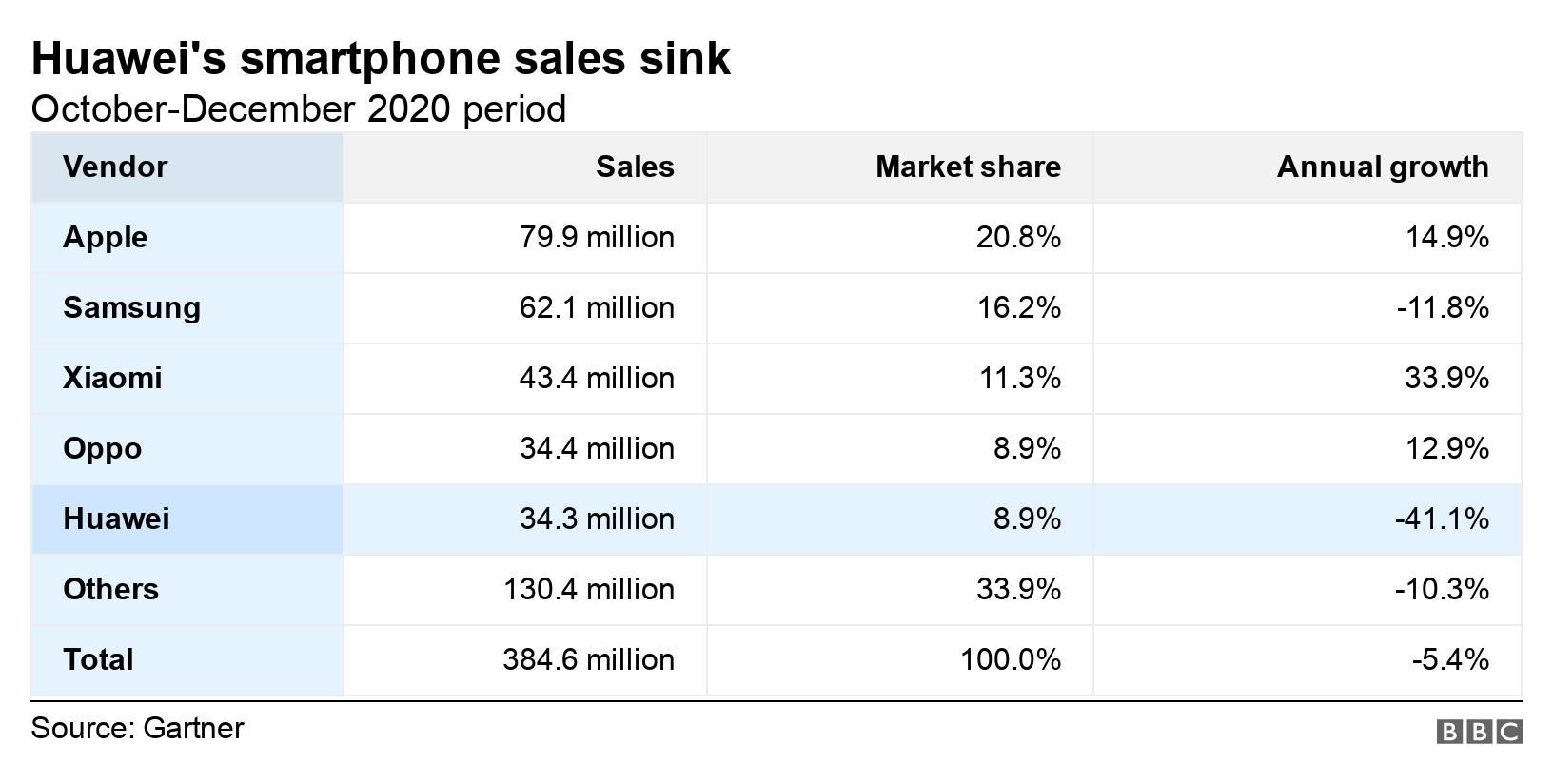
The launch coincides with a report from market research firm Gartner that indicates Huawei sold 41% fewer handsets in final three months of 2020 than the same quarter of the previous year.

This is, in large part, down to it being unable to offer either the Play store or several of Google's other apps - including YouTube, Maps and the Chrome browser - as a result of US trade sanctions.

Huawei offers similar software of its own, as well as the means to "side load" third-party products not listed in its App Gallery marketplace.

Even so, it has seen consumers switch to rival Android handsets, including those of Xiaomi.

"Outside of China, Google services are crucial to end users, and offering alternatives is not really going to work," explained Gartner analyst Anshul Gupta.

"But in China, people don't use Google services, and Huawei has a much stronger distribution network and brand there.

"And it's been able to take share from competitors in its home market."
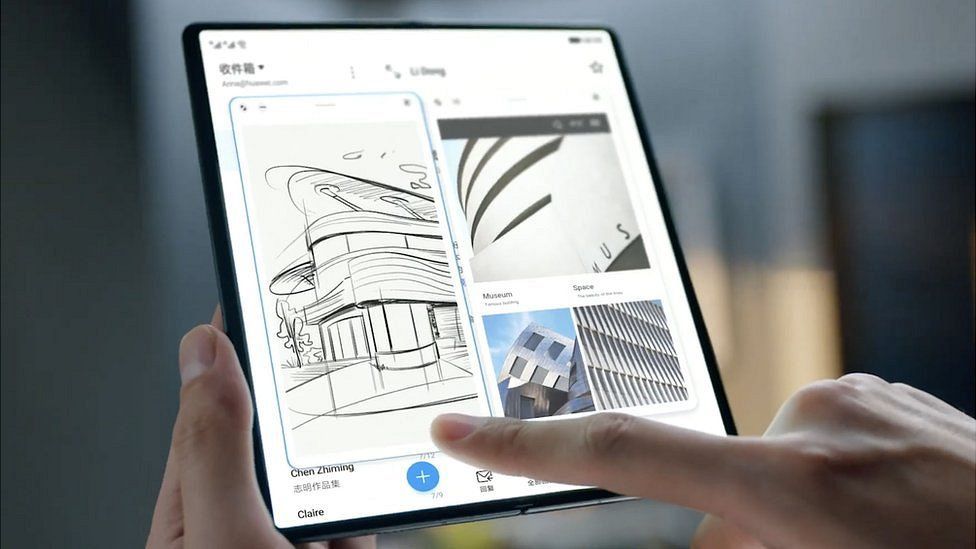
Huawei claims the dimensions of its large and small screens are superior to Samsung's

But even in China, Huawei faces a problem - it only has a dwindling number of its Kirin processors left to power its phones.

Huawei designs its own chips, but had been reliant on a Taiwanese firm, TSMC, to manufacture them.

Only TSMC and Samsung have the expertise and equipment to manufacture the microprocessors involved.

But the US has banned both from doing so on the grounds that Huawei poses a national security risk - something the Chinese firm denies.

Last week, Nikkei Asia reported that Huawei had notified its suppliers that its orders of other smartphone components would be more than 60% lower in 2021 than last year.
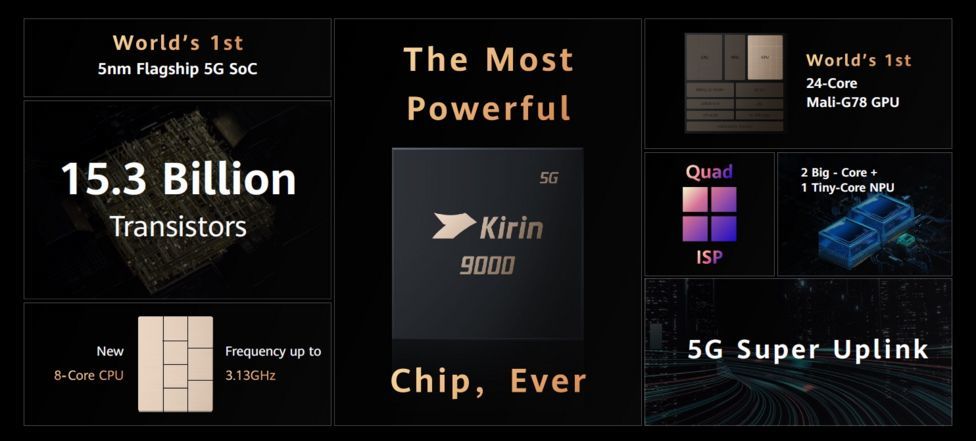
Huawei's press materials boast of its chip's prowess, but it cannot currently produce more of them

Huawei has already sold off its Honor brand.

But the company has denied reports that it is considering a similar move for its flagship brand, with its founder and chief executive Ren Zhengfei telling the press he would "never" sell the division.

"Unless the restrictions are lifted or loosened, or Qualcomm and other chip-makers are given permission to supply Huawei, then I think it will run out of processors in a quarter or two," said Mr Gupta.

Mr Yu said during the launch the firm had enough production capacity to meet demand for the Mate X2.

And when pressed about its wider smartphone business, a spokesman said: "We remain confident about the future."


WATCH: Huawei's earlier folding phones closed "face-out"


Newsletter

Related Articles

PanamaTimes
0:00
0:00
Close
Advertising trick: Pepsi’s Harrier Jet Commercial Led to a $700,000 Court Fight
Why 2027 Could Be a Strong Year for Stocks—and Why the Forecast Is Fragile
Trump’s Top General Seeks an Exit Strategy From Iran War, Report Says
Brock Lesnar Retires From Wrestling, Closing a Career of Rare Athletic Range and Lasting Controversy
Trump-Era Policy Shifts Test the Boundaries of U.S. Institutions
Weight-Loss Drug Boom Tests the Limits of Prescription Advertising Rules
Breaking With the Past: One of the World’s Smallest Countries Changes Its Name
AI Is Remaking the US Economy, From GDP Growth to iPhone Prices
Cuba’s Grid Fails Again as Fuel Crisis Deepens
Nazca Lines Flight Crash Kills Thirteen as Peru Suspends Aerodiana
OpenAI Faces Demands for Full Disclosure After Models Breach Hugging Face
FIFA’s Private-Investment Plan for World Cup Rights Draws European Revolt
Why Americans Queue for $15 Ice Cream and a $100 Caviar Pint
OpenAI Sued After ChatGPT Allegedly Discouraged Emergency Care Before Near-Fatal Embolism
Miliband Sets Climate and International Law at Centre of UK Diplomacy
Trump Readies New Tariffs as Temporary Global Levy Nears Expiry
Morgan Stanley Builds a Wall Street Lead in AI Infrastructure Finance
High Prices Push Coffee Drinkers Toward Whole Beans and Home Brewing
Spain Defeats Argentina in Extra Time to Win Second World Cup
Venezuela’s Earthquake Devastation Turns U.S. Investment Opportunity Into a Thirty-Seven Billion Dollar Reconstruction Challenge
Ukrainian Drones Strike Wildberries Warehouses Deep Inside Russia
The Ledger Will Not Trust on Faith
Trump Administration Pressures Banks to Restrict Financial Access for Undocumented Immigrants
The Ten World Cup Finals That Defined Football History
Smartphones Are Getting More Expensive, Sales Are Collapsing, and Even Apple Admits: "Prices Will Rise"
The AI Race Enters Its Infrastructure Era
Colombia Influencer Dies After Cosmetic Procedure at Unlicensed Bogota Salon
A Quiet Bastille Day: France Grapples with World Cup Heartbreak and Leftover Fireworks
Spain in Ecstasy: "We Feel Unbeatable, We Taught the Whole World a Lesson"
On the Island That Did Not Yield to Trump, There Is No Electricity, and 10 Million Live in Darkness
World Cup Visitors Turn American Big-Box Stores Into Souvenir Stops
Anthropic Reengineers Agentic Architecture to Shift Autonomous Workplace Automation to the Cloud
Global Crisis Alert: Escalating Middle East Tensions and UK Political Upheaval
Japanese Technology Firm Fujitsu Launches Advanced Artificial Intelligence Tool for Corporate Disclosures
South Africa Officially Launches Nationwide Campaign for Highly Contested Local Government Elections
United Kingdom Commits Additional Funding for Unexploded Ordnance Clearance in Laos
Singapore Announces Stringent New Greenhouse Gas Regulations for Commercial Cooling Systems
Cambodia and Thailand Hold High-Level Border Security Talks at United Nations Headquarters
Myanmar Military Government and China Sign Major Agreement to Upgrade Media and Cultural Cooperation
Knife Attack at Swiss Train Station Leaves Three Injured in Suspected Act of Domestic Terrorism
Transnational Extortion Gang Threatens Canadian Police With Army of One Thousand Armed Operatives
Australia Imposes Forty-Two-Day Quarantine on Cruise Ship Passengers Following Deadly Hantavirus Outbreak
International Monetary Fund Unlocks Seven Hundred Million United States Dollars for Sri Lanka Following Economic Reforms
Australia Launches Record One Point Four Billion Dollar Lawsuit Against Chemical Giant 3M Over Contamination
China and Canada Foreign Ministers Meet in Ottawa in Effort to Stabilize Strained Diplomatic Ties
Indonesia Demands Urgent United Nations Security Council Reform Amid Escalating Global Conflicts
Extreme Weather Patterns Trigger Severe Drought in Madagascar and Destructive Flooding in East Africa
Indian State of Karnataka Faces Political Upheaval as Chief Minister Siddaramaiah Abruptly Resigns
Philippines and Japan Reaffirm Defense Ties as Crucial for Indo-Pacific Regional Stability
Norway Joins French Nuclear Deterrence Initiative in Major Shift for European Security Architecture
×