
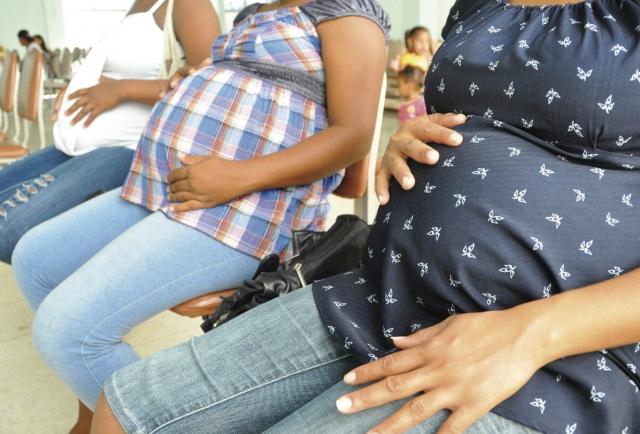
In Panama, 8 out of 10 pregnant women have a type of malnutrition; 7 are overweight
Let's talk about nutrition in Panama. In the country, malnutrition occurs in 8 out of 10 pregnant women, and of these, 7 are overweight.
This is established by the data collected in the National Survey of Panama (Enspa), carried out between the Gorgas Commemorative Institute for Health Studies, the Ministry of Health and the Comptroller's Office of the Republic, which will contribute to locating health and not disease as goal of Panama's public policies.
Pregnant women in the urban area had the highest prevalence of nutrition due to deficiency and at the same time one of the highest prevalence due to excess, reaching a double burden of malnutrition of 87.4%.
The evaluation of the nutritional status of pregnant women without edema was carried out according to the criteria adopted by the Ministry of Health, which is based on the curve of BMI according to gestation age. According to this classification criterion, it is observed that, in the country, 9.5% of pregnant women were underweight, while 72% were overweight.
When classifying by categories of excess weight, a prevalence of overweight was estimated in almost one in three pregnant women, while obesity reached 4 in 10 pregnant women.
The pregnant women most vulnerable to poor nutrition due to deficiency were those aged 15 to 19 years and those aged 40 to 49; in two groups, low weight reached one in four and one in three pregnant women, respectively.
The behavior of excess weight by age group shows that the lowest prevalence is located at 32.1% in pregnant women aged 15 to 19 years and the highest prevalence was estimated at 86.1% in women aged 30 to 39 years .
The analysis by health region indicates that the highest prevalence of excess weight was registered in the metro Panama region (86.3%), followed by the Bocas del Toro region (81.8%), while the highest prevalence Low was estimated in pregnant women from the Emberá region (27.8%).
Although the data from the National Survey of Panama (Enspa), carried out between the Gorgas Memorial Institute, the Ministry of Health and the Comptroller's Office of the Republic, cannot ensure statistically significant differences due to the wide margin obtained in the confidence intervals, of According to point estimates, the regions with the most obese pregnant women were Panama metro, Bocas del Toro, Coclé, Chiriquí and Darién.
In the Herrera, Los Santos, East Panama, West Panama, North Panama, Veraguas and Ngäbe Buglé regions, the highest proportion of excess weight was due to being overweight. In the regions of Colón, the prevalence of obesity was less than 1%, however, overweight in this region reached 36.2%.
In the last 11 years, the prevalence of overweight in the country remained, however, the prevalence of obesity increased 15.1%.
Obesity in the population
In Panama, excess weight in people over 18 years of age reached an estimated prevalence of 71.7%, with no major differences between the overweight and obesity categories.
Overweight was higher in men, while obesity was higher in women, with statistically significant differences for both cases.
In the last 16 years, excess weight increased approximately 20%, reaching a similar prevalence in urban and rural areas.
In the indigenous area, the greatest increase in excess weight was recorded, estimating some 22.1 percentage points above the estimate registered 11 years ago; if this trend continues in less than 5 years, the prevalence of excess weight will be similar regardless of the area of residence. An alarming statistic.
Currently, the prevalence of excess weight in Panama in adults aged 20 and over was estimated at 73.2%.
The analysis of overweight by age group shows that the lowest prevalence was reported by those under 19 years of age where overweight reached 19.9%, while in people aged 20 years and over, overweight was diagnosed in a third or more than the population.
Regarding obesity, it was found that four out of 10 people between 30 to 54 years old were classified as obese, therefore people belonging to the age groups of 18 to 19 years and 80 years and over showed the lowest prevalence of obesity this being 10% and 12.3%, respectively.
The prevention of overweight according to urban, rural and indigenous areas registered a similar behavior; while the prevalence of obesity was significantly different according to area, estimating 37.3% for the urban area, followed by the rural area with 32.9% and the indigenous area with 25.8%.
Most of the health regions registered an estimate of one in three people, with the exception of the Veraguas region where the prevalence reached 40.3% and in the Bocas del Toro region 39.3%, both with a difference greater than the national estimate.
With respect to obesity, the highest prevalence was observed in the health region of Bocas del Toro (47.6%) followed by highly urbanized regions such as North Panama (39.9%), San Miguelito (39.6%) and Panama metro (37.8%).
When observing in more detail the malnutrition due to excesses in the indigenous regions, it is evident that overweight and obesity notably affect the Emberá (55%) and Ngäbe Buglé (68.6%) regions and even in the Guna Yala region, in where the lowest prevalence of excess weight was recorded, obesity affected almost one in three people aged 18 years and over.