

Is it the end for the lush lawns of Los Angeles?
Ms Toby's attitude toward grass lawns has changed over the years. She wanted a lawn when her son was young and playing sport. But once he stopped, she let it die.
This was partly for practical reasons - as a lawn requires a great deal of maintenance. But the decision was also related to her interest in conserving water, amidst the persistent drought conditions in Los Angeles, California.
Her husband still likes the idea of a traditional lawn and picket fence, but Ms Toby is considering replacing the lawn altogether.
As a volunteer at the Theodore Payne Foundation for Wild Flowers & Native Plants, she is surrounded by alternative ideas.
Milkweed remains a popular plant with customers, she says, due to being both heat-tolerant and butterfly-friendly.
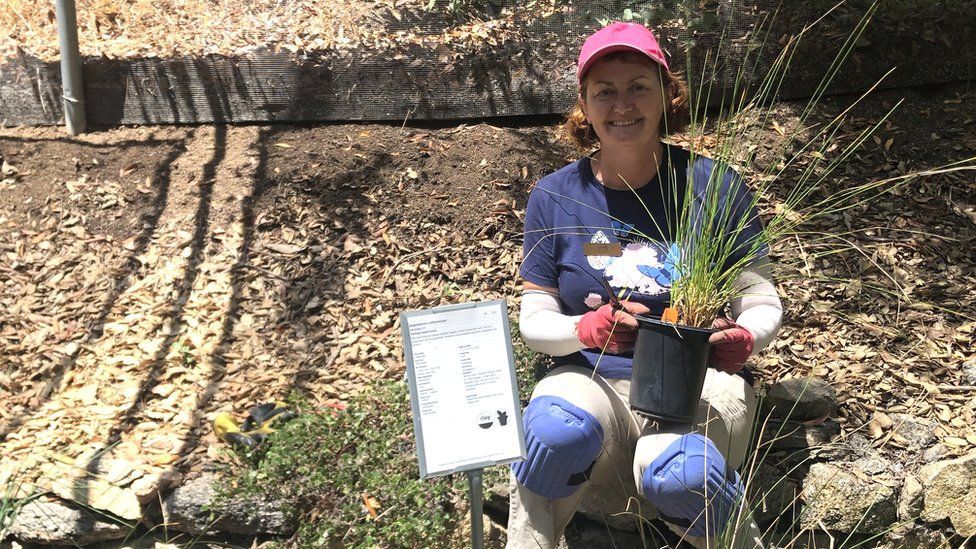 Lynne Toby works with groundcover alternatives
Many conservation-minded homeowners in Los Angeles are in a similar position. Every year, there are more rock gardens, shrubs, cacti, wood chips, wildflowers, and other landscape types appearing in front of Southern California homes.
Water agencies in Southern California have been encouraging these lawn replacements for years. But landscapers and horticulture organisations have seen an uptick in interest since April, when the Metropolitan Water District announced unprecedented new restrictions on outdoor watering, which in the UK would be described as hosepipe bans.
Under the new rules, which came into effect in June, millions of residents are limited to one day of outdoor watering per week. In Los Angeles, two days of outdoor irrigation are allowed, but only outside the hours of 9.00 to 16.00, and on certain days of the week.
Kristen Torres Pawling, who directs sustainability programmes for Los Angeles County, calls this "the dawn of a new era".
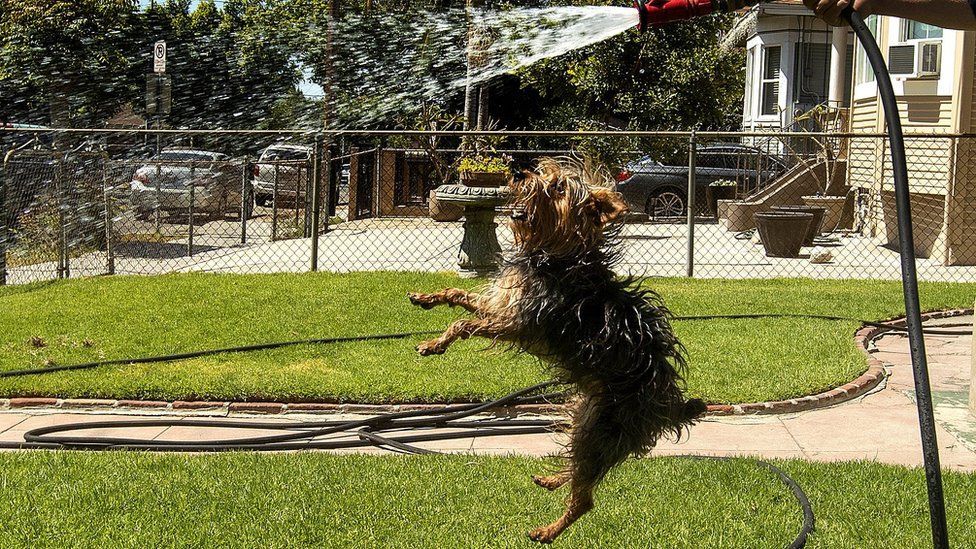 New rules are further limiting watering in Los Angeles
New measures are badly needed, given the recurrent dry periods, and uninspiring record of water conservation, in Southern California.
Water agencies offer rebates to encourage lawn replacement, but these incentive programmes are inconsistent, complicated to navigate, and insufficient to cover the full cost of overhauling a lawn.
The cost of lawn replacement might be $10-15/square foot (£8-£12), estimates Pamela Berstler, co-founder of the Green Gardens Group, a consultancy on regenerative land management.
Meanwhile, the rebates for lawn-to-garden transformation are in the range of $2-3/square foot.
According to the Metropolitan Water District, only 2,411 people applied for turf replacement rebates between July 2020 and June 2021. This is a small number for a network of water agencies covering 19 million people in Southern California.
Lawn replacement often comes down to what people can afford: lower-income residents, who have outdoor space, may not have the time, or money to devote to landscape restoration.
Higher-income people can afford to keep up their verdant lawns, simply paying any fines for violating water restrictions.
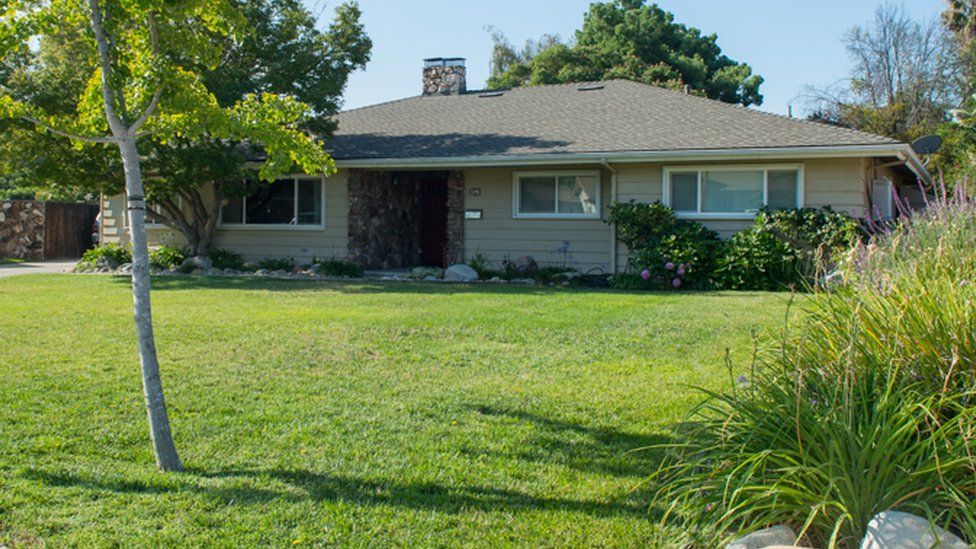 The authorities would like to see lawns transformed from this...
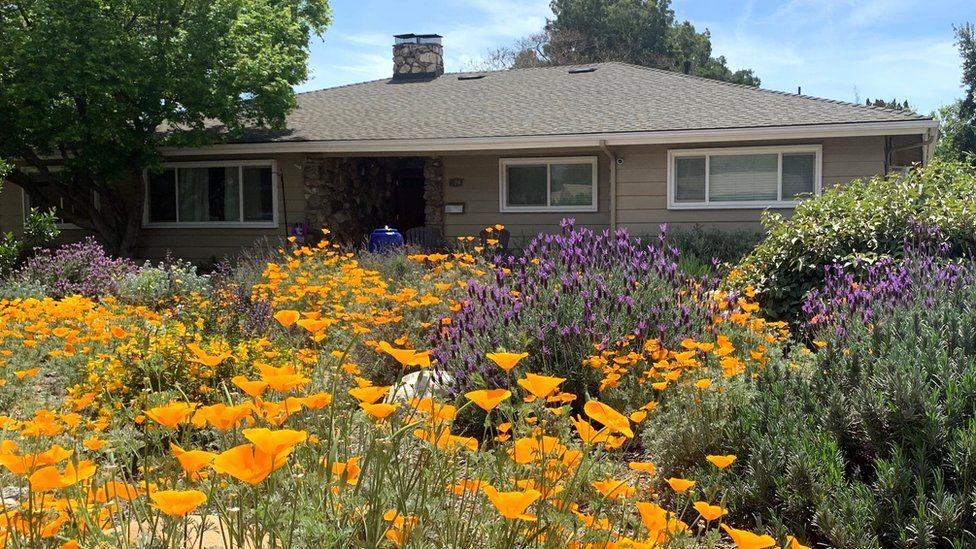 ... to something like this
Ms Berstler calls for a more nuanced approach to landscape restoration than simply seeing all lawns as bad. "These agencies and municipalities have been so focused on removing turf, that...they miss the fact that people actually want grass."
Some types of groundcover are drought-tolerant and have essentially the same functions as lawns. These include patented plants like Kurapia and native, warm-season grasses.
"The type of lawn that is installed most often is a cool-season grass," explains Ms Berstler, which needs twice as much water as warm-season grass. She says that children could continue playing on warm-season grass in winter.
But embracing this more locally appropriate grass would require a change in mentality. Residents would have to be ok with seasonal change, such as seeing their grass go dormant and brown in the winter.
"We have to shift the aesthetics from monoculture lawn to something else," Ms Berstler argues. "The monoculture is not going to stay green on one day [of watering] a week."
A new reality for Southern California's yards doesn't have to be bleak.
Stephanie Pincetl, an expert on sustainability and the environment at the University of California, Los Angeles, offers one vision of how the landscape would change if more people embraced the area's Mediterranean climate.
This would take the place of an unrealistic, aspirational lushness that dates back to white settlers in previous centuries who came from places with more water and thirstier plants.
A more locally appropriate landscape would have more birds and insects, Dr Pincetl says. There would also be more flowering plants. Even the aromas would be different, with "kind of fragrant, pungent, sage-type smells". Overall, "I think you would have a more diverse and interesting outdoor landscape."
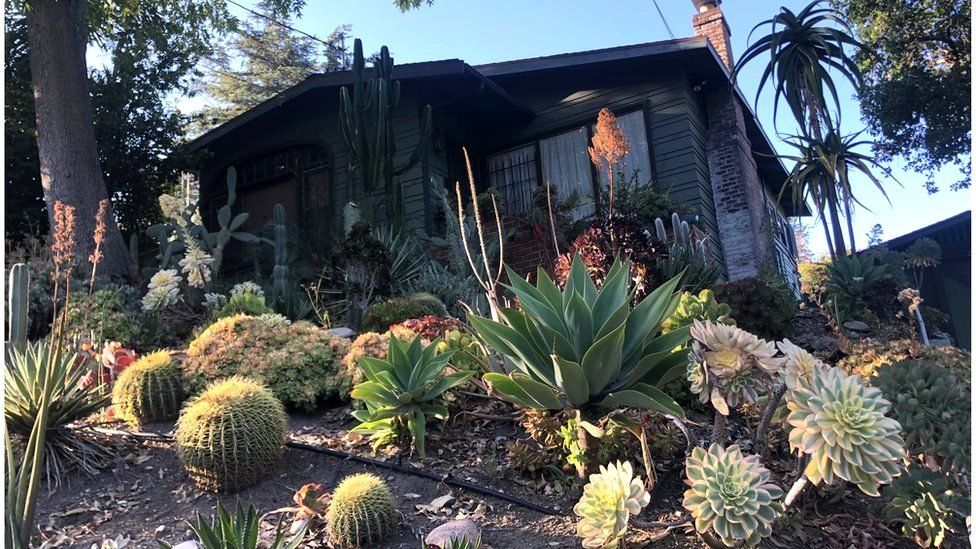 Cacti and flowering plants are a good alternative to grass in Southern California
Short of this kind of sea change, Ms Berstler believes that for residents who aren't ready for full lawn replacement, even incremental changes would improve soil health and sponginess, which she calls "the most important thing you can do for water conservation".
Mowing the lawn less, using fewer herbicides, and planting a variety of plants wherever possible would help a bit.
So would using soil probes to assess how much moisture is already in the soil, to avoid overwatering. Along similar lines, the Metropolitan Water District has provided a grant to Responsive Drip Irrigation (RDI), which has developed tubing with micropores that analyse and respond to signals from plants' root zones.
The more sophisticated tools may only be accessible to landscaping professionals, however.
An overall issue with the current approach to lawn replacement is that it's very individualised, says Dr Pincetl. There is an element of personal responsibility when it comes to lawns and water use, according to Dr Pincetl, where "the water you use on your lawn is the water I'm not going to be drinking next week".
At the same time, more sweeping community-level changes are needed.
Dr Pincetl calls for "a more robust infrastructure of transformation to really help people who want to make that transformation and don't have that kind of capacity". For instance, youth training organisations could work neighbourhood by neighbourhood to support residents in reimagining their lawns.
At the moment, given the challenges, many people opt for artificial turf. While it's an understandable choice, artificial turf has limited ecological benefits.
Ramin Javahery, a businessperson who has lived in Los Angeles for nearly 30 years, likes artificial grass because it "looks nice" and is "easy to maintain". One month ago, he replaced a lawn with an artificial substitute.
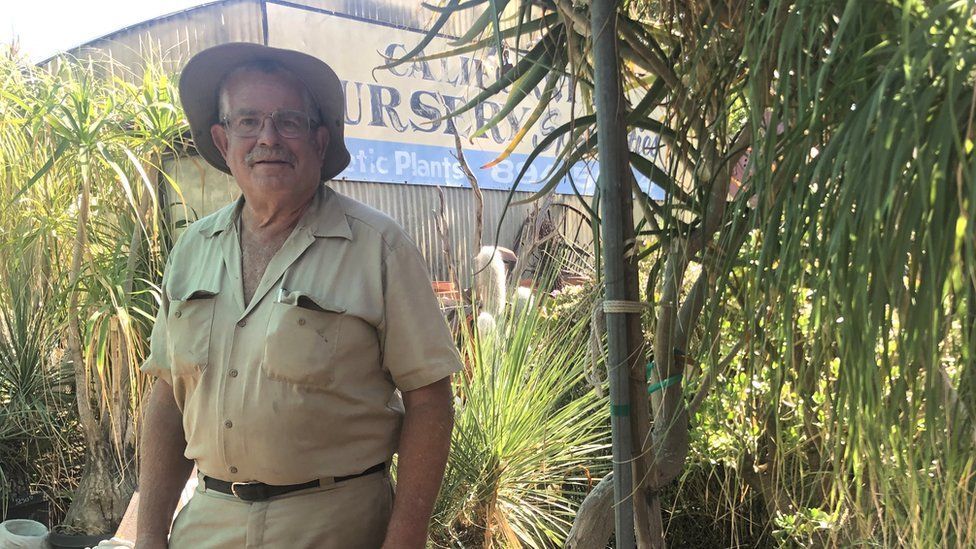 David Bernstein says some people don't believe there is a water problem
Some people don't even believe that drought exists in Southern California, given the wider problem of politicised distrust in authorities, according to David Bernstein.
Mr Bernstein runs the business, California Nursery Specialties, also known as Cactus Ranch, whose plants are all grown at nurseries in Southern California.
Clearly, one of the challenges around the lawn revolution relates to messaging. But these challenges can be overcome.
As Mr Bernstein says of people who have been holding onto an increasingly antiquated style of lawn, "they can have a beautiful place to live and they don't have to waste water".