
PAHO: At this point of the pandemic you have to rely on citizens
The Americas, which represents about 13% of the total world population, accounts for 54% of global infections and deaths from COVID-19, when more than 20 million cases have already been reported in the world, including more than 735,000 deaths, indicates the Pan American Health Organization (PAHO).
The figures are 'dynamic', and while some countries on the continent are detecting more cases than others, others are publishing figures that are excessively low and that has to call our attention to be able to calibrate technical cooperation, Alfaro said in an interview.
The reliability of the data varies from one country to another, but the important thing is not to imply a ranking between countries, because each one has its own reality, said the PAHO representative, a specialist in Family and Community Medicine with a master's degree in Health Management.
THE HOUR OF THE CITIZENS
The strategy of restrictions on the general population to slow the spread of the disease caused by the new coronavirus SARS-CoV-2, which has led to the closure of economic activities, were initially effective, but within five or more months (pandemic) has to be reassessed.
And in these phases that we are entering, we must bet on citizens. It is not with restrictive measures that we will be able to sustain more or less comfortable health services that can respond. All our countries are already very close to entering a critical state, Alfaro alerted.
The inevitable economic opening, Alfaro acknowledged, is associated with new sources of contagion, so it is necessary to maintain information campaigns, as there are already in many countries, that tell people how to take care of themselves because still many people do not know.
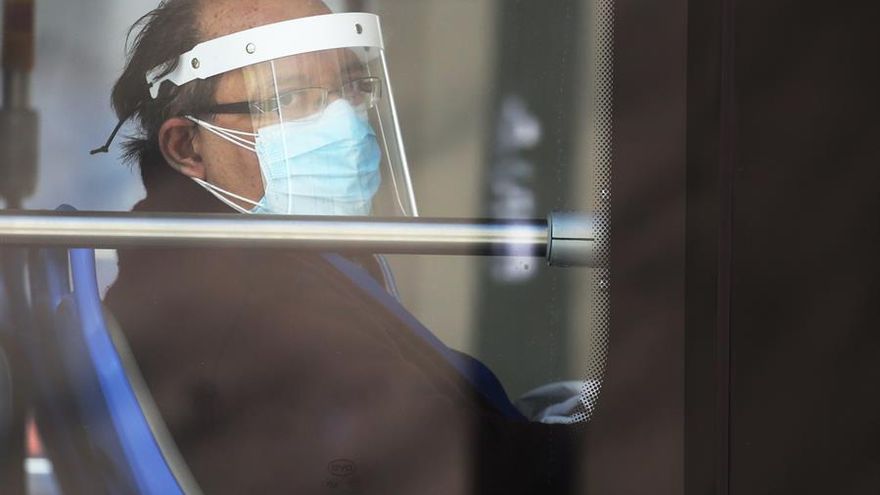
This goes from the use of the mask, which has proven to be effective, the physical distancing, those two meters is what I have seen that people forget the most, to wash their hands.
Alfaro urged countries to bet on the strategy of "family bubbles": families that go out together and follow all biosecurity measures.
This will contribute not only to reducing people's stress but also to reactivate microeconomics, for example in rural and beach areas, which are usually the preferred destinations for recreation and places to which those lucky ones who have not lost their job could come, Alfaro explained.
One form of citizen participation to face the pandemic is to activate the academic sectors, which are a bit off, Alfaro said.
We need students of Social Sciences helping to build models for monitoring and evaluation of the social component, students of Economics helping to make predictions, innovating with proposals that protect jobs, he said.
NEW FOCUS OF ATTENTION AND APPROACH
Alfaro indicated that when the region is approaching half a year of pandemic it is time to move the focus of attention from hospitals, the ICU and the number of deaths, towards other approaches that we at PAHO consider very important.
One of them is change the approach from health services, from health policies and from the promotion of health to focus on chronic ailments such as diabetes, hypertension, heart disease and obesity, which appear as comorbidities in severe cases or death from COVID-19.
We must reinforce the care of people with chronic diseases. We cannot close the external consultation, we have to have full coverage, identify people, be sure that they receive their treatment, he said.
He commented that the epidemiological indicators that have been used are losing sensitivity and usefulness over time and put the case of the RT or transmission rate: which is already close to 1, let's say it is not so sensitive, must be disaggregated sub-nationally and see, which are the communities that are steadily increasing the number of cases in order to focus actions there.
Alfaro also warned about 'becoming numb' to the pandemic, and starting to see it is as normal that each day 800 or more new cases of COVID-19 are reported, or that each day 25 or more deaths are reported, something that he called "tremendously dangerous because we began to lose the capacity for analysis, self-evaluation and self-criticism."
You have to let us learn about all this that we are suffering with the pandemic and that is still missing. We are adjusting our cooperation plan for the next 12 months, because although we have good news in terms of vaccines, from here until our countries have at least less than 70% of its vaccinated and protected population will be at least 10 or 12 months, he said.