
Panama protests continue
More than 25 street closings registered during the last two weeks in different parts of the country, the reason has been the same: people lack of money to buy food and the absence of government aid amid the quarantine imposed to contain the coronavirus.
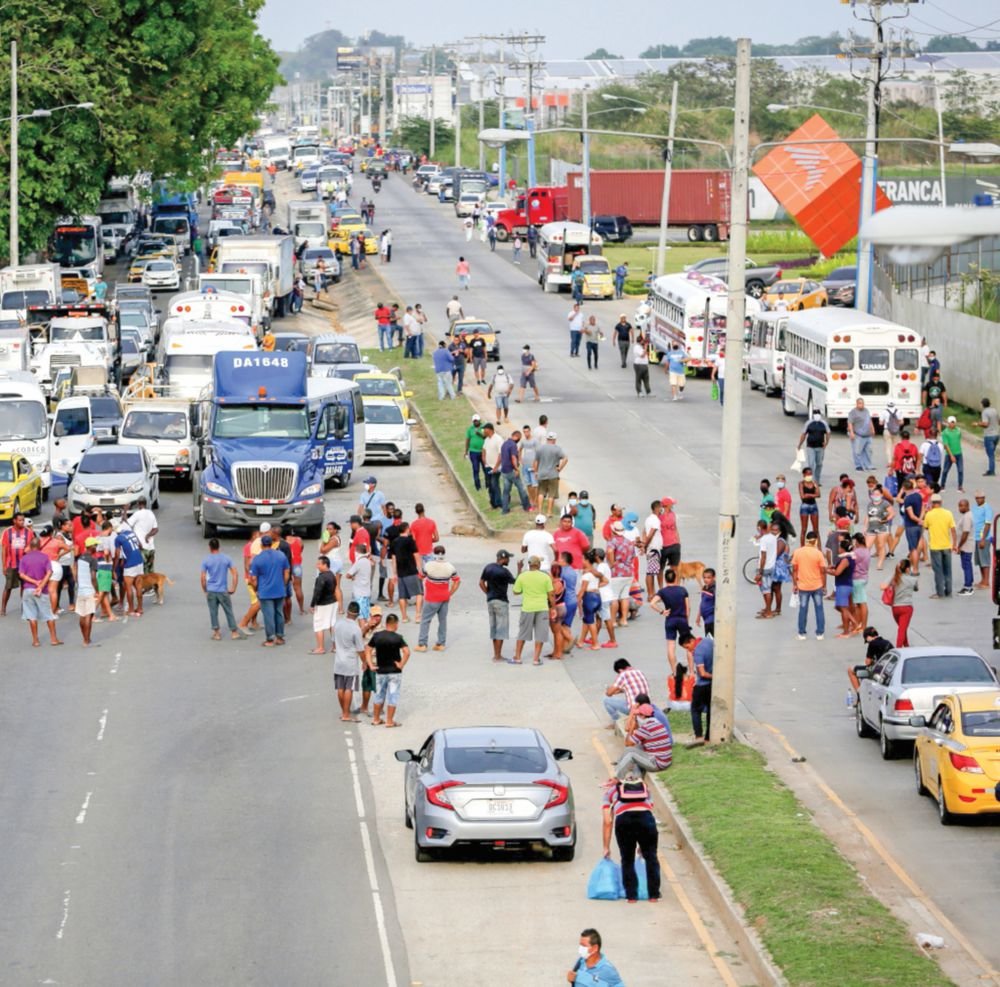
On Wednesday, the Inter-American highway at the height of Loma Cová, Arraiján, became one of the main focuses of the news: residents of Valle del Sol, La Cascada, La Paz, and La Nubes communities closed the four lanes of the route for several hours. They demanded the delivery of bonds and food bags of the Panama Solidarity plan. One group reported that since the quarantine was decreed, there has been very little help they have had. Others even reported that nothing has come to their communities.
They said that last Tuesday they were brought 500 bags of food, but that more than 5,000 people live in the area, so there was great discontent. Others said they wanted the aid money voucher.
They played pots and whistles, and screamed that they needed to be taken care of.
The same scene was seen in the San Isidro Valley, in San Miguelito, where residents closed the access roads to the area. They demanded the delivery of the food bags and the voucher. Omar Montilla, vice minister of Commerce and Industries, and who was the representative of the district of Mateo Iturralde for two periods, promised that on Thursday aid would come to them.
In the same district, but in Nuevo Progreso, a group of protesters closed the widening of the Pedregal - Gonzalillo - Transítmica highway, better known as the "corridor for the poor." They complained that they had not eaten for two weeks.
One of the protesters reported that residents of some areas have been given bags of food, but that they were not enough for everyone.
But there were also complaints in Torrijos Carter, San Miguelito. In Rana De Oro, and Montería, sectors of the township of Pedregal. Like La Valdesa in La Chorrera, Panamá Oeste.
Inhabitants of Colón also took to the streets. In the morning hours the road closures were also happening. The protesters even blocked the Panama-Colón highway near Puerto Escondido.
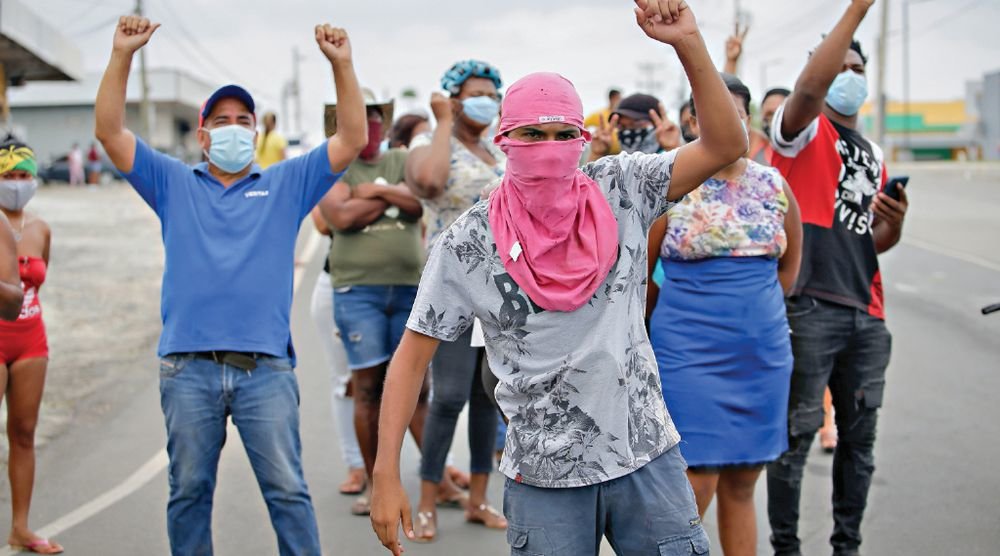
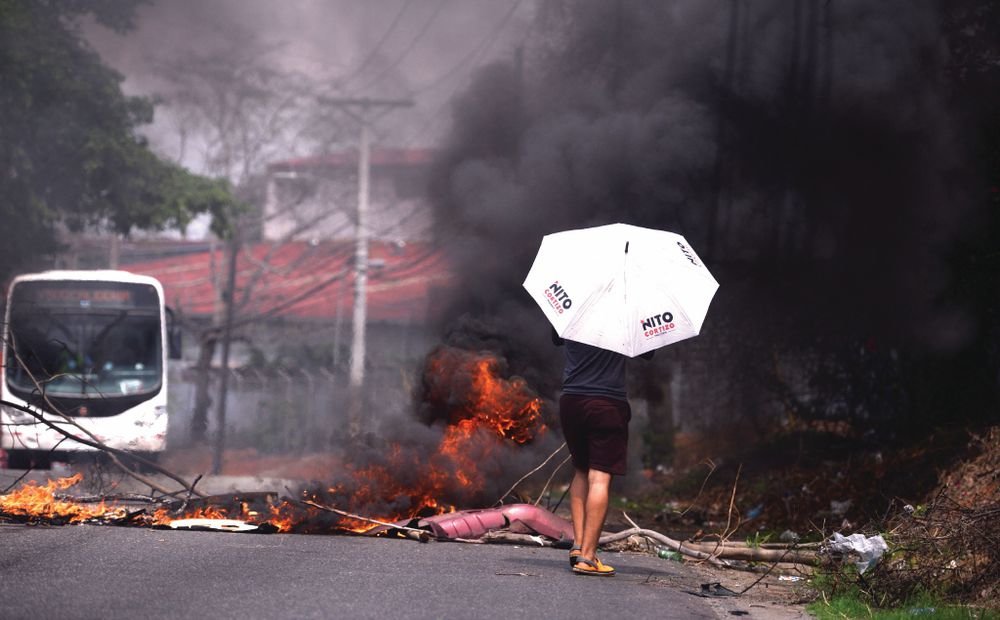
The scene of all the protests was very similar: burning of tires, posters with anti-government slogans and screaming. Some wore balaclavas in red or black. National Police arrived the scenes to try to calm things down, but failed to reopen the tracks.
In late March, when the Panama Solidarity plan started, President Laurentino Nito Cortizo announced that aid would reach at least 1 million people, and that local governments (representatives of the corregimiento and mayors of the country) would be part of the team, and that he would deliver the vouchers and bags of food, house by house. They would do so in coordination with other ministries: Social Development, the Presidency, Agricultural Development, and Public Security, among others. At that time, an initial $50 million was announced to activate the program. However, day after day, complaints about alleged irregularities in the distribution of aid increase. One of the most constant claims is the criteria choosing the beneficiaries.
While last Tuesday, Panama Solidario was the subject of debate in the Municipal Council of Panama. The representative of Bella Vista, Ricardo Domínguez, for example, assured that the system of delivery of vouchers and bags of food coordinated by the Ministry of Social Development, has not been the most effective.
Yoira Perea, representative of Chilibre, alleged that due to the size of some townships where up to 28 thousand people live, the community boards do not have the physical capacity to make deliveries at the speed required.
While Nelson Vergara, representative of December 24, announced that a deputy, whose name he did not reveal, sends people to the community board to withdraw the solidarity bonds.
Politics?
However, there are voices that argue that although there are legitimate protests that arise from the people's need for food and work in the midst of the health crisis, some protests are motivated by political interests.
In fact, some deputies of the ruling Democratic Revolutionary Party (PRD) have shown themselves in the company of the protesters. "They do not want to pay attention and my people can no longer take it anymore," wrote Colón deputy Jairo Bolota Salazar on his Instagram account, where he uploaded a video of a protest in Colón.
Meanwhile, President Laurentino Cortizo announced yesterday that as of today the “solidarity ID” is activated, a voucher that can be exchanged in supermarkets by presenting the identity card.