
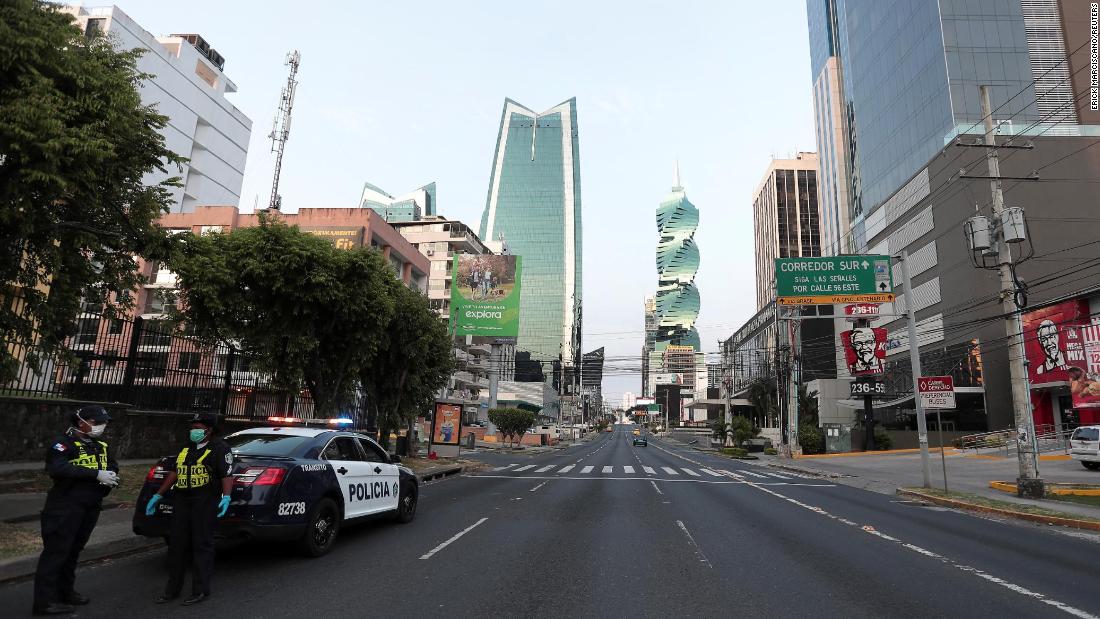
Panama will separate men and women in public during coronavirus lockdown
Panama is taking a new - if somewhat unorthodox - measure to combat the spread of the novel coronavirus: separation of the sexes.
Panama is taking a new -- if somewhat unorthodox — measure to combat the spread of the novel coronavirus: separation of the sexes.
Starting on Wednesday, only women will be able to leave their homes to buy necessities on Monday, Wednesday and Friday.
Men in Panama will be allowed to venture outside to run errands on Tuesday, Thursday and Saturday.
Everyone will have to stay home on Sundays. The restrictions will last for at least 15 days, according to government officials.
The additional measures to the already-announced national quarantine in theory will make it easier for police in the Central American nation to limit the number of people going out in public.
"The great quantity of people circulating outside their homes, despite the obligatory national quarantine, has led the national government to take more severe measures," said a statement by Panamanian President Laurentino "Nito" Cortizo on Twitter.
Earlier, Panamanian officials had ordered all citizens to stay inside except for emergencies and to buy food. But alarmed by the number of people still going out, Panamanian officials decided to divide the week by sex to further limit how much of the public is outside their homes at one time.
Even on their designated days both men and women will only have two hours to do their shopping, according to the Panamanian government release.
Panama has 1075 confirmed cases of coronavirus and 27 deaths, according to health officials, and has already taken some of the toughest measures in the region to stop the spread of the illness.
The country has banned all domestic and international travel. It has shut down airports and -- after a March 22 deadline -- prevented even Panamanian citizens from traveling to the country.
A nightly curfew had already kept Panamanians from leaving their homes between 9pm and 5am each day. Under the new, more stringent measures, the curfew will now begin at 5pm.