
President Cortizo has to flatten curves on multiple fronts
A wave of corruption claims emerged regarding the pandemic related purchases. The claims curve peaked last week over disputed contracts to purchase medical supplies.
The event raised tensions in the Palacio de las Garzas, and put the Vice President of the Republic and Minister of the Presidency, José Gabriel Carrizo, at the center of the debate. Last night, thousands of people blew pailas in the capital to demand Carrizo's resignation.
The new virus has not only tested the capacity of the health system to face the pandemic, but also the ability of the President to overcome a crisis with political measures.
The resignation of the official who managed the purchases for the pandemic, who answered directly to the vice president of the Republic José Gabriel Carrizo, the more than 50 street closings in demand for financial aid, the pressure of the deputies for the sanction of a general law of moratorium, even the clarification of the Presidency that the minister who leads the team that fights against the crisis remains in her post, would overwhelm anyone's plate.
In addition the questions of the main leaders of the political parties, and the persistence of those who request a gradual economic reopening in the face of the rapid deterioration of the social situation, especially of jobs. And in the midst of everything, the drastic fall in income of more than 40% due to the pandemic.
Straining and tensions
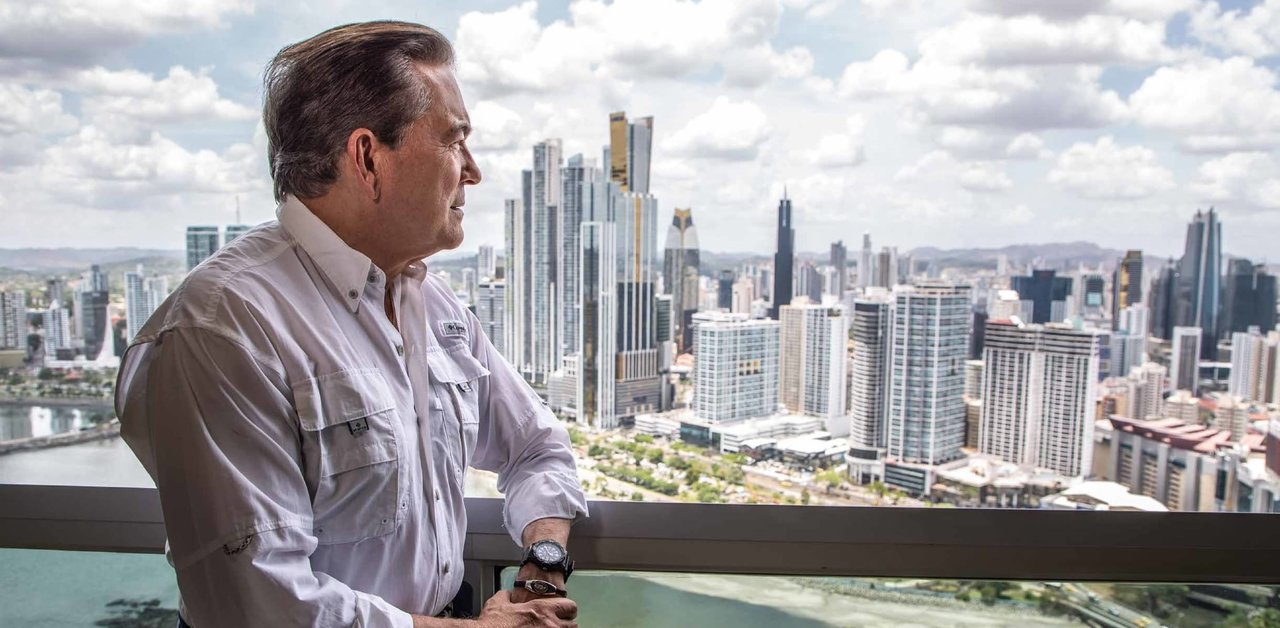
Governing in times of coronavirus also requires political skills at the highest level. Laurentino Cortizo is the 38th president of Panama, the 67-year-old man who returned to put the Democratic Revolutionary Party (PRD) in the Palacio de Las Garzas after 10 years in political "winter". Today he does not only face the the challenge of flattening the contagion curve, but rather that of searching for the "vaccine" to eradicate any threat of corruption that may arise with emergency purchases.
The claims curve peaked last week due to the noise made by questioned contracts to acquire medical supplies. One of them, the purchase of fans with a surcharge, a fact that caused the departure of Juan Carlos Muñoz, vice minister of the Presidency. This event put the spotlight on the man responsible for managing the funds of the pandemic: Vice President and Minister of the Presidency José Gabriel Gaby Carrizo.
With Muñoz out of the palace, a movement grew that even the President's political strategists did not see coming. Citizens began to ask for Carrizo's resignation: #Gabyrenuncia, was all over Panama's social networks.
Voices within the PRD itself approached the matter arguing that requesting the departure of a vice president is "unconstitutional" and would be a "coup."
As tensions increased in the center of power, the demonstrators hit the streets. Discontent reached its peak: street closings, and protests in the Interamericana, Colón, Chiriquí, San Miguelito, and the capital. They claimed the food bags and monetary aid of the Panama Solidarity plan. In the National Assembly, deputies from the ruling party asked for the sanction of laws that imply general moratoriums; and some like Zulay Rodríguez and Crispiano Adames branded the new vice-minister of the Presidency Carlos Cayito García as "malicious", "corrupt" and "figurehead".
Zero quarantine
Gone was that chapter (almost dreamlike) in which the government's decisions were applauded: from the sanitary measures, to the presidential speeches on Tuesday, in which Cortizo compared the sanitary battle against the virus with a war that had to be won.
José Isabel Blandón, president of the opposition Panameñista Party, explains it this way: “that kind of consensus that existed at the beginning of the crisis has disappeared, and has disappeared first, due to the delay in the delivery of social aid, and second because of the scandals of corruption, ”he said.
Blandón, suggested yesterday in Radar of TVN , that Cortizo should call a dialogue with all sectors to rethink the future of the country. "We cannot pretend to solve an unprecedented crisis, with the same things as before, for me to deliver bags from house to house is to apply a formula of the last century for a crisis of the present century," he continued.
The atmosphere
It is not uncommon that in the palace, the last days of April and the first days of this May were tense. The atmosphere is now more charged. Even more than at the beginning of the pandemic, political sources told La Prensa.
Last minute meetings, changes in strategy, scolding, complaints, pressures. With uncertainty on his back, the President has narrowed his inner circle. To face this peak of the crisis, he mainly consults two women: the first is one of the figures who has best positioned himself with emergency management: the Minister of Health, Rosario Turner, a pediatrician who is experienced in crisis management.
And the other person he listens to is his main advisor: his wife Yazmín Colón de Cortizo, the only one who dares to tell him things as they are, tell political sources.
It doesn't go away
Last Saturday, April 2, a day after Cortizo announced that 233,657 people will receive the digital voucher, on the street it was stated that Minister Turner had resigned. All kinds of theories began to circulate. At night, the State Communication Secretariat reported that Turner remained in charge of leading the team of professionals that has faced the crisis due to the pandemic. "As she has done since the National Emergency was declared, Minister Turner has spent the last days coordinating from her office, designing strategies and from the other battle fronts the actions that are taken to combat this evil that affects the entire world" says a paragraph from the statement.
Last weekend there was also talk of a possible change of figures in government communications. Boris Moreno announced on social networks that he would not be secretary of state communication, "as was speculated." He assured that he was willing to collaborate, but not in public office. The topic entered the agenda on Friday, May 1, a day after the commentator Juan Carlos Tapia on his Best of Boxing program announced that he had broken his honeymoon with the Government, and recommended his son-in-law Óscar Ramos to leave the Ministry of Communication of the State.
Private citizens do not point to who stays and who leaves the Ministry of Communication of the State. The key is in transparency and managing the millions affected by the pandemic. People want to know all the details of the contract for the modular hospital, for example, or how many of the millions that have been authorized for the emergency have been spent.
“I have not been able to find a detailed account of all the donations that are being received in relation to Panama Solidario. The same applies to the Panama Solidario program", said Olga De Obaldía, executive director of the Foundation for the Development of Citizen Freedom. At the beginning of the pandemic, this group suggested that the government would create a website where you can see all the information on the budget execution of the money earmarked for the emergency, including purchases.