
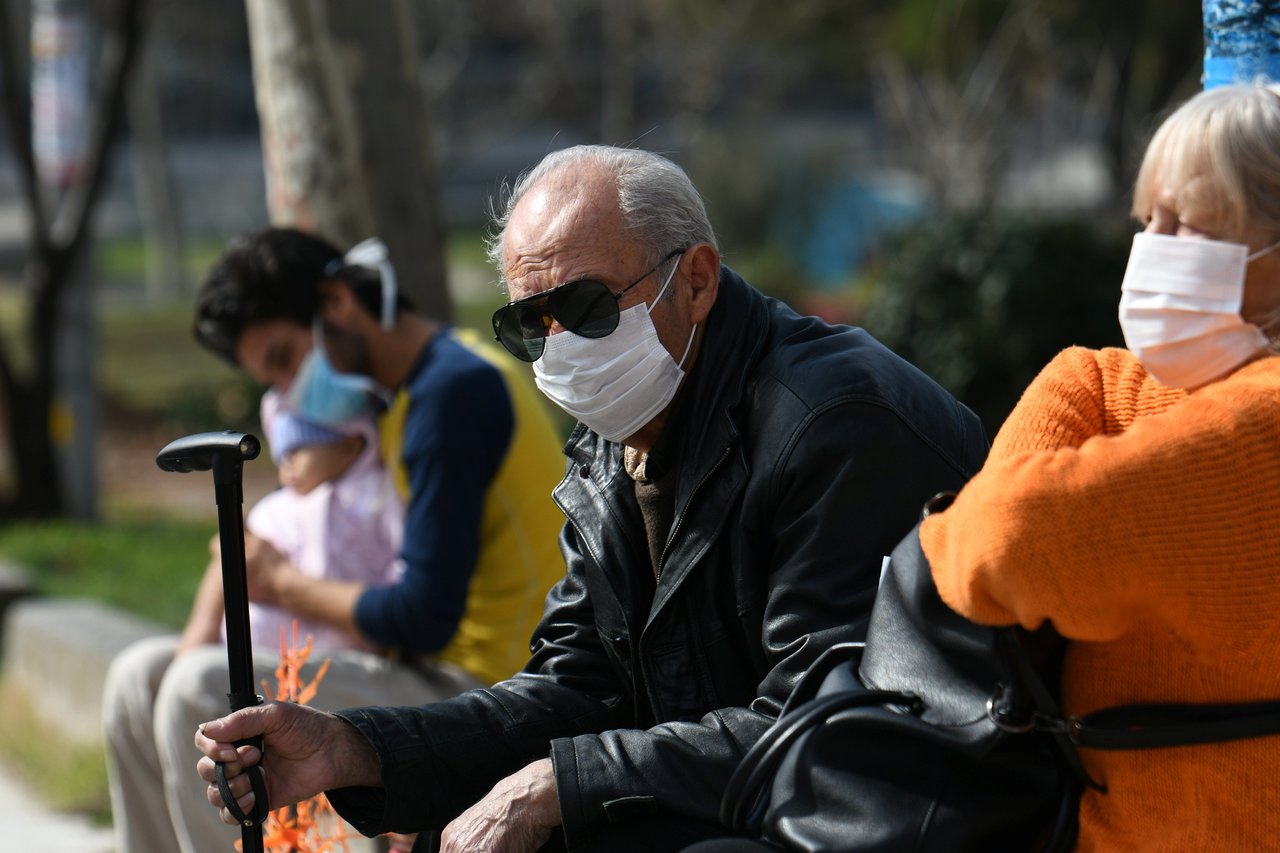
The pandemic rages against those over 60; young people: 'engine' of the virus
Three out of four people who die of coronavirus in the country are over 60 years old.
A reality that has led doctors from the Technical Advisory Committee of the Ministry of Health to suggest that social distancing prevail in this segment of the population and among people with diabetes, hypertension, heart disease and other conditions, even in the face of an eventual relaxation of the quarantine.
Javier Nieto, part of this team, stressed that after almost two months of pandemic this sector of the population is still the most susceptible to hospitalization and death. In fact, so far there are 188 deaths from Covid-19, of which 138 correspond to those over 60 years of age; that is, 73%.
On the other hand, of the 6,532 accumulated cases registered in the country so far, 5,569 (85%) correspond to those under 59 years of age. In the words of specialists, this last segment of the population has become the "contagion engine" of the virus.
For Manuel Pérez, representative of retirees on the board of directors of the Social Security Fund, "prudence" must be taken when lifting the quarantine to avoid a "death" of older adults.
This Saturday and Sunday there will be a total quarantine.
Older adults effected the most
The pandemic of the new coronavirus has been rampant with the country, but there is a sector of the population that, according to statistics from the Ministry of Health (Minsa), is the most vulnerable to the deadly virus: those over 60 years of age.
More than 73% of deaths reported in the country by Covid-19 correspond to people who exceed that age range, despite the fact that only 15% of infections occur in that population.
A scenario that Manuel Pérez, representative of the retirees on the board of directors of the Social Security Fund (CSS), is aware of. He asked the government for "prudence" when lifting the quarantine.
Pérez argued that, according to data from the Office of the Comptroller General of the Republic (CGR), there are some 700,000 people over the age of 60 in the country, so it would be "risky" for this group of the population if the opening of the quarantine occurs no scientific evidence or planning.
"We have put the deaths in this crisis and, therefore, we ask for post-pandemic planning," said the retiree.
Isolation
Several specialists from the Technical Advisory Committee of the Minsa have referred to this topic. One of them is Javier Nieto, who stated that the social distancing of people over 60 years old and those with underlying diseases (diabetes, hypertension, heart disease) should still prevail in the scenario of relaxation of quarantine measures.
Although a date has not been set to lift the quarantine, Nieto said that when that happens, the population of young people and adults should be much more rigorous in complying with preventive measures, such as the use of masks and hand washing, to care for the elderly. .
"It is time to show solidarity and think of others," he said.
Chronic disease patients should also be considered in this. For example, in the country there are about 2,500 patients who are treated in the hemodialysis rooms of the Santo Tomás Hospital (HST) and in the Social Security Fund (CSS).
In turn, data from the Pro Welfare and Dignity Foundation of People Affected with HIV (Probidsida) specify that 12,000 people with HIV live in Panama.
Relieving of social distancing propose a danger
Member of Advisory Committee and a doctor Julio Sandoval stressed that when the relieving of social distancing begins to take place, perhaps schools will be among the last to integrate, since although children and adolescents are the least affected by Viruses are excellent transmitters of the disease to their parents and grandparents.
"The global trend is aimed at making measures more flexible for the youngest population, and subsequently for the most at-risk population," said Sandoval.
According to reports that the Minsa has presented, between 60% and 70% of deaths from coronavirus in the country correspond to people who present a risk factor, that is, over 60 years, diabetes, hypertension or heart disease.