

The rich that believe in the vaccine effectivnss are gaming the system to get COVID-19 vaccines using hefty donations and cozy relationships with CEOs
In Florida, nursing-home board members flocked to West Palm Beach for a jab of the COVID-19 vaccine meant for their residents.
In Philadelphia, a 22-year-old pandemic-response startup CEO quietly snatched vaccine-filled syringes and injected them into his friends' arms.
In Los Angeles, concierge doctors fielded frantic calls from wealthy clients offering up hefty donations in exchange for a shot.
The sense of hope that came when the Food and Drug Administration granted emergency authorization for the Pfizer and Moderna COVID-19 vaccines soon curdled when Americans discovered congressional lawmakers, billionaire nursing-home benefactors, and hospital executives were getting the vaccine more quickly than the average person.
"The rich don't want to wait their turn, so they're able to pull strings just like they would to get a first-class ticket on an airline by spending the top dollar or getting the best hotel room," R. Couri Hay, a New York City society publicist with more than 25 years of experience, told Insider. "The rich view the vaccine and the testing as another commodity that they could purchase."
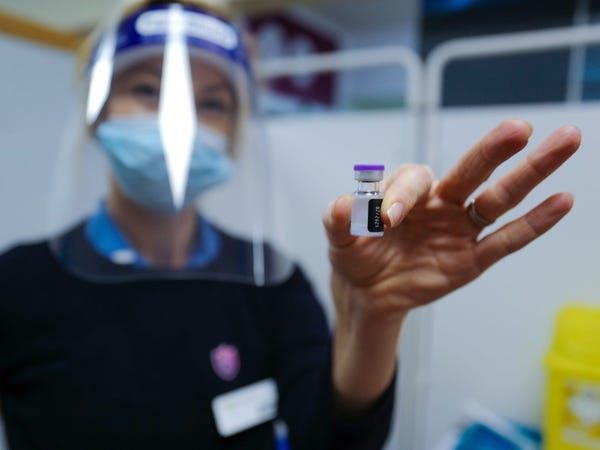 A nurse at the Royal Cornwall Hospital prepares to administer a COVID-19 vaccine in Truro, United Kingdom.
Access to the COVID-19 vaccine — the best bet yet at warding off a virus that has disproportionately affected low-income people and people of color — has become another marker in a pandemic that has both exposed and deepened the gap between the wealthy and everyone else.
The discombobulated rollout of the Trump administration's vaccine program has offered up countless loopholes
The federal government decides how many vaccine doses each state receives and sends them to pre-authorized locations. From there, state and local health officials are in charge of creating vaccination plans using the loose priority recommendations the Trump administration set in place.
But underfunded and understaffed hospitals, nursing homes, and other healthcare facilities have been unable to handle the influx of patients, who are tasked with making their own vaccination appointments on overloaded websites and call centers. These shortcomings, plus confusing state-by-state priority rules, have led to excess doses in some places and shortages in others.
Theoretically, the rollout chaos should benefit anyone savvy enough to take advantage of it. But "savviness" increasingly appears to correlate with "resources."
Keith Myers, the chief executive of the Palm Beach, Florida-based MorseLife Health Systems, called an undisclosed number of board members asking if they wanted the vaccine, The Washington Post reported. The company had been given vaccines for residents and staff.
In New Jersey, Hunterdon Medical Center executives, donors, and their families were given shots in December and January when frontline workers and nursing-home residents were the only eligible groups, CBS 3 Philly reported.
"We're seeing people kind of making up their own decisions without any ethical framework," Dr. Marissa Levine, a public-health professor at the University of South Florida, previously told Insider. "That's a worst-case scenario because then the people with the most power or connections are more likely to get the vaccine, which is the most inequitable way to do what we need to do."
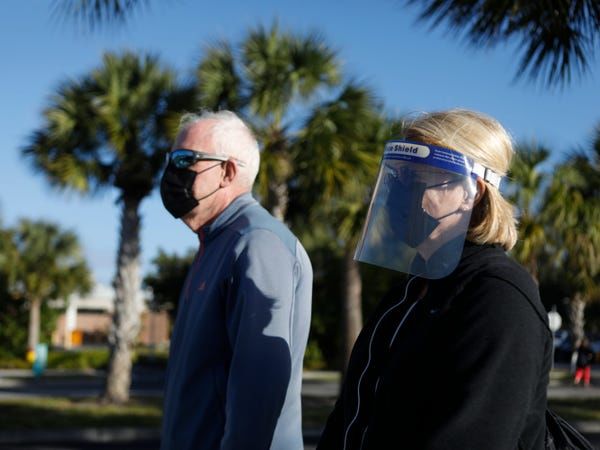 People wait in line to receive a COVID-19 vaccine at the Lakes Regional Library on December 30, in Fort Myers, Florida.
Tourists in New York City and people with vacation homes in Florida have also harnessed shoddy vaccination systems to "skip the line" and get vaccinated. The SoulCycle instructor Stacey Griffith even posted a video of herself receiving a vaccine jab in Staten Island, New York. Griffith — who makes $800 per class, according to Vox — told The Daily Beast she was an "educator" and defended her choice in a now deleted post: "I see hundreds every week, I think it's fair to say it was a good decision," she said.
Arthur Caplan, the founder of the Division of Medical Ethics at NYU School of Medicine, described the coronavirus-vaccine rollout as "a screwed-up mess."
Caplan said he believed wealthy people were incentivized to use their status to get ahead of the vaccine line because of a lack of trust in the system. The lack of consistent regulations among states and the difficulty in getting an appointment eroded trust in the system, he said.
"People began to say, 'To hell with it, I'm going to use my money or my connections and see what I could do,'" Caplan told Insider.
Poorer communities and communities of color haven't received as much vaccine access, despite being disproportionately affected by COVID-19
White New Yorkers have received nearly half of all available vaccines so far, while Black and Latinx residents were given just 11% and 15%, respectively. Part of the problem is the lack of Spanish-speaking volunteers working outside vaccine sites, The City reported, which left Latinx seniors without access to information on how to get appointments.
Black and Latinx New Yorkers have a higher risk of hospitalization and death from COVID-19, but the disparity isn't limited to New York. The Centers for Disease Control and Prevention found Latinx, Black, and Native American communities had a disproportionately high death rate from COVID-19 relative to these groups' population in the US.
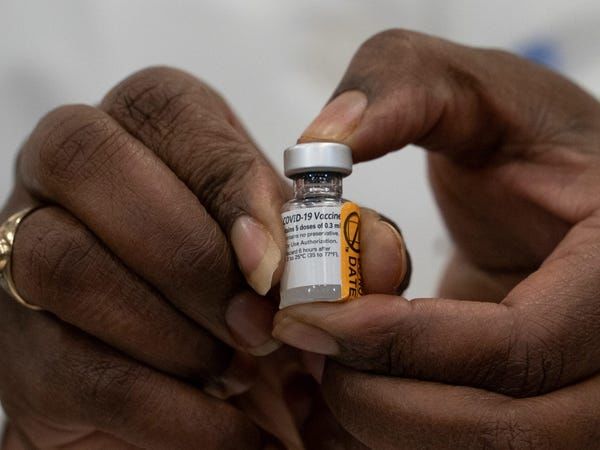 Dr. Michelle Chester displays a
The outsize impact on Black and Latinx communities in part occurred because these groups are more likely to have frontline jobs that don't allow for social distancing or working from home. Black Americans also tend to have more preexisting conditions that greatly increase the chance of death from COVID-19, The Washington Post reported.
The disparity played out clearly in Philadelphia, where officials hired the startup Philly Fighting COVID to be the city's largest mass-vaccination provider, with Andrei Doroshin, a 22-year-old Drexel University neuroscience graduate student, at the helm.
But the plan came crashing down on January 23, when Katrina Lipinsky, a registered nurse and Philly Fighting COVID volunteer, said she saw Doroshin take a bag full of Pfizer vaccines and record cards and leave the premises. A week prior, unsupervised college students were seen vaccinating their low-priority friends, an illegal act in Pennsylvania, the local NPR affiliate WHYY reported.
Lipinsky, who decided to volunteer with the group as a way to help her community, told Insider the experience was so disheartening, she left the evening of January 23, shared what happened on Twitter, and never looked back.
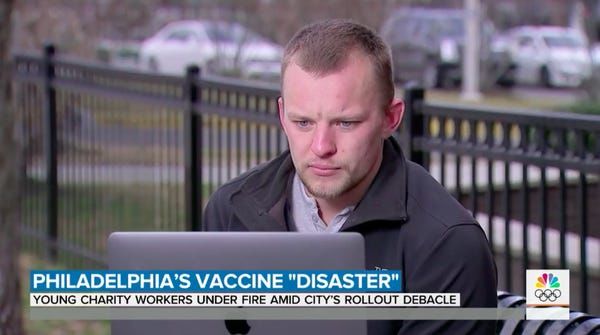 Andrei Doroshin on "Today Show" on January 28.
"The big moment for me was watching Andrei and leave with them," Lipinsky said. It was an issue she brought up to her supervisor, who quickly dismissed it, she said.
"It was clear at that point the people who were involved with running this also used it as a way to prioritize and privilege their friends," Lipinsky added.
The disastrous rollout left at-risk Black people, who comprise 44% of the city, unvaccinated and reinforced Black communities' distrust of medicine, a consequence of decades of systemic racism in the US health system.
For the rich, a vaccine isn't necessarily a choice between life and death
Not everyone amasses the wealth necessary to donate tens of thousands of dollars to nursing homes and hospitals with COVID-19 vaccine access.
But the average rich person still has enough cash to make a yearlong pandemic look like a luxury getaway.
Besides the usual markers of substantial wealth — concierge doctors, nannies, private jets, hotels, the ability to test staff — those with means have the ability to visit a doctor or pay for a hospital stay without putting themselves into debt.
"The rich have more choices because they can do everything" more safely, Hay, the society publicist, said, adding: "They could control their environment better than someone who works in a grocery store, or a nurse, or a frontline worker. Is it inequitable? Absolutely. Is it fair? No. But is it a reality? Yes."
But the disparity in access is also hardly surprising: The pandemic has largely favored the rich and privileged from the start.
Long before a vaccine was in our grasp, the rich and famous got special treatment for COVID-19 tests. Then came Los Angeles influencers' pandemic parties, mask-free politicians, and Kim Kardashian's October private-island birthday party.
"This is the same thing as getting a rent-controlled apartment for your children or getting them into college. This is part of the system. Money buys access. Money gets you in," Hay said. "You can't get in the club? Spend $10,000 on bottle service and you're in."