

The vaccine passport debate isn't new. It started in 1897 during a plague pandemic
The debate over proof of vaccination as a requirement for entry dates back more than 120 years. The first time certificates of vaccines were required, health officials were fighting a plague pandemic.
In the 1890s, the Government of British India enacted a series of measures in an attempt to stop the spread of the plague, which included requiring travelers to prove they'd been vaccinated against the bacterial disease.
But colonized people living in India then saw government-mandated vaccine certificates as an invasive measure meant to curb travel and control citizens' movements. Officials struggled to enforce the requirement as they were outnumbered by people traveling across the country.
Today's concept of a vaccine "passport" isn't much different: It's proof of vaccination -- either on paper or in digital form -- that grants someone access or entry to venues, foreign countries and other locations. It's meant to keep those who haven't been vaccinated out of public areas where they could transmit the coronavirus -- and reward people who've been vaccinated with a return to somewhat normal life.
 The "Excelsior Pass" is New York's digital pass that people can dowload to show proof of vaccination.
The US federal government won't require vaccine passports or issue them, so the passports' viability lies with the states.
New York is already testing its digital vaccine passport, the Excelsior Pass app. Meanwhile, Florida and Texas' Republican governors signed orders prohibiting the passports, both citing privacy issues. All three states have seen some of the country's highest numbers of Covid-19 cases, according to Johns Hopkins University data.
If history is any indication, the adoption of vaccine passports won't happen smoothly or all at once. They were difficult to enforce in the 1890s -- and if more Americans and international citizens resist, the same could be true in 2021 and beyond.
Colonized people of India rejected vaccine passports
The vaccine verification debate goes back to the 1890s, during the third global plague pandemic. The scientist who created the first effective vaccine for a bacterial disease, Dr. Waldemar Haffkine, had joined the Government of India while it was under British rule and was commissioned to stymy the spread of the plague in the country, said Rene Najera, an infectious disease epidemiologist and editor of the History of Vaccines project, led by the private medical society The College of Physicians of Philadelphia.
Haffkine eventually repeated the success of his anti-cholera vaccine with a vaccine for the plague, which he initially used to inoculate himself and incarcerated people in a Bombay jail, Najera said.
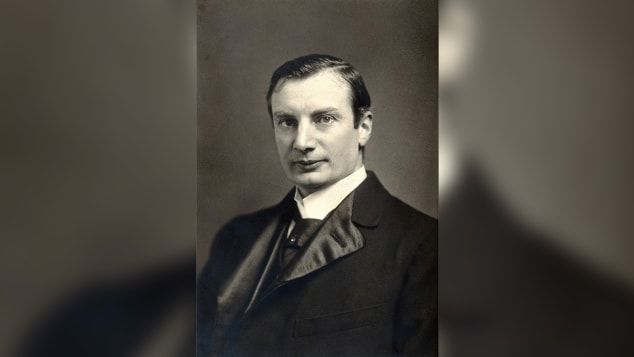 Dr. Waldemar Haffkine
But tensions between government officials and colonized peoples were already high by that time, he said, and came to a head in 1897, when the Epidemic Diseases Act was passed. The legislation gave officials permission to take public health measures that citizens considered "very intrusive," Najera said.
Health officials would force plague patients out of their homes, often with the help of local police or the military, and burn down rat-infested buildings, since the rodents were known to spread the plague. Citizens were also required to carry vaccination certificates.
The measures taken by British officials led to civil unrest across the country, through work strikes and demonstrations that often turned violent. As a result, many colonized people began leaving crowded urban centers for homes in regions where the colonial government was less present.
The problem, Najera said, was that those citizens brought the plague with them.
Officials in British India were concerned about Hindu and Muslim pilgrimage sites, as well, where thousands of people could gather at once, Sanjoy Bhattacharya, a University of York history professor, told NPR last week.
Najera said the pilgrimages "were only part of the impetus for certificates of immunization."
"It was just one of the many things the government tried to do to stop the mass exodus from cities with plague."
Not that requiring certificates halted travel -- the sheer number of people moving around India proved the control measures ineffective, Najera said.
"While certificates were required, the enforcement was lax or nearly impossible to do," he said. "And, if it was done in a way that inhibited the movement of people who were already upset and escaping the plague epidemic in their own city, violence would erupt."
One kind of vaccine passport still exists
There's one version of the vaccine passport that's been implemented: The "yellow card," or proof of vaccination for yellow fever that some countries require of travelers to prevent the spread of the disease.
It's the only disease specifically mentioned in the World Health Organization's (WHO) International Health Regulations, though many countries set their own requirements for vaccinations. (Najera noted that countries like New Zealand and Australia required the measles, mumps and rubella vaccine for travelers during the resurgence of measles in 2019.)
It's up to countries on how to enforce or proceed the WHO's guidelines, Najera said.
But in the US, the power to enforce proof of vaccination would belong to the states and local officials. The White House said last week that while the Biden administration supports setting standards for people to prove they're vaccinated, it won't issue vaccine passports or mandate vaccine credentials.
The US adopted a piecemeal approach to the pandemic when it first began in March 2020, largely entrusting states to make their own guidelines on wearing masks, limiting the capacity of buildings and other ways of mitigating residents' risk of Covid-19 transmission.
And if some states are already prohibiting the use of vaccine passports while others encourage it, the US could see imperfect enforcement, too.