
The WHO: Coronavirus is still a Global Health Emergency
Despite some governments playing with the idea of reopening, the spread of the virus has accelerated rapidly in countries in South America and Africa.
The World Health Organization (WHO) extended its declaration of a global health emergency on Friday amid increasing criticism from the Trump Administration about its handling of the coronavirus pandemic.
The move comes exactly three months after the organization’s original decision to announce a “public health emergency of international concern” on Jan. 30. At the time, only 98 of the nearly 10,000 confirmed cases had occurred outside China’s borders.
But the pandemic continues to grow. More than 3.2 million people around the world are known to have been infected, and nearly a quarter million have died, according to official counts. There is evidence on six continents of sustained transmission of the virus.
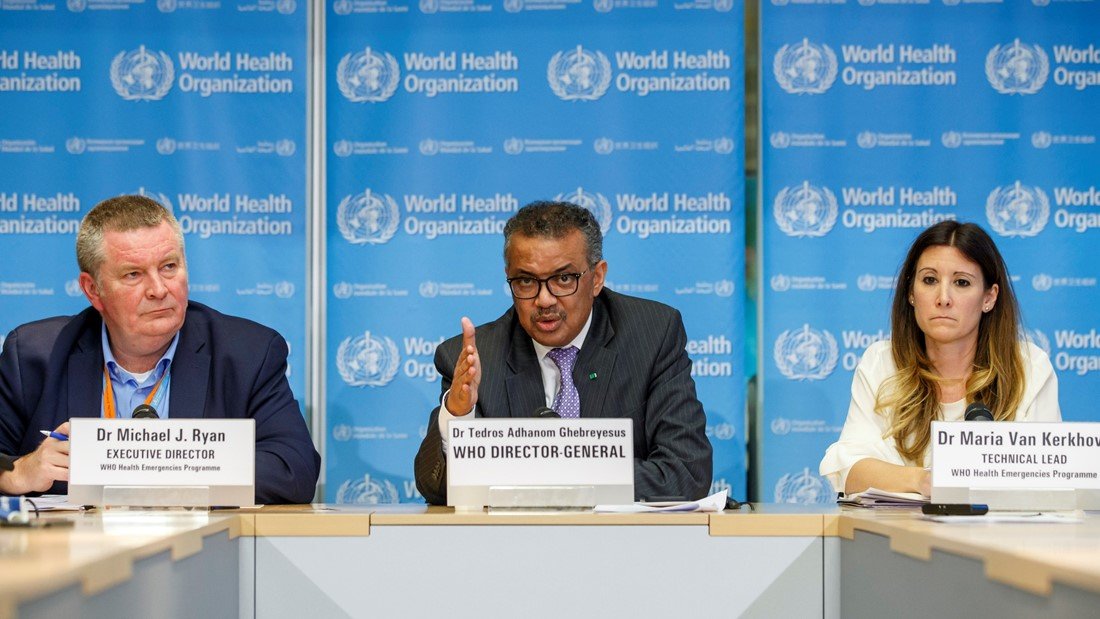
All of this has led experts in the W.H.O.’s emergency committee to reconvene to assess the course of the outbreak, and to advise on updated recommendations, said Dr. Tedros Adhanom Ghebreyesus, the organization’s director-general.
“The pandemic remains a public health emergency of international concern,” Dr. Tedros said, adding that the crisis “has illustrated that even the most sophisticated health systems are struggling to cope with a pandemic.”
A rapid rise in new cases in Africa and South America, where many countries have weak health care systems, was alarming, he said. The acceleration is occurring even as the spread of the virus has appeared to slow in many countries in Asia and Europe.
Although people are slowly starting to return to work in China after weeks of lockdowns, businesses, schools and cultural institutions are still shuttered in most parts of the world. The virus has badly damaged the global economy.
Across the United States, governors are struggling to square constituents’ demands for an end to stay-at-home orders with the consequences of loosening social distancing rules.
Scientific and public health experts have warned that reopening restaurants, movie theaters and malls may lead to a deadly second wave of infection.
Several Republican senators, especially those locked in difficult races, have started shifting the blame for the spread of the virus onto China. Party officials hope that deflecting anger over the human casualties and economic pain in the United States will help salvage a difficult election.
President Trump has embraced the strategy, calling out “China’s misinformation” and the WHO's “China-centric” response in the early days of the pandemic.
He has accused the WHO, without evidence, of helping China to obscure the extent of its epidemic in the early days, as well as being slow to release guidelines for precautions against infections.
In fact, the WHO began raising alarms in early January, as soon as it was informed by China of a new, mysterious illness in the city of Wuhan. On Friday, Dr. Tedros insisted that the WHO did not waste any time in traveling to Beijing “to discuss with the leadership and to find, to see for ourselves, the situation in China.”
In mid-April, Mr. Trump announced he would halt funding to the WHO The United States is by far the organization’s largest benefactor.
Dr. Tedros announced Friday that the European Investment Bank would provide grants and financial support to help strengthen global supply chains, and facilitate the distribution of diagnostics, personal protective equipment and other medical supplies.
“We look forward to seeing how that type of innovative financing could deliver real results for global health when WHO is advocating health for all,” Dr. Tedros said. “WHO is deeply grateful to the European Investment Bank for its support and collaboration.”
But the Trump administration has not been alone in criticizing the WHO Some public health experts and officials of other countries, including Japan’s finance minister, have also said the organization was too deferential to China.
Others have said the WHO should have realized in early January that there was human-to-human transmission of the virus, and that the organization should stop blocking participation by Taiwan.
Yet the WHO has still managed the coronavirus crisis as well as it could, and much better than the Trump administration has, many experts say.
The WHO helped arrange testing supplies and personal protective equipment for countries in need and held daily news meetings to warn the world that the virus was spreading and that countries should do everything they could to stop it.
At nearly every briefing, Dr. Tedros repeated: “We have a window of opportunity to stop this virus. But that window is rapidly closing.”
On Friday, Didier Houssin, chair of the WHO emergency committee, said that committee members had made more than 20 recommendations, hoping to reduce disruptions caused by the coronavirus pandemic.
The guidance focuses on mitigating interruptions to the distribution of food and medicines caused by lockdowns, a safe return to work, and resumption of normal air travel. The committee said researchers would continue to look for the animal thought to be the original source of the coronavirus, and to develop potential vaccines and therapies.
“We encourage countries to follow WHO's advice, which we are constantly reviewing and updating as we learn more about the virus, and as we learn more from countries about best practices for responding to it,” Dr. Tedros said.