
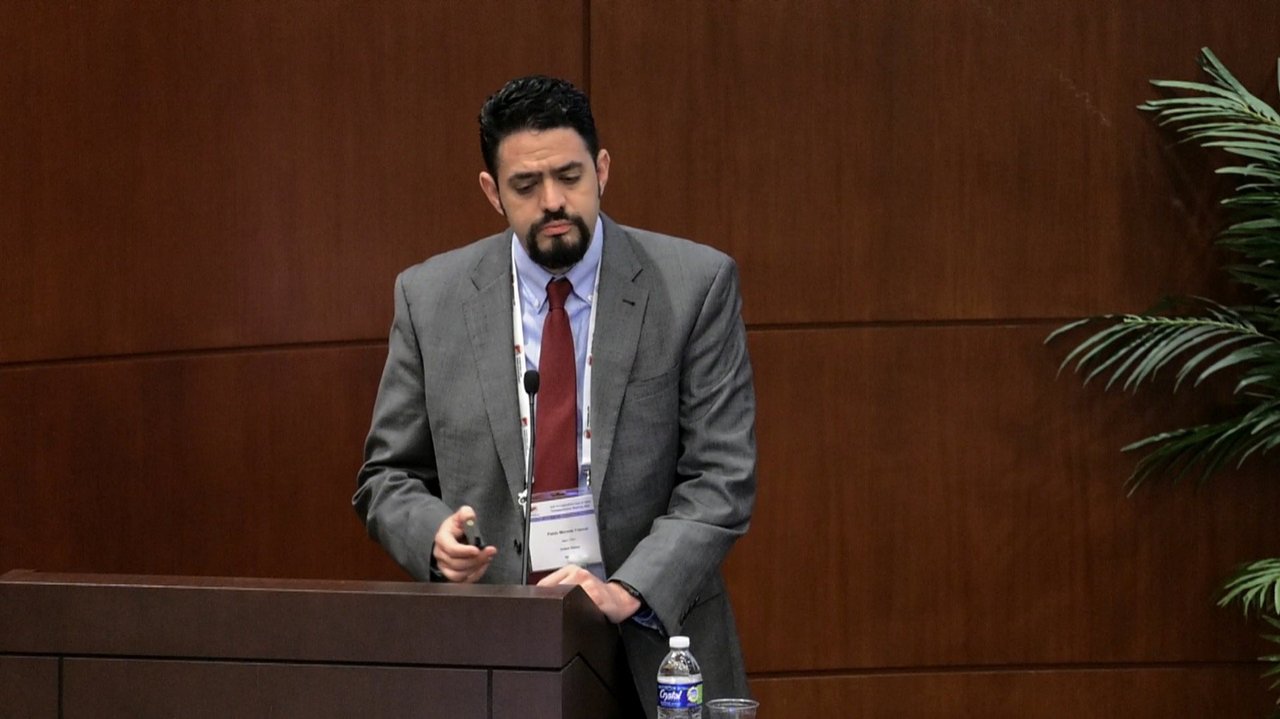
'They put politics above health', Pablo Moreno Franco
Interview with a Panamanian internist and intensivist, who is Director of ICU and Head of Quality Control at Mayo Clinic in Florida, USA.
How many cases have you treated for infections in open spaces?
I don't remember any. I do not understand the closure of beaches, if to prevent transmission, the best are open spaces.
And how many patients have you treated since the start of the pandemic?
At Mayo Clinic in Florida we have had 6,000. Of those, I have treated about 1,100.
Do you attend more infections due to meetings, lack of use of a mask, transportation or what?
More for meetings without a mask. But in Panama what worries me the most is public transportation. More than meetings, even, because in transport there is no way that there is distance. And there is no ventilation.
How much of what reaches the ICU is Covid and how much of other pathologies?
Two out of 10 is from Covid. And in the hospital, 4 out of 10.
What do you think about the Ministry of Health, the governing authority for health, authorizing and recommending the use of ivermerctin and hydroxychloroquine?
It is irresponsible that the authorities themselves do not follow evidence-based medicine.
What are they building on? In the politically feasible or scientifically necessary?
Politically feasible. The protocols would have to be made by credentialed physicians, who understand the scientific evidence. They removed those who knew to replace them with people without experience or scientific rigor.
What do the countries that have beaten the virus have in common?
They have avoided misinformation, panic, and pseudoscience. And they have educated the population in things that do work.
Which ones don't work?
Prophylactic medications, immunobombs, herbal supplements, home remedies, and chichas.
Can you respond to those who say that ivermectin is NIH approved?
What NIH says is that there is not enough evidence for or against. That does not mean approved. And high doses can affect the nervous system. And as for hydroxychloroquine, it is dangerous for complications of arrhythmias.
What about chlorine dioxide?
The most damaging. It causes vomiting, low blood pressure, even liver failure and death.
In Panama, what good is the law that prohibits unsuitable people from prescribing drugs?
You're welcome, if they pass it by, you know where.
Antibiotics: why are they not used to treat the virus?
Because they kill bacteria, not viruses.
What is your message to your colleagues who insist on these drugs?
By misinforming they are killing people.
And the Panamanians who insist on using them?
Play alive, Panamanian. Do not let unsuitable people put your legs in rags with cures that are worse than the disease itself.
Convalescent plasma: does it work if the patient is already hospitalized or just for the beginning?
It reduces mortality only in the first week, and in doses with many antibodies.
What has Sucre done better than Turner?
No comment. But surrounding yourself with advisers who know is the key.
Why do you think they changed the technical advisory committee to a political one?
Pure politics. In Panama they put politics above health.
What's the point of establishing masks as mandatory in restaurants, but not in churches where people sing?
None. And the first cases occurred in church choirs.
How effective are masks, if this is more of a respiratory virus than a contact virus, and the air is breathed with or without a mask?
The key is in the spray drops. The more direct the drops fall on you, the more they infect you. If you wear a mask, you are 50% protected. If you add a mask, you add another 30%. And for every meter of distance the protection doubles.
How effective are sanitary fences for the virus, if the safe conducts have already been eliminated?
That is a waste of time. It would be easier for each person to do their self-assessment of symptoms. If they are already with symptoms, do not go out.
How do you explain being the country with the most infections per capita, having had one of the strictest quarantines in the world?
The Panamanian 'play alive', institutionalized corruption, irregular safe-conduct and lack of traceability.
A two-week quarantine like the one we just had, how effective will that be?
In two weeks all you do is slow down, you don't go down the curve. In truth, it takes three weeks or more, and very strict. And how effective will it be? With 40 deaths a day, we will close January with 1,200 deaths. That equates to six months of mortality from last year.
What is the biggest fault of the Minsa?
Not educating people, but scolding them, and lack of coordination. The scenario would have been very very different if they had acted in a coordinated manner between the Insurance, the Minsa and the private sector.
Why are there fewer deaths at the private level than at the public level?
Doctors are the same. What kills us in public is the lack of supplies, overcrowding and bureaucracy, which prevent the proper implementation of the protocols.
What has been the biggest failure of citizens?
To let their guard down.
What important data are they not giving us in Panama?
The lack of transparency does not let us know the severity of the situation. The health systems are saturated, we have a record of the hospitalized and that is not explained in detail. It is not being alarmist, but we need to understand what is happening, how and where.
Why is it important to know where people die?
That is a clear marker of how saturated the system is and where to act. The hospital funnel is full. If you don't decrease what comes in or increase what goes out, more people will die.
What information should accompany the number of available beds?
Where they are and if they have the equipment, supplies and personnel to operate them.
What is the problem with the oximeter that the government distributes to outpatients?
That they deliver it without even explaining how to use it or when to go to the hospital.
What is the most common sequelae among those recovered?
Neurological, clots and, mainly, shortness of breath even to walk.
The fundamental difference between an ICU hospitalized there and here?
In addition to the flow of oxygen, here we add pulmonary vasodilators. And if all the measures fail, we use ECMO (extracorporeal circulation membrane). We draw his blood, oxygenate it, and give it back to him. That makes the mortality in the hospital low: 4%.
What is the hardest thing you have seen in these 10 months?
Minor patients we have not been able to save. And watch people die away from their family.
What are you afraid of?
My family and friends in Panama.
In what phase - from 1 to 10 - of the pandemic is Panama?
We are not even halfway there. There is more than a year to achieve herd immunity. And that can be achieved either with many vaccines or with many deaths. We hope it will be with many vaccines.
Mayo Clinic is highly rigorous. You are the head of quality control, how do you make decisions about drug recommendations?
We have a therapeutic review panel, with doctors from many specialties, that meets weekly and reviews all the evidence published in the last week. And it is decided if there is something rigorous enough to change the protocol.
Have you seen any change in the clinical outcome of the patients you were managing at the beginning and now?
Yes. Our hospital stay has decreased from 12 to 5 days.
What effect does being already vaccinated have on you?
We are still on the same battlefield, but now I have a bulletproof vest.
What is your answer to those who do not want to be vaccinated?
They are might be out of luck, because it is a lottery.
Why did you leave Panama?
Professional satisfaction. At the Mayo Clinic we have a patient-centered health system, where all teams collaborate in a protocolized way. In Panama, doctors are selfish, we stay with the patient instead of seeking help from colleagues.
If you had stayed in Panama, what would you be doing?
Work in the Anita Moreno hospital, frustrated by the lack of supplies and beds, while I see how they spend money on traffic lights ... and waiting for my vaccine.
How do you feel working abroad, while there is so much suspicion with foreign doctors?
It makes no sense. Anyone with the credentials can help. And in Panama, doctors from other specialties have not gotten off the train, they have taken the bodies of those who are on the battle line.
What do you miss about Panama?
The family, the beach and the sancocho.
And what not?
'Playing alive', roadblocks and violence.
What do your colleagues tell you about the management of Covid in Panama?
That we went from science to obscurity.