
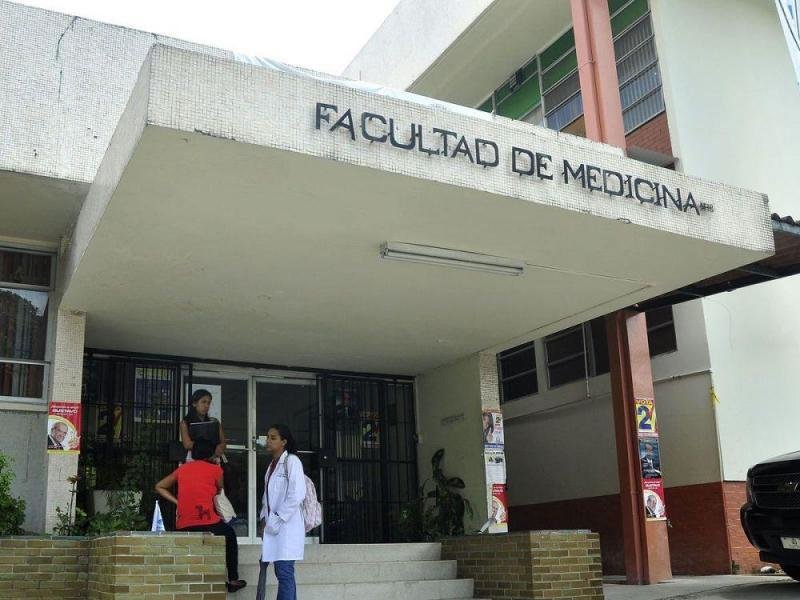
UP Faculty of Medicine raises doubts about the reopening of economic activities
In a statement, the University of Panama, Faculty of Medicine raises concerns, if the country is capable of protecting the working population. Blind mitigation measures cannot be relaxed. We need scientifically collected evidence to define the risks of reintroduction of the virus or increased transmission.
Does Panama have the capacity to carry out massive tests after reopening the economic sectors?
Does the country have the mechanisms to achieve traceability of contacts?
How are you going to protect workers in companies?
These three questions were raised by the Faculty of Medicine of the University of Panama (UP) in a statement analyzing the health situation as a consequence of Covid-19.
"We fully understand that the decision to reopen the economy is not only medical or public health and we know the critical considerations to be analyzed from the economic and social perspective. However, all Panamanians have the right to express our thoughts when it comes to our lives”, read the statement, signed by the dean of the Faculty, Enrique Mendoza.
The transition from mitigation to flexibility of measures is profoundly complicated and that there is no universally valid implementation dynamic, he analyzes.
The Faculty of Medicine observes with concern that since March Panama has become the second country in Latin America with the highest mortality expressed in terms of 100,000 inhabitants, having a fatality rate of around 2.88 and with a calculated Rt (contagion rate) at 1.5.
To this is added that currently the pandemic affects above all the most humble sectors of the capital city and the Guna Yala region, the statement said.
The interaction of the population with the virus is dynamic. It is not static. To the extent that there is significant transmission of this virus, the possibility increases that individuals who are incubating the disease, or who have a low level of symptomatic infection, may reach communities that do not have transmission, indicates the press release.
“Blind mitigation measures cannot be relaxed. We need scientifically collected evidence to define the risks of reintroduction of the virus or increased transmission," he stresses.
The Faculty of Medicine cites as an example that the virus came to the country through the Tocumen airport and, faced with this scenario, asks what is going to be done to eliminate the possibility of imported cases through international flights?
Additionally, in Panama City the virus spread through public transport, 300,000 daily metro users, traveling January, February and March without social distancing and without masks, what measures are you planning to take to avoid these viral propagation mechanisms?
The quarantine prevented infections and reduced deaths from Covid-19, however, it is crucial to say that the health crisis is far from over, he adds. At the very times when most countries decide to make mitigation measures more flexible, there may still be sustained community transmission.
Although the Faculty of Medicine acknowledges that the Health authorities have “responded vigorously” to COVID-19 for more than two months, it cannot be forgotten that it is an easily transmitted respiratory virus. The biology of it, has not changed.
"We do not have the means to make the virus disappear, that is, we do not have vaccines or medicines to stop transmission. We remain at risk", stresses the statement. Experts in one of the latest editions of the New Journal of Medicine say that it would be surprising to have no new outbreaks or macro-outbreaks by easing mitigation measures.
The Faculty of Medicine also analyzes the climate issue. In Europe and North America it has had the transition from winter to spring. In Panama it has gone from the dry to the rainy season. In both scenarios, the viral pandemic of the new coronavirus seems to go from one phase to another.