

US law mandates that carmakers integrate anti-drink driving technology
Breath-sniffing sensors and finger-scanning detectors are central to a landmark US safety mandate to fight drunk driving that is spurring tough questions about what technology can be trusted to do.
The new federal law, which will require new cars to spot intoxicated drivers in coming years, could save thousands of lives annually with the potential to expand abroad, advocates say.
Yet the legislation signed into law this week by President Joe Biden has also left skeptics questioning whether vehicles could refuse to operate due to a false positive or effectively become witnesses against their owners in criminal cases.
Ultimately it is up to American regulators to decide what could become international precedent-setting rules. They have not said much so far, but have a potentially extendable three years to work with.
The initial reaction though was euphoria for people who battle against alcohol-related crashes in the United States, which permits drivers to have a higher level of booze in their blood than many other developed nations and consistently records a death toll of over 10,000 per year.
"I'm crying tears of joy today," said Alex Otte, national president of the anti-drunk-driving advocacy group, MADD.
"This is the beginning of the end of drunk driving," she wrote in a statement following Biden's law signing ceremony at the White House on Monday.
Breath sensors and fingertip scans
The devil is in the details of course, and one of the best options for fielding functional technology to meet the mandate has been under development since 2008 in a collaboration between carmakers and regulators.
As part of the Driver Alcohol Detection System for Safety (DADSS), researchers have developed tiny vent-like sensors that draw in a driver's exhaled breath and test it.
Another innovation measures blood alcohol levels under the skin's surface by shining an infrared-light through the person's fingertip when the driver pushes the ignition button.
Anti-cheat functions are built into the system, which could prevent the car from starting or keep it from moving for drivers over the .08 per cent blood alcohol limit in most US states, said Robert Strassburger, president of the Automotive Coalition for Traffic Safety (ACTS), which is supported by carmakers.
'Completely unconstitutional'
The DADDS initiative is a partnership between ACTS and the National Highway Traffic Safety Administration, which did not respond to a request for comment.
"We all emit carbon dioxide as we exhale and as long as you are in a range of CO2, then we know that sample was coming from the driver and nowhere else," Strassburger told AFP.
As for the touch system, by pressing the ignition button the driver would complete what is effectively a circuit between their seat and the system.
"If the passenger were to reach over and touch the sensor the circuit would not be completed and an (alcohol testing) measurement would not be taken," he said.
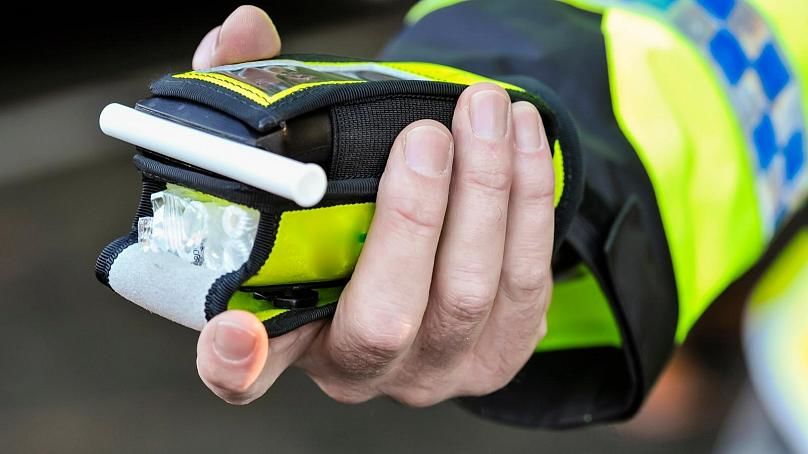
They are considered "passive" measures, unlike the already existing devices that require drivers to pass an alcohol test by blowing into a tube before they can operate a vehicle - devices that some jurisdictions require of people convicted of drunk driving.
While some experts see the new technology as ultimately positive with proper protections and communication, others see it as a worrying erosion of privacy.
Critics have their say
Laura Perrotta, president of the advocacy group American Highway Users Alliance, said the alcohol testing technology is a fine idea - as long as it works.
"Someone uses mouthwash and goes to turn on their car and can't get it to start, but then someone else has one too many drinks and it doesn't detect it," she said. "That could be a real problem."
Albert Fox Cahn, founder and executive director of the Surveillance Technology Oversight Project watchdog group, said: "It's completely unconstitutional to have our cars commandeered to monitor us for the government".
"This is no less illegal than if the government mandated that the phone company installed wiretaps in everyone's home just to make sure that they don't commit a crime in the future," he added.
Strassburger, the ACTS president, said there are already privacy limits for other information-gathering technologies in cars and the police need a warrant to get access to them - yet he will not be the final decider of which way things go.
"Vehicle manufacturers are going to make that ultimate decision or they will be commanded by policymakers," he said.