

Way the music died: can Asia’s nightclubs survive Covid-19?
Before the coronavirus pandemic, Zouk, one of Singapore’s oldest and most elaborate nightspots, easily attracted at least 3,000 partygoers a night. Now it sees only 150 patrons every evening and has had to transform parts of its 31,000 square feet complex into a restaurant, spin studio and cinema.
“We used to make more money in one night than we make in a month now,” said Andrew Li, the chief executive of Zouk Group. Revenue nosedived by over 85 per cent, he told This Week In Asia, meaning he had to cut 25 per cent of his staff, with more cuts possibly on the cards.
Like Zouk, many businesses in Singapore’s vibrant nightlife scene are reeling from the economic fallout as a result of the pandemic. Elsewhere in Asia, similar establishments remain shut as governments impose fresh lockdowns to tackle new waves of infections. In Hong Kong, for example, bars, nightclubs and party rooms have been closed since late November while Malaysian authorities recently extended a movement control order to the end of February.
Does this spell doom for the nightlife sector? Health care experts and economists suggest it depends on whether the country has kept the virus under control, the speed of vaccine roll-out, and the monetary help governments can afford to offer.
But they were more cautious than bullish, noting that the industry would likely receive little or no help given its considerably small contributions to the economy.
FIRST TO SHUT, LAST TO REOPEN?
While there have been reports that the nightlife scene is slowly resuming in mainland China and Taiwan – with videos of maskless partygoers revelling in underground clubs and music festivals – other parts of Asia remain wary, guided by incidents in South Korea and Hong Kong where clubs and dance studios triggered new waves of infections.
Even in Singapore, which appears to have the virus under control with negligible numbers of community infections, most nightspots have yet to be given the green light to fully resume normal operations. Bars and pubs with food licences have been allowed to reopen but must observe rules such as a maximum capacity of eight people per table and not being allowed to serve alcohol after 10.30pm.
Karaoke lounges and nightclubs, deemed as having a higher risk of virus transmission, had banked their hopes on a pilot programme to reopen a handful of clubs that was set to kick off last month. But it was postponed indefinitely at the eleventh hour due to a slight uptick in cases.
Following the news, there was a spike in businesses wanting to exit the industry, according to Chua Ee Chien, an executive committee member of the Singapore Nightlife Business Association, with over 225 companies expressing an interest in doing so.
Already, local media had reported that 59 businesses in the sector folded in the first half of 2020, and more than 100 nightspots have not been allowed to resume operations since the pandemic.
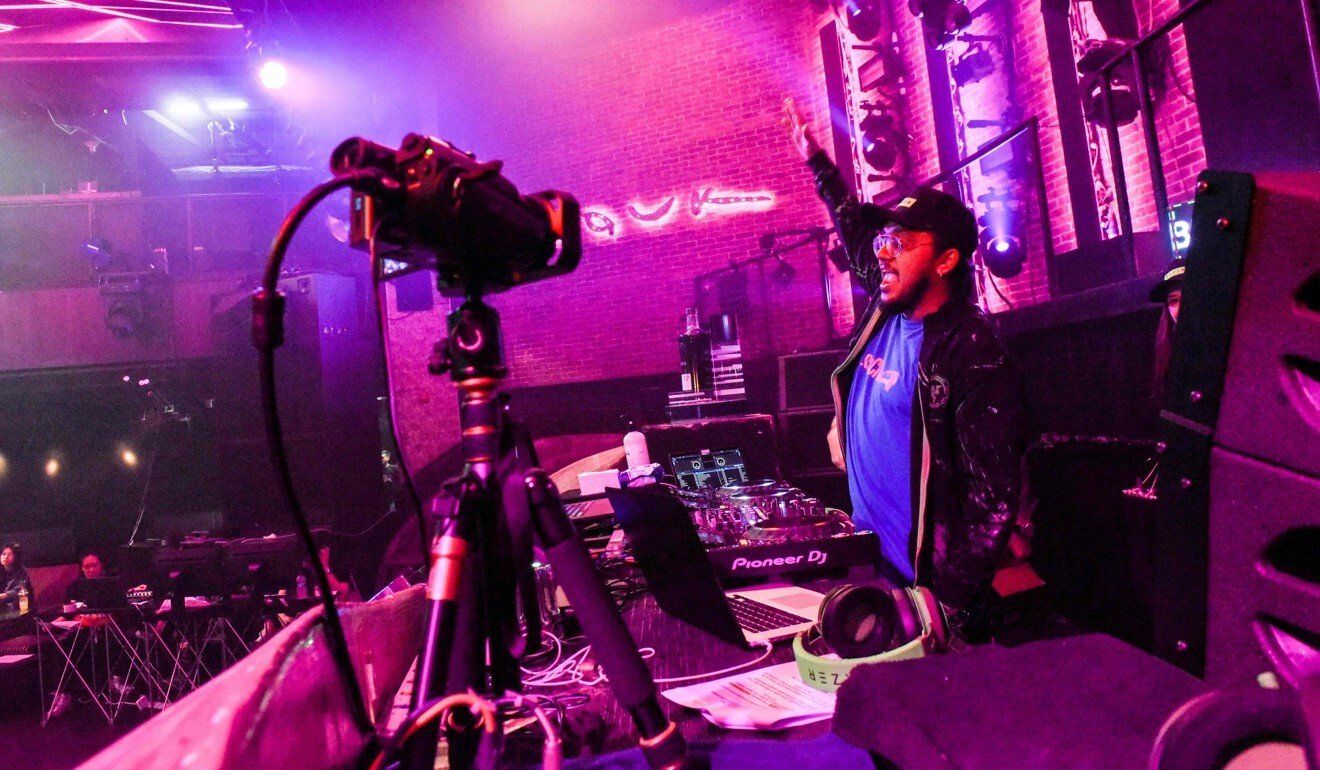 Zouk's DJ Nash D performs in front of a video camera during a
“cloud-clubbing” party that was live-streamed in March after
entertainment venues were temporarily closed.
“One of the concerns we have is whether they will have the means to maintain their current positions with no revenue in sight. With the pilot being postponed, businesses that spent money prepping for that are now in an even tougher position,” said Chua, who is also owner of cocktail bar Jekyll and Hyde.
He urged operators to consider other measures to survive, including altering their business model, similar to what the Zouk Group did by incorporating indoor cycling classes in their sprawling compound. “Owners need to accept that the pandemic is not going to be over any time soon,” Chua added.
The picture remains equally bleak across the border. A report in September last year revealed about one in five entertainment outlets in Malaysia had closed.
Similarly, in Hong Kong, Privé Group owner John Rana said revenue dipped by more than 95 per cent, primarily because clubs and bars were only allowed to operate fully for less than two months last year. All the other months, he said, nightspots were either barred from opening or were limited to fewer hours of operation.
Rana said the group, which has seven restaurants, bars and clubs, has now placed more focus on its eateries: “We are not worrying that far about whether the industry will bounce back. We are more worried about whether we can survive till tomorrow because government [restrictions] just keep extending without [support] for the industry.”
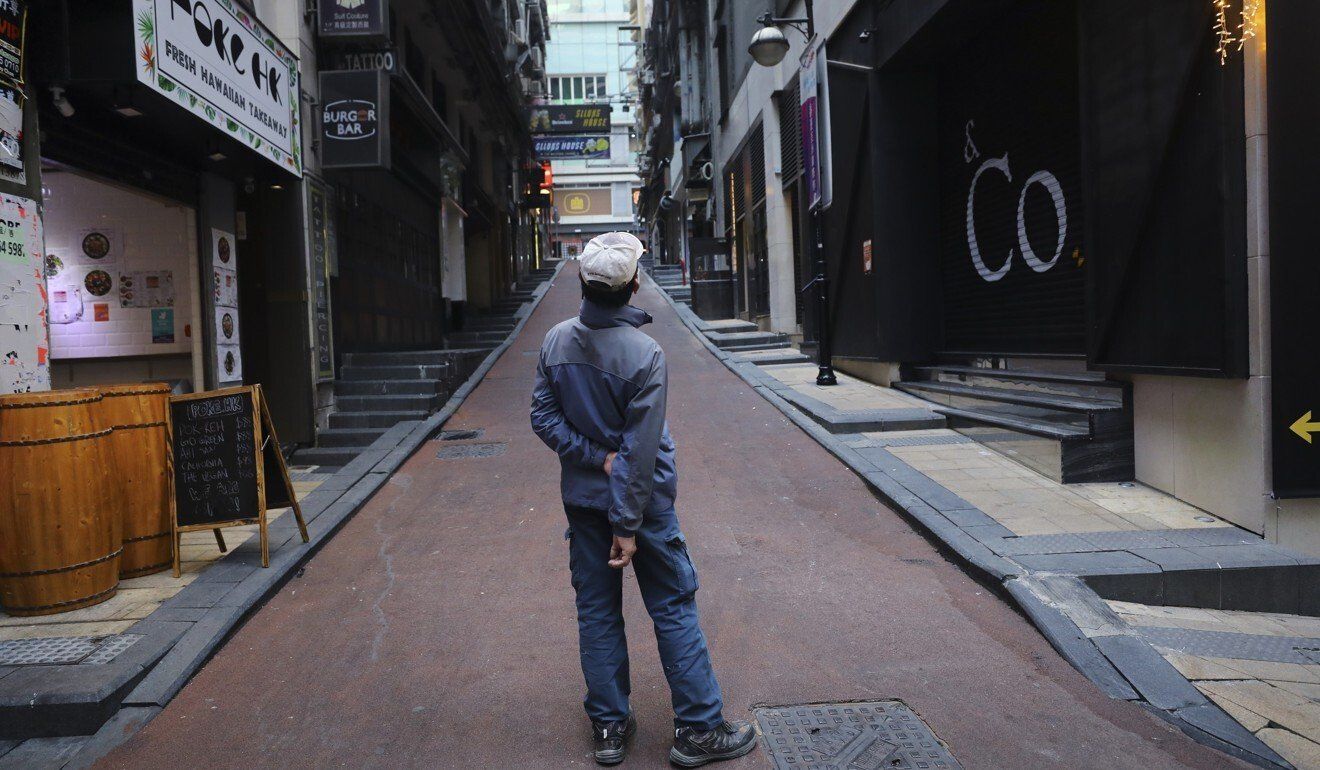 Bars remain closed at Hong Kong’s Lan Kwai Fong district during the fourth wave of coronavirus infections.
MORE AID?
Governments across Asia have offered some form of financial support for the industry. In Singapore, authorities are still co-funding about 30 per cent of local workers’ wages alongside rental waivers.
Rana said he has received cash assistance from the Hong Kong government based on the group’s liquor and restaurant licences as well as floor-size subsidies. Still, he felt this was not enough to keep businesses alive as Hong Kong’s high rental costs added a huge financial burden.
Chua of the Singapore Nightlife Business Association also voiced similar sentiments: “The government will not look to pump in cash, but if they let these businesses die out, what will replace them?”
But even as nightlife establishments and organisations eye greater governmental support, Song Seng Wun, economist at CIMB Private Banking, pointed out that governments might not render much help.
“To be brutally honest, it is not a huge contributor to the economy,” he said. For Singapore, there is no official breakdown for the industry but Song estimated that the nightlife industry only made up a “fraction of a per cent” – a similar figure for most Asian economies.
Selena Ling, head of treasury research and strategy at OCBC Bank, offered a slightly larger estimate, saying that in the city state, the sector is grouped under a bigger category of recreation, community and personal services, which accounted for 6 per cent of GDP.
The importance of nightlife also differed among countries, she noted. In Thailand, for example, it is of higher priority as international tourists usually flock to the country for its busy night scene. This way, Ling said, there are intangible benefits from the sector, such as enhancing the attractiveness of Thailand as a tourist destination.
Li, the chief executive of Zouk Group, felt that the nightlife sector also “gave back to society in terms of experience, memories, social connection, and even mental health”.
But these, Song said, are often unseen benefits that could be overlooked by authorities. From a government policy stance, he said, this would mean that the nightlife industry would be pushed down the priority list, below other ailing sectors such as the aviation, manufacturing and even the broader hospitality industries.
THE FUTURE OF NIGHTLIFE
Health care experts were hesitant to say if it was wise for governments to open up the nightlife industry now, but Hsu Li Yang, an infectious diseases expert, suggested this would depend on the risk appetite of politicians and whether there was a growing push from nightlife operators.
Another factor would be the individual country’s success in containing the virus, said Hsu, the associate professor at the National University of Singapore’s Saw Swee Hock School of Public Health.
He also pointed out that most bars, karaoke lounges and nightclubs were not designed with physical distancing or natural ventilation in mind. “Many people also do not go to these places to sip drinks quietly by themselves [so] they can potentially be sites for super-spreading events in regions where there is ongoing community transmission.”
Singapore’s now-delayed pilot to reopen clubs provided a snapshot of how the future of nightlife would look, such as requiring patrons to present a negative Covid-19 test and wear face masks, even on the dance floor. Nightspots would also host only 100 people at most, with separate dancing and dining zones holding 50 people each.
A separate, smaller-scale pilot for bars that kicked off earlier in December also prescribed that establishments cannot play recorded music at louder than 60 decibels, while live music and other forms of entertainment such as dancing, darts and pool are barred.
Still, Teo Yik Ying, dean of the Saw Swee Hock School of Public Health, felt it would be difficult to allow the industry to resume solely on the back of these measures. Zouk Group’s Li also felt it did not make sense for a consumer who would not need to do a test if they went to a restaurant or bar to drink instead.
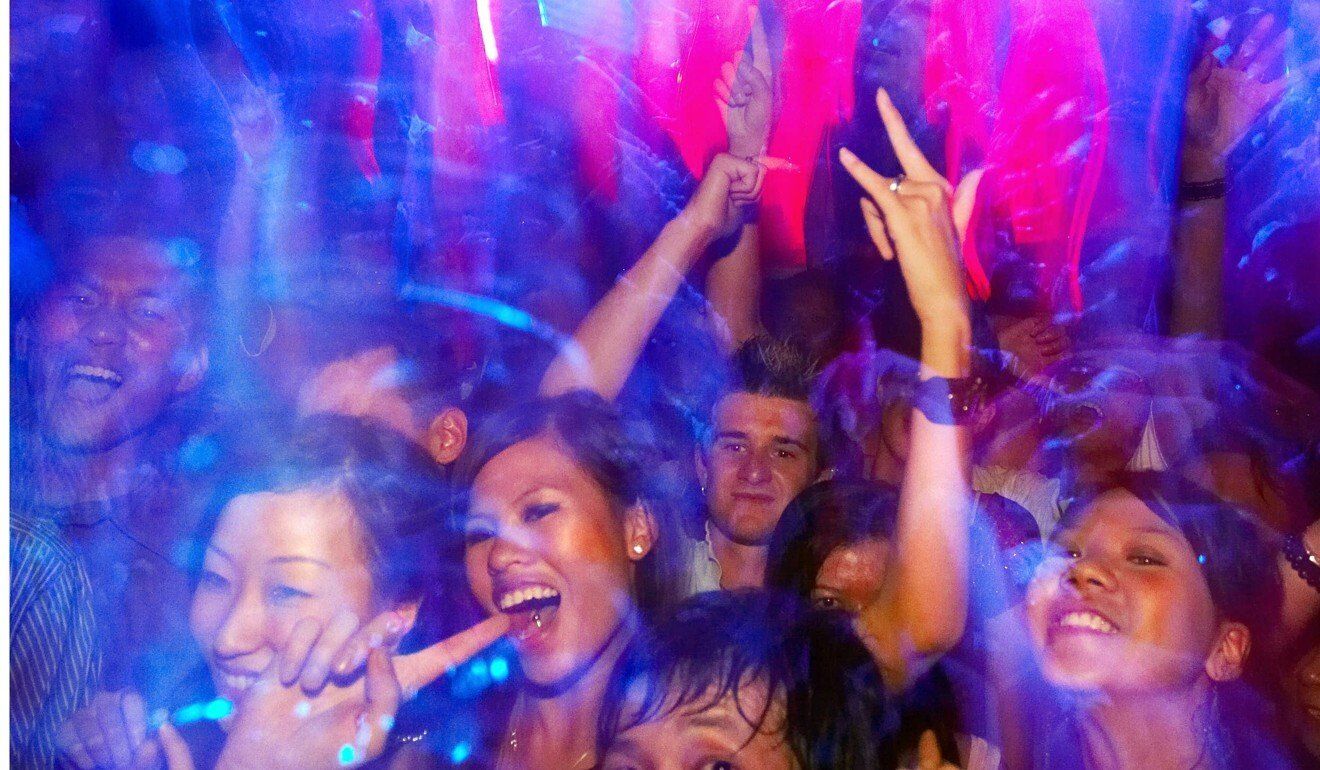 People dance at the Zouk nightclub in Singapore before the coronavirus pandemic.
Hsu described the future of the nightclub industry as “definitely challenging”, and said it was clear that venue operators would need to ensure their venues are safe, which could include focusing on more intimate events and having systems in place to avoid queues at entrances.
Teo added there was a “good chance” of the sector bouncing back only if a vaccine roll-out in a particular country is successful, and there is sufficient data to prove it reduces the risk of infection and transmission.
While he was wary about the virus situation changing, Li said he was eyeing a recovery by the end of this year, after the Singapore government said it plans to vaccinate its entire 5.7 million population by then.
Or as Song, the economist, put it: “The industry will come back at some point, but we don’t know when. And when it does, there will be pent-up demand and revenge spending again.”