

We Own This City review: A shocking police corruption tale
Almost 20 years ago, methodical detective Lester Freamon doled out this (paraphrased) piece of advice on an episode of The Wire: "You follow drugs, you get drug addicts and drug dealers. But you start to follow the money, you don't know where it will take you."
That line encapsulates journalist and television writer David Simon's modus operandi as a dramatic storyteller. From shows like The Wire and Treme, through miniseries like Generation Kill and Show Me a Hero, all the way to the criminally underrated The Deuce, Simon and his writing/producing partner George Pelecanos have committed to depicting the wide-reaching systemic rot of institutional failure and corruption.
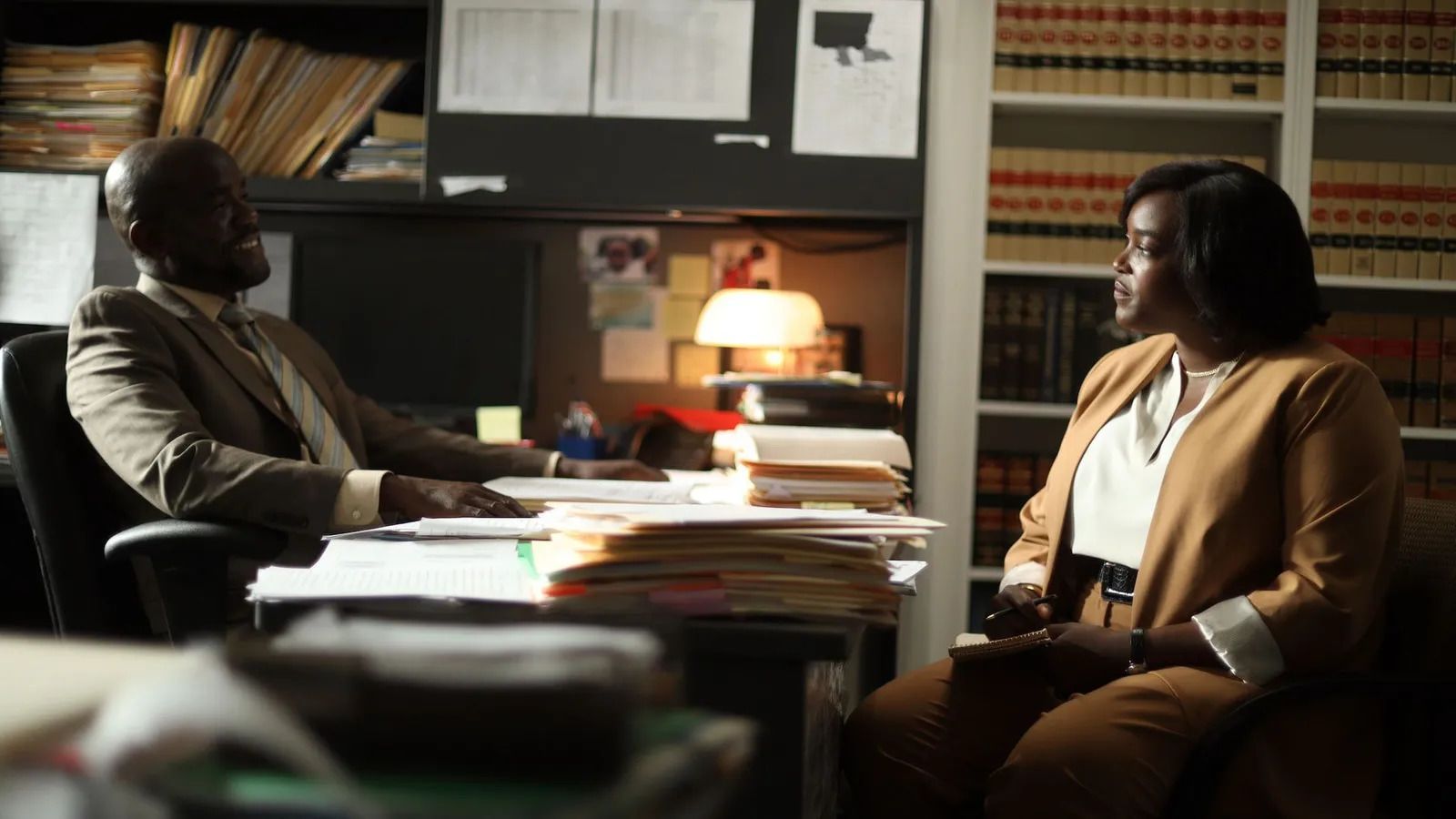
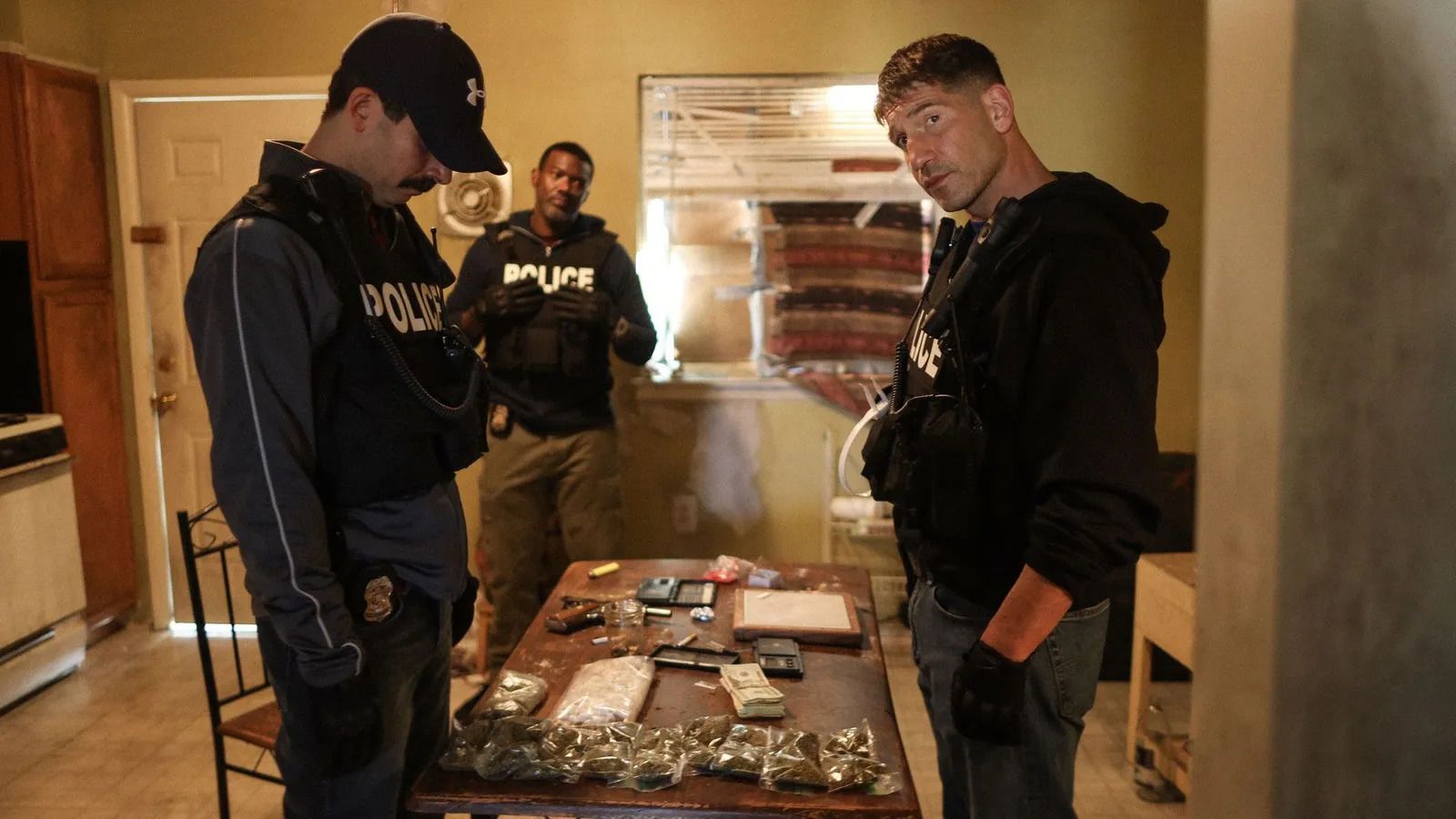
Their latest miniseries, We Own This City, based on the book of the same name by Baltimore Sun reporter Justin Fenton, chronicles the real-life story of the Baltimore Police Department's Gun Trace Task Force (GTTF), an elite unit that ruled the city like a roving gang of thieves. They wrongfully searched civilians and stole money from them, planted drugs and guns, and generally acted with brutal impunity, all with the protection of a badge. In 2017, all eight members of the GTTF were arrested on charges of federal racketeering and all were eventually sentenced to multiple years in prison. It remains a shocking scandal that not only laid bare the ruthless behaviour of officers hired to "serve and protect" the citizenry, but also the political failures that allow such behaviour to continue unfettered as well as the devastating judicial, legislative, and social effects their actions had on Baltimore at large.
Simon and Pelecanos primarily follow GTTF ringleader Wayne Jenkins (Jon Bernthal), a formerly wide-eyed officer who slowly became inured to the casual corner-cutting and unlawful searches and arrests that fellow cops preached as conventional wisdom. His devolution into an aggressive thug serves as the series' backbone, but per their wont, Simon and Pelecanos branch out laterally across multiple different fields. They track Nicole Steele (Wunmi Mosaku), a Department of Justice lawyer in the Civil Rights Division examining the Baltimore Police Department in the aftermath of the death of Freddie Gray in police custody in 2015 and subsequent protests. There's also Sean Suiter (Jamie Hector), a homicide detective who was formerly in plain clothes units alongside the likes of Jenkins but now prefers systematic investigative work that involves community policing, as well as the multiple FBI agents and Narcotics Task Force investigators tracking the GTTF with surveillance and wiretaps.
An escalating problem
We Own This City sports an intriguing non-linear structure that initially seems haphazard but quickly reveals itself to be thematically compelling. Simon, Pelecanos, and the rest of the series' writers use meetings between the FBI and GTTF officers, who wish to cooperate with the investigation in exchange for more lenient sentencing, as the main avenue to tell the story of the unit's rise and fall.
But the series jumps back in time to multiple different periods, from the early 2000s, when Jenkins first comes onto the force, through to the mid 2010s when the FBI begins its investigation in earnest after the Narcotics Task Force accidentally recovers a tracking device used by GTTF officers in order to steal money from a local drug dealer.
Jenkins is our gateway into this world of dirty cops, but he's not the sole focus. Instead, he's merely the embodiment of a culture that rewards unethical conduct with higher profits and bigger promotions, on the far-end of a spectrum of corruption. This narrative structure also potently highlights how this pattern of corruption stems from understandable economic motivations, with the time jumps illustrating the slow normalisation of fraud and theft as an integral part of the job. A police officer might make a solid middle-class salary, but if you're surrounded by piles of drug money that total an amount you might never see in a lifetime, it's easy to justify skimming a little off the top.
Yet, small breaches of ethics are shown to organically generate a mentality of greed in which everything is for the taking. Suddenly, the routine police stop turns into another avenue to take a little more cash, even if it's a civilian's paycheck. A baseless search of a home might not turn up any drugs, but it might lead to a shoebox filled with a rainy-day fund. The cops' justifications for their thefts start to become more desperate. Jenkins doesn't always explicitly verbalise his rationalisations, but it's clear that the GTTF views any suspect as de facto guilty, no matter how unfounded their suspicion, and everyone is a potential suspect. Maybe the guy they're stealing from isn't a drug dealer, but he probably associates with drug dealers. He's likely a criminal, so what difference does it make if they take his dirty money?
Simon and Pelecanos take the obvious next step and show how such theft produces an endless parade of victims. A subject of recurrent police harassment ends up in jail after Officer Daniel Hersl (Josh Charles) falsely accuses him of assault; he ends up losing his job due to not being able to go to work, as well as his car, after Hersl swipes his paycheck. A father of two gets murdered after the GTTF steal a stash of cash that was supposed to pay off his street debts. A high-speed pursuit between Jenkins and a falsely suspected drug carrier culminates in the death of an elderly driver. Plus, there are the judicial effects of constant harassment. In a particularly strong scene, a judge notes that the court had to excuse all but seven people out of more than a thousand from serving on juries in cases involving cops because they had all been the subjects of abuse at the hands of the Baltimore Police Department at one time or another.
We Own This City will inevitably draw comparisons to The Wire, given their shared Baltimore setting, and though the latter stands as the greater achievement, it's not necessarily the most meaningful resemblance. As much as We Own This City covers a lot of ground, the scope of The Wire stretched far beyond the police to an entire urban environment, capturing how every element of the social and political economy connected. We Own This City specifically focuses on policing, and suggests that it's actively worsened since the early 2000s when The Wire was set.
The series spends a great deal of time in the lead up to Donald Trump's election in 2016, which allows Simon and Pelecanos to show how an absence of justice for dead black men, coupled with economic displacement and a politically polarised culture, have exacerbated distrust in the police, who in turn are depicted as viewing the people they're supposed to protect with active disdain.
Despite the downright nostalgic scenes of detectives poring over wiretaps and the numerous appearances from stars of The Wire, the most fitting point of comparison to We Own This City is Sidney Lumet's 1981 film Prince of the City, which is based on another real-life story about police corruption. It's no wonder that the film's star, Treat Williams, makes a crucial, almost winking cameo in the series.
We Own This City suffers from various minor issues. The all-round stellar performances from the cast are frequently underserved by Reinaldo Marcus Green's rote direction. The drama can feel a little mechanical at times, likely because it closely hews to the facts of the real-life case, and the storyline involving Suiter in particular sometimes scans as a too-symbolic contrast to the GTTF story, as if to clumsily underscore the fact that there are actually good cops around.
But when the series heads into the home stretch and all the pieces start to connect in only the way a Simon-led series can do, these drawbacks tend to fade from memory. Few other writers craft television narratives like this, whose appropriately downbeat worldview accurately reflects the fact that , despite the sheer amount of people trying to do the right thing, there's a lot of money in ensuring that systemic failure flourishes.