PanamaTimes

Saturday, Oct 24, 2026

What's the G-7?

What's the G-7?

Together, these seven wealthy nations form the foundation of the modern global economy and the cooperative rules-based system on which it is built.
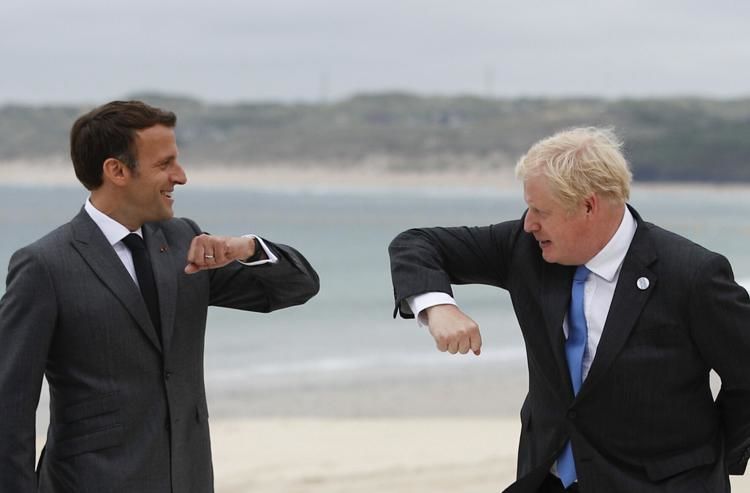
British Prime Minister Boris Johnson, right, greets French President Emmanuel Macron during arrivals for the G7 meeting at the Carbis Bay Hotel in Carbis Bay, St. Ives, Cornwall, England, Friday, June 11, 2021. Leaders of the G7 begin their first of three days of meetings on Friday, in which they will discuss COVID-19, climate, foreign policy and the economy.

The Group of 7 is an informal group of seven powerful democracies: Canada, France, Germany, Italy, Japan, the United Kingdom and the United States. The presidents of the European Commission and European Council also attend G-7 meetings because several of Europe’s largest countries are also members.

Membership, which is decided internally, hasn’t changed much since the group’s founding in 1975. At the time, it included only six countries, all of which still belong. Canada joined a year later. Russia joined as an eighth member in 1998, temporarily changing the group’s moniker to the G-8, but Russia was ousted after it annexed Crimea in 2014.

Together, these seven wealthy nations form the foundation of the modern global economy and the cooperative rules-based system on which it is built.

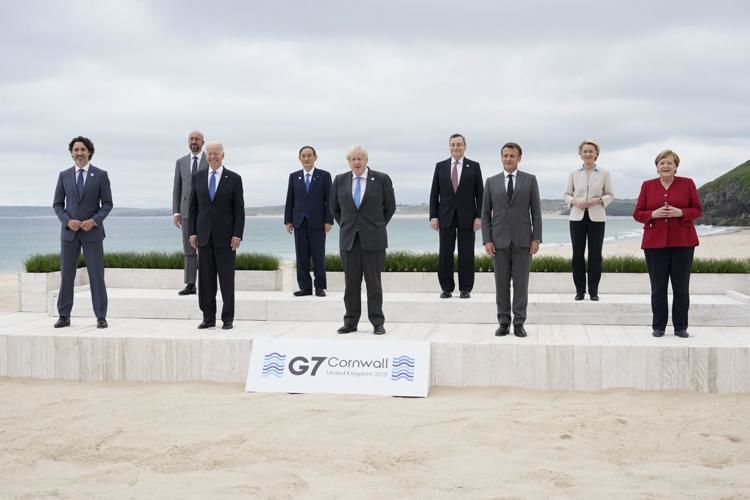
Leaders of the G7 pose for a group photo on overlooking the beach at the Carbis Bay Hotel in Carbis Bay, St. Ives, Cornwall, England, Friday, June 11, 2021. Leaders from left, Canadian Prime Minister Justin Trudeau, European Council President Charles Michel, U.S. President Joe Biden, Japan's Prime Minister Yoshihide Suga, British Prime Minister Boris Johnson, Italy's Prime Minister Mario Draghi, French President Emmanuel Macron, European Commission President Ursula von der Leyen and German Chancellor Angela Merkel.


Why the G-7 matters
The G-7 countries make up about 40% of the world economy, down from nearly 70% a few decades ago.


Despite the decline, the economic might of G-7 nations remains undeniable, not least due to their collective position as countries at the forefront of technological innovation and industrial know-how. Moreover, G-7 economies are inextricably interwoven with global supply chains, which means that a policy change or economic shock in one G-7 country will, for better or worse, have ripple effects across the globe.

Ultimately, the G-7 may be the best hope for quick, decisive and meaningful policy action on pressing global problems.

While the G-7 doesn’t have the institutional clout of the United Nations, the World Trade Organization or NATO, it also doesn’t have their institutional red tape or bureaucracy.

And although the G-7 is a subset of the ascendant G20 – which also includes rising economic powerhouses China, India and Brazil – the G-7 has another advantage: it’s much easier to achieve consensus in an intimate group of similar nations than it is to find common ground among diverse nations with very different economic and political priorities.
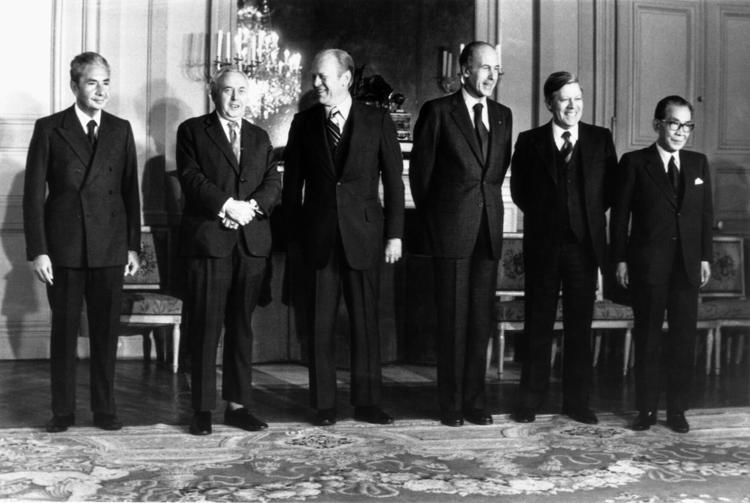
In this Nov. 17, 1975 file photo the six heads of state and government attending Economic and Monetary summit meeting at the Chateau de Rambouillet, West of Paris, pose for a group portrait before the final session. From left: Premier Aldo Moro of Italy, Premier Harold Wilson of the Great Britain, President Gerald Ford of the United States, President Valery Giscard d'Estaing of France, Chacellor Helmut Schmidt of West Germany and Premier Takeo Miki of Japan. The G7 was originally a response by leaders of Western democracies to the economic shocks and recession of the mid-1970s.


What the G-7 does


The world is facing profound challenges, from the devastation of the COVID-19 pandemic and climate change to authoritarianism and attacks on democracy.

None of these issues colors neatly within the lines of national borders. Countries need to cooperate to find solutions that do not simply kick the can to their neighbors.

An example of meaningful action by the G-7 is its June 5, 2021, announcement of an agreement on global minimum corporate tax rates, which marked a watershed moment in international taxation. If successful, the agreement could mean the end of tax havens and a dramatic shift in how companies record their profits around the world.

Newsletter

Related Articles

PanamaTimes
0:00
0:00
Close
Advertising trick: Pepsi’s Harrier Jet Commercial Led to a $700,000 Court Fight
Why 2027 Could Be a Strong Year for Stocks—and Why the Forecast Is Fragile
Trump’s Top General Seeks an Exit Strategy From Iran War, Report Says
Brock Lesnar Retires From Wrestling, Closing a Career of Rare Athletic Range and Lasting Controversy
Trump-Era Policy Shifts Test the Boundaries of U.S. Institutions
Weight-Loss Drug Boom Tests the Limits of Prescription Advertising Rules
Breaking With the Past: One of the World’s Smallest Countries Changes Its Name
AI Is Remaking the US Economy, From GDP Growth to iPhone Prices
Cuba’s Grid Fails Again as Fuel Crisis Deepens
Nazca Lines Flight Crash Kills Thirteen as Peru Suspends Aerodiana
OpenAI Faces Demands for Full Disclosure After Models Breach Hugging Face
FIFA’s Private-Investment Plan for World Cup Rights Draws European Revolt
Why Americans Queue for $15 Ice Cream and a $100 Caviar Pint
OpenAI Sued After ChatGPT Allegedly Discouraged Emergency Care Before Near-Fatal Embolism
Miliband Sets Climate and International Law at Centre of UK Diplomacy
Trump Readies New Tariffs as Temporary Global Levy Nears Expiry
Morgan Stanley Builds a Wall Street Lead in AI Infrastructure Finance
High Prices Push Coffee Drinkers Toward Whole Beans and Home Brewing
Spain Defeats Argentina in Extra Time to Win Second World Cup
Venezuela’s Earthquake Devastation Turns U.S. Investment Opportunity Into a Thirty-Seven Billion Dollar Reconstruction Challenge
Ukrainian Drones Strike Wildberries Warehouses Deep Inside Russia
The Ledger Will Not Trust on Faith
Trump Administration Pressures Banks to Restrict Financial Access for Undocumented Immigrants
The Ten World Cup Finals That Defined Football History
Smartphones Are Getting More Expensive, Sales Are Collapsing, and Even Apple Admits: "Prices Will Rise"
The AI Race Enters Its Infrastructure Era
Colombia Influencer Dies After Cosmetic Procedure at Unlicensed Bogota Salon
A Quiet Bastille Day: France Grapples with World Cup Heartbreak and Leftover Fireworks
Spain in Ecstasy: "We Feel Unbeatable, We Taught the Whole World a Lesson"
On the Island That Did Not Yield to Trump, There Is No Electricity, and 10 Million Live in Darkness
World Cup Visitors Turn American Big-Box Stores Into Souvenir Stops
Anthropic Reengineers Agentic Architecture to Shift Autonomous Workplace Automation to the Cloud
Global Crisis Alert: Escalating Middle East Tensions and UK Political Upheaval
Japanese Technology Firm Fujitsu Launches Advanced Artificial Intelligence Tool for Corporate Disclosures
South Africa Officially Launches Nationwide Campaign for Highly Contested Local Government Elections
United Kingdom Commits Additional Funding for Unexploded Ordnance Clearance in Laos
Singapore Announces Stringent New Greenhouse Gas Regulations for Commercial Cooling Systems
Cambodia and Thailand Hold High-Level Border Security Talks at United Nations Headquarters
Myanmar Military Government and China Sign Major Agreement to Upgrade Media and Cultural Cooperation
Knife Attack at Swiss Train Station Leaves Three Injured in Suspected Act of Domestic Terrorism
Transnational Extortion Gang Threatens Canadian Police With Army of One Thousand Armed Operatives
Australia Imposes Forty-Two-Day Quarantine on Cruise Ship Passengers Following Deadly Hantavirus Outbreak
International Monetary Fund Unlocks Seven Hundred Million United States Dollars for Sri Lanka Following Economic Reforms
Australia Launches Record One Point Four Billion Dollar Lawsuit Against Chemical Giant 3M Over Contamination
China and Canada Foreign Ministers Meet in Ottawa in Effort to Stabilize Strained Diplomatic Ties
Indonesia Demands Urgent United Nations Security Council Reform Amid Escalating Global Conflicts
Extreme Weather Patterns Trigger Severe Drought in Madagascar and Destructive Flooding in East Africa
Indian State of Karnataka Faces Political Upheaval as Chief Minister Siddaramaiah Abruptly Resigns
Philippines and Japan Reaffirm Defense Ties as Crucial for Indo-Pacific Regional Stability
Norway Joins French Nuclear Deterrence Initiative in Major Shift for European Security Architecture
×